
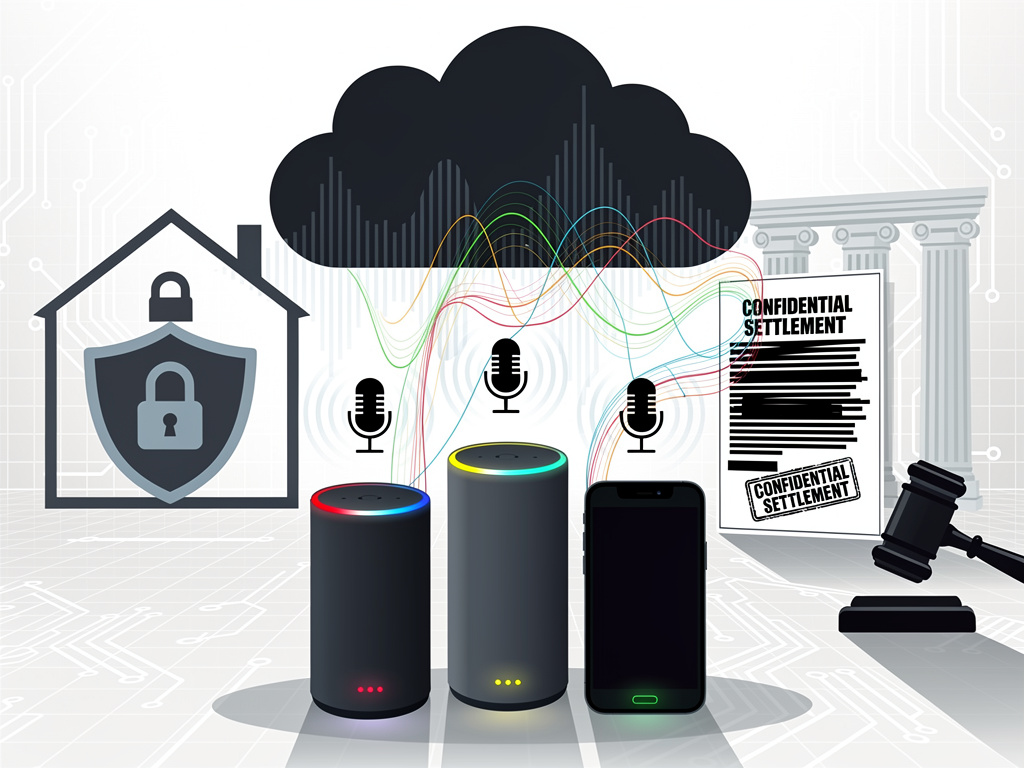
MOUNTAIN VIEW, Calif. — In a move that closes a contentious chapter in the history of voice-activated technology, Google has quietly settled a major class-action lawsuit that alleged its digital Assistant was illegally recording private user conversations. The settlement resolves the multi-year litigation, known as *In re Google Assistant Privacy Litigation*, in the Northern District of California, but its confidential terms leave a crucial question unanswered for millions of consumers: What is the price of privacy when a smart device is always listening?
The lawsuit, which consolidated numerous claims from across the country, centered on allegations that Google’s smart speakers and Android devices recorded conversations even when users had not uttered the “Hey Google” or “OK Google” wake words. Plaintiffs argued these “accidental activations” resulted in the capture and storage of sensitive, private discussions, ranging from business negotiations to intimate family moments, in violation of federal and state wiretapping laws. While the resolution brings an end to the legal battle, the sealed nature of the agreement means the financial payout and any mandated changes to Google’s practices will remain shielded from public and industry scrutiny.
From Smart Speakers to Court Speakers: The Origins of the Dispute
The legal firestorm was ignited by a bombshell 2019 investigation from a Belgian public broadcaster, VRT NWS. The report revealed that human contractors, hired by Google, were routinely listening to and transcribing a vast trove of audio snippets captured by Google Assistant. These weren’t just user commands; they included deeply personal and identifiable information, such as people discussing medical conditions, revealing their home addresses, and even audio of domestic disputes. The leak demonstrated in stark terms that the interaction was not solely between a user and an algorithm, but involved a hidden human element.
Google’s immediate response was one of damage control. The company admitted that a small fraction of audio clips—about 0.2 percent—were manually reviewed by linguists to improve the service’s speech recognition capabilities. In the face of intense public and regulatory backlash, Google announced it would temporarily halt the practice of human audio review globally. The incident shattered the carefully crafted image of seamless, private AI, prompting a wave of lawsuits from consumers who felt their trust had been fundamentally breached, leading directly to the consolidated class-action case that has now been settled.
The Legal Labyrinth of ‘Accidental Activation’
At the heart of the plaintiffs’ case was the argument that recording any conversation without a clear, intentional user prompt constitutes illegal electronic surveillance. The Federal Wiretap Act and similar state-level statutes, such as the California Invasion of Privacy Act, require consent from parties involved in a conversation before it can be recorded. The lawsuit contended that an accidental recording, by its very definition, lacks this consent, making it an unlawful interception of communication. The legal filings were filled with examples of users who discovered recordings in their Google activity logs that they had no recollection of initiating.
In its defense, Google has consistently argued that users consent to its practices when they agree to the company’s terms of service. The company’s lawyers maintained that the potential for accidental activations is an acknowledged aspect of how the technology functions. The core of the technology relies on a device’s microphones being in an “always-on” state to listen for the hotword. As detailed in a technical analysis by Ars Technica, this process can be triggered by sounds phonetically similar to the wake phrase, leading to unintentional recordings that are then sent to Google’s servers for processing—a technical reality that became a focal point of legal debate.
A Confidential Handshake: The Implications of a Sealed Settlement
For industry insiders, the decision to seal the settlement is as significant as the settlement itself. By keeping the terms confidential, Google avoids setting a public financial precedent for future privacy lawsuits. A large, public settlement figure could have emboldened plaintiffs in other pending cases against Google and its competitors. Furthermore, a sealed agreement prevents the public disclosure of potentially damaging internal documents and testimony gathered during the discovery phase of the lawsuit, effectively containing the full scope of the reputational and operational fallout from the 2019 revelations.
While the monetary compensation for class members remains unknown, the settlement likely includes non-monetary provisions, often referred to as “injunctive relief.” Following the initial controversy, Google did implement changes, such as making it easier for users to manage their audio data and making human review an opt-in feature rather than a default. According to a Google blog post from the time, the company committed to reducing the amount of audio data it stores. The final settlement may have formalized these changes or introduced new requirements for transparency, user controls, and technical safeguards designed to minimize false activations, though without access to the documents, this remains a matter of educated speculation.
An Industry-Wide Echo Chamber of Privacy Concerns
The issues at the center of the Google Assistant lawsuit are far from unique to the Mountain View-based tech giant. In fact, they represent a systemic challenge across the entire voice assistant market. Shortly after Google’s practices came to light, similar reports emerged about its chief rivals. The Guardian reported that contractors for Apple were also listening to a percentage of Siri recordings, which sometimes included sensitive personal data. Similarly, a Bloomberg investigation found that thousands of Amazon employees and contractors around the world were listening to Alexa voice recordings to help train the AI.
These collective revelations underscore a fundamental tension at the core of artificial intelligence development: the need for vast amounts of real-world data to improve machine learning models versus the user’s expectation of privacy. Each of these companies has since updated its policies to provide more transparency and user control, but the underlying technological paradigm of passive listening remains. The settlements, lawsuits, and ensuing policy shifts have become a recurring cost of doing business in a sector built on data, raising questions about whether true privacy can ever coexist with a microphone that is always on.
Navigating the New Regulatory Reality
The era of tech self-regulation that allowed these data collection practices to flourish is rapidly drawing to a close. This settlement arrives amid heightened global scrutiny over data privacy, with regulators in both the United States and Europe taking a more aggressive stance. The Federal Trade Commission has shown increased interest in the data practices of smart device manufacturers, while in Europe, the General Data Protection Regulation (GDPR) imposes steep fines for non-compliance, creating a powerful incentive for companies to avoid privacy missteps. Even without a public verdict, the Google Assistant case serves as a clear signal that consumer privacy arguments hold significant legal weight.
Ultimately, while Google has managed to resolve this specific legal challenge without a public trial, the broader debate over voice assistant privacy is far from over. The settlement may quiet one courtroom, but it amplifies the ongoing conversation in regulatory bodies and among consumers about the acceptable trade-offs between convenience and confidentiality. For the tech industry, the case is a potent reminder that the words spoken in the privacy of one’s home can echo powerfully in the halls of justice, even if the final judgment is never heard by the public.


 WebProNews is an iEntry Publication