
The software industry has spent decades promising that building applications would become easier. Low-code platforms, artificial intelligence assistants, and increasingly sophisticated frameworks were supposed to democratize development, transforming software creation from an arcane craft into something approaching assembly-line predictability. Yet despite these advances, the fundamental reality remains unchanged: building quality software is extraordinarily difficult, and the industry’s reluctance to acknowledge this creates dangerous misconceptions among business leaders and aspiring developers alike.
According to Nordcraft’s analysis, the complexity of software development stems not from inadequate tools but from the inherent nature of the work itself. Software development requires simultaneously managing abstract logic, human communication, changing requirements, technical debt, and unforeseen edge cases—all while maintaining code that remains comprehensible months or years after its creation. The promise that new frameworks or methodologies would eliminate these challenges has proven consistently hollow, leaving organizations unprepared for the true costs and timelines involved in custom software development.
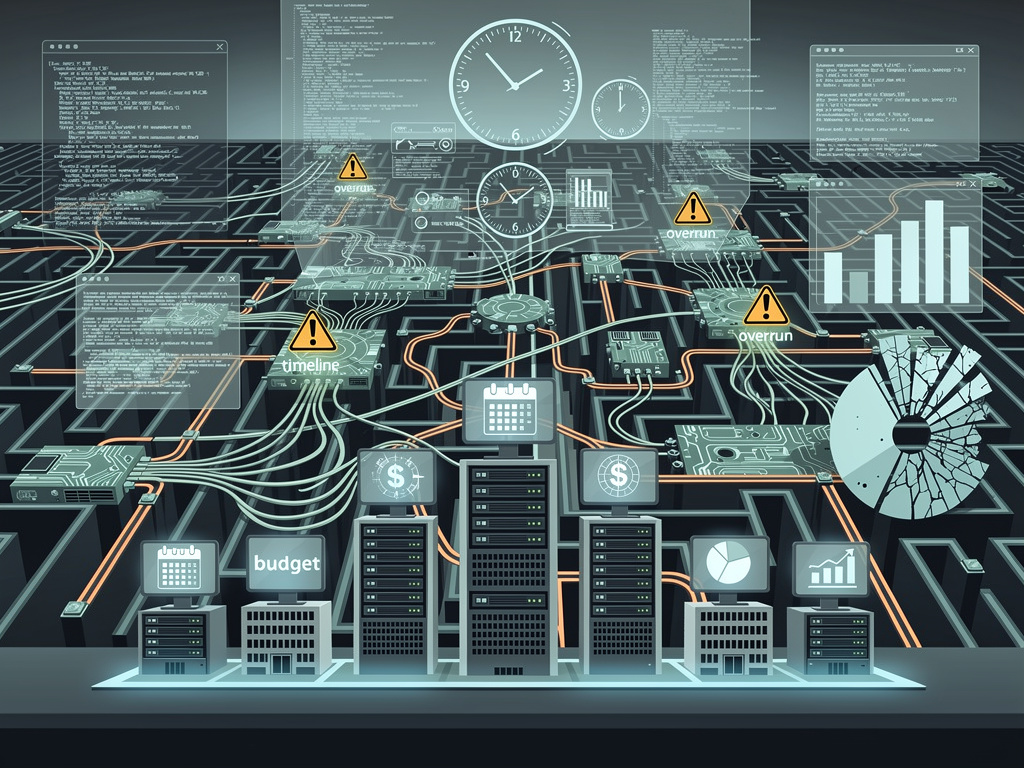
This disconnect between perception and reality carries substantial financial consequences. Businesses routinely underestimate project timelines by 50% or more, assuming that modern development tools have made software creation nearly effortless. When projects inevitably exceed budgets and deadlines, the blame typically falls on developers rather than on unrealistic expectations fostered by an industry that oversells its own capabilities. The result is a cycle of disappointment that damages relationships between technical teams and business stakeholders, ultimately undermining the quality of software products that reach the market.
The Illusion of Simplicity in Modern Development Tools
The proliferation of development frameworks and platforms has created a paradoxical situation where more tools often mean more complexity rather than less. Each new framework promises to abstract away difficult problems, yet developers find themselves needing to understand not only the underlying technologies but also the abstractions themselves. As Nordcraft points out, learning a framework doesn’t eliminate the need to understand fundamental programming concepts; it adds an additional layer of knowledge requirements on top of existing prerequisites.
Low-code and no-code platforms have emerged as the latest solution to software complexity, marketing themselves as tools that enable non-programmers to build sophisticated applications. While these platforms serve legitimate purposes for specific use cases, they cannot replace traditional development for complex, custom solutions. The limitations become apparent when businesses need functionality beyond the platform’s predetermined capabilities, forcing organizations to either accept compromised solutions or invest in traditional development anyway—often after having already spent significant resources on the low-code approach.
The Human Element That No Framework Can Solve
Software development’s difficulty extends far beyond technical challenges into the realm of human communication and collaboration. Requirements gathering remains one of the most challenging aspects of any project, as stakeholders often cannot articulate what they need until they see what they don’t want. This iterative discovery process is inherent to software development, yet it conflicts with the fixed-bid, fixed-timeline contracts that many organizations prefer. The mismatch between how software must be built and how businesses want to purchase it creates tension that no amount of technical sophistication can resolve.
The complexity multiplies when multiple developers work on the same codebase, requiring not just technical skill but also social coordination, shared understanding of architectural decisions, and consistent coding standards. Code that makes perfect sense to its original author can become incomprehensible to others without proper documentation and communication. These human factors mean that simply hiring more developers doesn’t proportionally increase output—a reality that continues to surprise business leaders who view software development through a manufacturing lens.
Technical Debt: The Invisible Weight on Every Project
Every software project accumulates technical debt—shortcuts, workarounds, and compromises made to meet deadlines or work around limitations. This debt isn’t necessarily bad; it’s often the pragmatic choice that allows projects to ship. However, the industry’s reluctance to honestly discuss technical debt leads businesses to view it as failure rather than an inevitable aspect of software development. According to Nordcraft’s research, the accumulation of technical debt significantly impacts future development velocity, yet this slowdown surprises stakeholders who expected consistent output rates.
Managing technical debt requires deliberate effort and time that doesn’t produce visible features, making it a difficult sell to business stakeholders focused on immediate deliverables. Development teams face constant pressure to add new functionality rather than refactor existing code, leading to codebases that become progressively more difficult to modify. This creates a vicious cycle where each new feature takes longer to implement than the last, eventually reaching a point where the system becomes nearly unmaintainable—a crisis that could have been avoided with honest conversations about the true nature of software development from the project’s inception.
The Myth of the 10x Developer and Productivity Metrics
The software industry’s obsession with productivity metrics and the mythical “10x developer” reflects a fundamental misunderstanding of what makes software development difficult. Measuring developer productivity by lines of code or number of commits incentivizes quantity over quality, encouraging developers to write more code when often the best solution involves writing less. The most valuable contributions—preventing bugs through careful design, simplifying complex systems, or mentoring junior developers—resist quantification, yet these activities often have greater long-term impact than churning out features.
The reality is that software development productivity varies enormously based on problem domain, team dynamics, and code quality, making meaningful comparisons nearly impossible. A developer might spend days on a problem that appears simple but involves subtle edge cases, while completing an apparently complex feature in hours because it fits naturally within existing architecture. This variability is intrinsic to creative problem-solving work, yet businesses continue seeking metrics that would allow them to treat software development as a predictable, measurable process comparable to manufacturing.
Why Agile Methodologies Haven’t Solved the Core Problems
Agile methodologies emerged partly as a response to the difficulties of software development, promising better outcomes through iterative development, frequent communication, and flexibility. While Agile practices have improved many aspects of software development, they haven’t eliminated its fundamental difficulty. In fact, Agile’s emphasis on rapid iteration and changing requirements can increase complexity, requiring developers to build systems flexible enough to accommodate unknown future needs—a significantly harder challenge than building to fixed specifications.
Many organizations adopt Agile ceremonies without embracing the underlying principles, creating additional overhead without gaining the benefits. Daily standups become status reports for management rather than coordination sessions for developers. Sprint planning turns into commitment negotiations rather than collaborative estimation. The result is “Agile theater”—performing Agile rituals while maintaining traditional command-and-control management structures that undermine the methodology’s effectiveness. This cargo-cult Agile adds process complexity without addressing the inherent difficulties of software development.
The Economics of Underestimating Software Complexity
The persistent underestimation of software development difficulty has significant economic implications for both individual companies and the broader technology sector. Projects that run over budget and past deadlines represent not just wasted resources but also missed market opportunities and damaged competitive positions. When businesses base strategic decisions on unrealistic assumptions about software development timelines, they make commitments to customers, partners, and investors that become impossible to fulfill, eroding trust and credibility.
This pattern of underestimation also affects hiring and retention in the technology sector. When organizations expect unrealistic productivity levels based on misconceptions about modern development tools, they create unsustainable workloads that lead to burnout among development teams. The resulting turnover further slows projects as new team members require time to understand existing codebases and team dynamics. The true cost of software development includes not just direct development expenses but also the organizational overhead of managing unrealistic expectations and recovering from failed projects.
Artificial Intelligence: The Latest Silver Bullet That Isn’t
The recent explosion of AI-powered coding assistants has renewed promises that software development will soon become dramatically easier. Tools like GitHub Copilot and ChatGPT can indeed accelerate certain coding tasks, generating boilerplate code and suggesting implementations for common patterns. However, these tools don’t eliminate the need for deep technical knowledge; they require it. Developers must still understand whether AI-generated code is correct, secure, and maintainable—skills that require the same expertise that has always been necessary for quality software development.
AI coding assistants are particularly weak at the aspects of software development that are genuinely difficult: architectural decisions, requirement clarification, debugging subtle interactions between components, and ensuring code remains maintainable over time. These tools excel at generating code that looks plausible but may contain subtle bugs or security vulnerabilities that only experienced developers can identify. Rather than democratizing software development, AI tools may actually increase the gap between novice and expert developers, as extracting value from these tools requires the judgment that comes only with experience.
Building Realistic Expectations for Sustainable Development
Moving forward requires a fundamental shift in how the industry discusses software development with business stakeholders and aspiring developers. Rather than continuing to promise that the next framework or methodology will make software development easy, the industry must acknowledge that building quality software is inherently difficult and will remain so. This doesn’t mean development can’t improve—better tools, practices, and training do increase productivity—but these improvements are incremental rather than revolutionary.
Organizations that accept software development’s true difficulty can make better decisions about build-versus-buy choices, realistic timeline estimation, and appropriate team sizing. They can invest in developer training and experience rather than assuming that tools alone will compensate for skill gaps. Most importantly, they can create cultures where honest communication about challenges and uncertainties is valued rather than punished, enabling teams to surface problems early when they’re still manageable rather than hiding difficulties until they become crises. The path to better software outcomes begins with accepting an uncomfortable truth: despite decades of innovation, building software remains really, genuinely hard.


 WebProNews is an iEntry Publication