
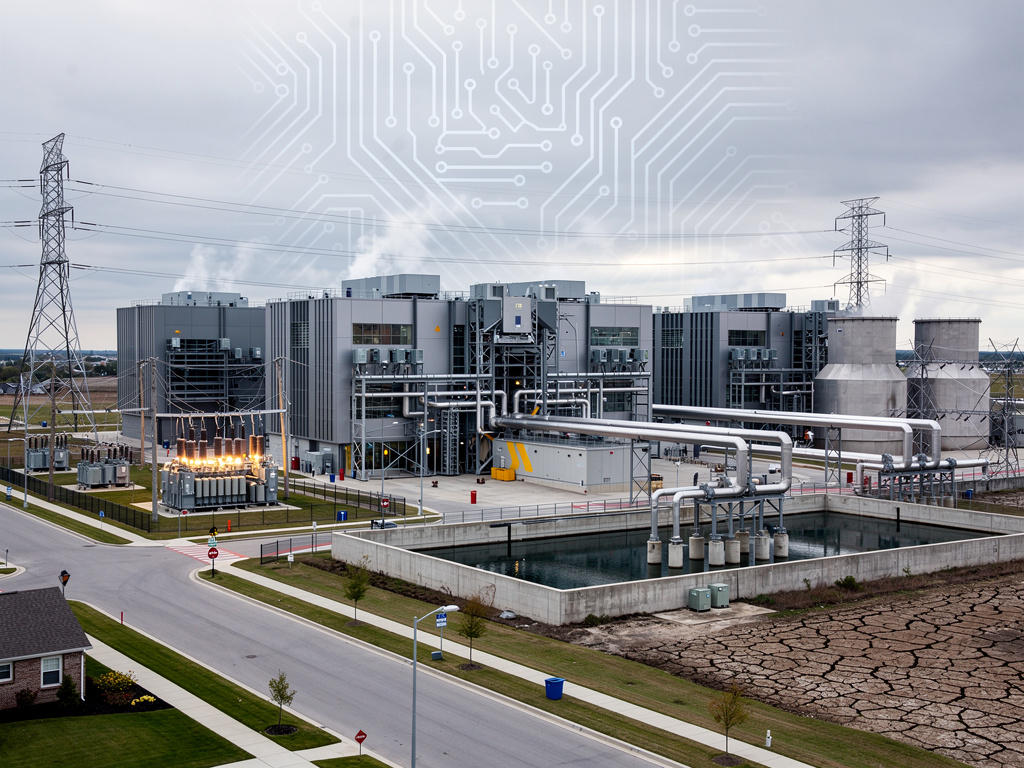
Big Tech poured hundreds of billions into artificial intelligence. The returns so far remain mostly digital. The physical footprint tells a different story. Windowless warehouses. Constant drone of industrial fans. Towers of cooling equipment that dominate skylines in once-quiet towns. These structures now stand as the unphotogenic face of the AI boom.
Communities have noticed. And they don’t like what they see.
A Gallup survey from March 2026 found seven in 10 Americans oppose construction of AI data centers in their local area. Nearly half strongly oppose the projects. Support barely reaches one quarter. The numbers surprised even seasoned pollsters. This marks the first time Gallup asked specifically about data centers tied to artificial intelligence. The backlash runs deeper than typical infrastructure gripes.
Residents cite noise that never stops. They point to massive power draws that strain local grids and drive up electricity bills for everyone else. Water consumption for cooling draws particular anger in drought-prone regions. Visual blight ranks high on complaint lists too. The buildings look like prisons or warehouses dropped into suburban or rural settings without much effort to blend in.
But the industry can’t simply hide these facilities anymore. Demand from AI training and inference keeps climbing. Hyperscalers need ever-larger clusters of GPUs running 24 hours a day. That means more land, more electricity, more everything. The old model of sticking massive but low-slung boxes in remote areas no longer works. Power availability and fiber connections often favor locations closer to population centers.
So the designs are changing. The Wall Street Journal reported last year that data centers are going taller in some cases, sporting slicker facades and paying more attention to street-level appearance. “They can’t just be big boxes anymore,” one expert told the paper. The shift reflects both necessity and growing pressure from local governments and residents.
Yet cosmetic upgrades may not solve the deeper issue. Opposition has already killed or delayed projects worth tens of billions. A Data Center Watch report documented $64 billion in data center proposals blocked or delayed in recent years. Virginia, long a data center hub, now sees fierce pushback over visual impact, noise and effects on property values. In Missouri, a group called “Don’t Dump Data in Peculiar” helped kill a $1.5 billion project from Diode Ventures after raising concerns about the same issues.
Similar stories play out nationwide. In Utah, a massive proposed development drew fury over water use and air quality before the developer scaled it back. Richmond, Virginia saw a $500 million proposal from DC Blox withdrawn after local officials deferred it over noise and aesthetics. These aren’t isolated cases. They signal a pattern.
Environmental groups have joined the fray. Stand.earth ran a campaign in June 2026 accusing Microsoft of misleading the public about its AI data centers’ impact on communities and the climate. The group directed people to a site called MicrosoftLies.com. Protests popped up at industry events. The message is clear. The infrastructure enabling large language models and image generators carries real-world costs that extend beyond corporate balance sheets.
Power represents the biggest flashpoint. AI workloads consume electricity at scales that surprise even veterans of the cloud computing era. A single large training run can use as much power as small cities. Keeping all those chips cool requires yet more energy plus vast amounts of water. In places already facing grid constraints, the arrival of a data center can mean delayed renewable projects or reactivation of fossil fuel plants. That undercuts the clean image many tech companies project.
Water use adds another layer. Cooling systems in traditional facilities evaporate millions of gallons annually. Some operators have switched to dry cooling or other technologies. But those often come with efficiency trade-offs or higher upfront costs. Local residents rarely care about those engineering details when their own wells run low or rivers shrink.
The image problem extends to the broader AI narrative. For years the technology sold itself through sleek interfaces and magical capabilities. Chatbots that write essays. Tools that create photorealistic images in seconds. The marketing emphasized intelligence without visible effort. Now the public sees the enormous, humming machines required to make it all happen. The contrast feels jarring. And it fuels skepticism.
Some in the industry acknowledge the challenge. Executives have begun speaking more openly about community engagement. A few operators experiment with better landscaping, architectural flourishes or even locating facilities inside repurposed buildings to reduce visual impact. But these efforts remain piecemeal. The core tension persists. Society wants the benefits of AI. Many don’t want the necessary physical plants nearby.
Recent analysis from Ropes & Gray in May 2026 highlighted community opposition as a genuine headwind for data center investment. The law firm noted risks of state-level moratoria if the industry fails to improve engagement with local and state stakeholders. Federal preemption remains a long shot. That leaves companies to navigate town hall meetings, zoning battles and public relations campaigns.
Polling suggests the opposition isn’t purely local. While “not in my backyard” attitudes play a role, national sentiment has hardened. Only a small fraction of those opposing new data centers actually live near existing ones. Concerns about broader effects on energy prices, water resources and land use have gone mainstream. This makes the political environment more difficult than in previous infrastructure buildouts.
Tech giants continue to announce ambitious expansion plans. Microsoft, Google, Amazon and Meta have all committed enormous sums to AI-related infrastructure. The race with competitors, including those in China, adds urgency. Yet each new announcement risks fresh protests and permitting delays. The $64 billion in stalled projects already shows the cost of underestimating local resistance.
Architects and developers now talk about data centers as civic infrastructure rather than mere industrial plants. Some propose designs that incorporate public spaces or mimic surrounding architecture. Others explore underground construction or multi-use facilities. These ideas sound promising on paper. Whether they scale fast enough to meet AI demand is another question.
The original article that highlighted this tension, from The Information, captured an industry beginning to grapple with its physical presentation. The piece noted how the hulking facilities clash with the ethereal promises of artificial intelligence. That mismatch has only grown more apparent in the months since.
Noise complaints offer a concrete example. The constant hum from cooling fans can travel for miles. In residential areas it disrupts sleep and daily life. Some operators have installed advanced sound barriers or quieter equipment. Results vary. In several documented cases, residents still report the sound as intolerable.
Property values enter the conversation too. Homeowners near proposed sites worry about resale prices. Studies on the topic remain limited and often contested. Yet perception drives politics. When enough neighbors fear declining values, local officials listen.
So what comes next? The industry cannot wish away the infrastructure problem. AI capabilities depend on physical computing power. Training larger models requires more chips, more power, more space. Inference at scale for millions of users adds further demand. Hiding the facilities or making them prettier addresses only part of the issue.
Better transparency might help. Companies could share detailed data on actual power and water consumption per model or per query. They could fund independent studies on local impacts and commit to mitigation measures before breaking ground. Some already do versions of this. More systematic efforts could rebuild trust.
Innovation in hardware and software offers another path. More efficient chips reduce power needs. Advances in cooling technology cut water use. New architectures that require fewer resources for the same performance would ease the pressure. Progress on these fronts continues but rarely matches the pace of capability improvements.
Regulatory approaches differ by region. Some states roll out the red carpet with tax incentives and fast permitting. Others impose stricter environmental reviews or outright bans on new facilities in certain zones. This patchwork creates uneven development. It also encourages companies to shop for the most accommodating locations, sometimes at the expense of optimal technical sites.
Public opinion may shift if AI delivers widely recognized benefits that touch everyday life. Better medical diagnostics, more productive workplaces or solutions to climate modeling could change minds. For now, the technology’s most visible impacts for average people involve chat interfaces and image generators. Those feel frivolous to many when weighed against the industrial reality behind them.
The data center image problem isn’t going away. If anything, it sharpens as more facilities break ground and more residents experience the consequences firsthand. Tech companies face a choice. They can treat these buildings as unfortunate necessities to be minimized and disguised. Or they can approach them as critical infrastructure deserving of thoughtful design, honest communication and genuine community investment.
The former approach risks prolonged delays, higher costs and continued erosion of public support for AI. The latter demands more time, money and imagination than the industry has typically allocated to its physical plants. Yet with hundreds of billions at stake and national competitiveness on the line, the investment may prove necessary. The boxes, no matter how they are dressed up, will keep coming. The question is whether communities will accept them.


 WebProNews is an iEntry Publication