
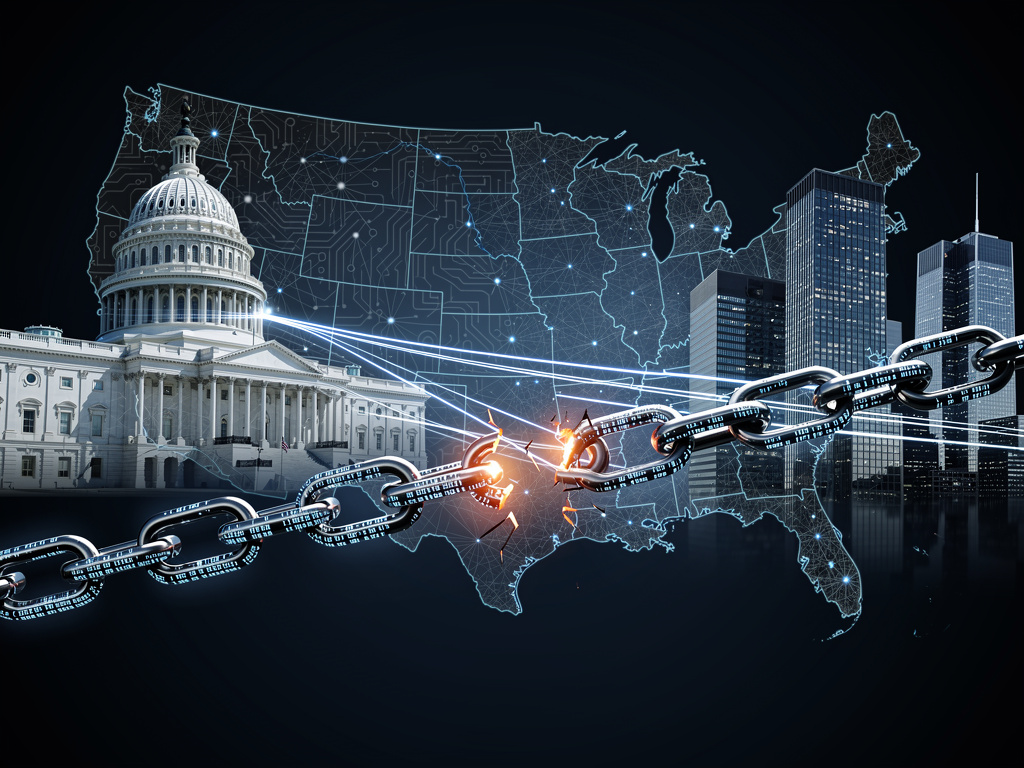
The foundation of America’s cybersecurity defenses is cracking, and the fault lines run directly through the increasingly strained relationship between government agencies and private sector companies. A comprehensive new report from the Center for Cybersecurity Policy and Law reveals that without rebuilding trust between these critical partners, national cybersecurity strategies risk becoming little more than policy documents gathering dust on bureaucratic shelves.
According to research published by Cybersecurity Dive, the erosion of public-private trust represents one of the most significant vulnerabilities in contemporary cyber defense frameworks. The report emphasizes that effective cybersecurity cannot be achieved through government mandates alone, nor can private companies adequately protect critical infrastructure without coordinated governmental support and intelligence sharing. This interdependence creates a paradox: both sectors need each other desperately, yet mutual suspicion continues to undermine collaborative efforts.
The timing of these findings carries particular weight as cyberattacks against critical infrastructure have surged dramatically. From ransomware attacks crippling hospital systems to sophisticated nation-state intrusions targeting energy grids and water treatment facilities, the consequences of inadequate coordination have never been more apparent. Private companies control approximately 85% of America’s critical infrastructure, making their cooperation essential to any viable national defense strategy.
The Historical Context of Distrust
The relationship between government cybersecurity agencies and private corporations has been fraught with tension since the early days of digital security. Companies have long harbored concerns about regulatory overreach, liability exposure, and the potential competitive disadvantages that might result from sharing sensitive information about their security vulnerabilities with government entities. These fears are not entirely unfounded; past instances of government data breaches and concerns about surveillance programs have reinforced corporate reluctance to fully engage in information-sharing partnerships.
Government agencies, meanwhile, have expressed frustration with what they perceive as insufficient security investments by private companies and a reluctance to report incidents promptly. This mutual wariness has created a vicious cycle: companies withhold information because they don’t trust how it will be used, and government agencies struggle to provide effective guidance and protection without comprehensive intelligence about emerging threats. The Center for Cybersecurity Policy and Law’s report identifies this trust deficit as perhaps the single greatest impediment to effective national cybersecurity.
Regulatory Pressures and Compliance Burdens
The proliferation of cybersecurity regulations has paradoxically contributed to the trust problem rather than solving it. Companies now navigate a complex web of federal, state, and industry-specific requirements, each with its own reporting obligations, compliance standards, and potential penalties. This regulatory fragmentation creates confusion and increases the administrative burden on organizations, particularly smaller companies with limited cybersecurity resources.
The report emphasizes that while regulation plays an important role in establishing baseline security standards, overly prescriptive or punitive approaches can backfire. When companies fear that reporting a breach will trigger investigations, lawsuits, or regulatory sanctions, they become less likely to share information voluntarily or seek government assistance during active incidents. This defensive posture ultimately weakens the collective security posture by preventing the rapid dissemination of threat intelligence that could help other organizations defend against similar attacks.
Intelligence Sharing: The Cornerstone of Collective Defense
Effective cybersecurity defense in the modern era requires real-time sharing of threat intelligence, attack patterns, and defensive strategies. When one organization successfully repels a sophisticated attack, that knowledge should rapidly propagate throughout the ecosystem to help others prepare for similar threats. However, this ideal scenario remains largely unrealized due to the trust deficit between public and private sectors.
The Cybersecurity and Infrastructure Security Agency (CISA) and other government entities have established various information-sharing programs, but participation rates and the quality of shared information often fall short of what’s needed for truly effective collective defense. Companies worry about exposing proprietary information, revealing security weaknesses to competitors, or inadvertently triggering regulatory scrutiny. Government agencies, constrained by classification requirements and bureaucratic processes, sometimes struggle to share actionable intelligence in timeframes that allow companies to mount effective defenses.
Liability Concerns and Legal Uncertainties
One of the most significant barriers to enhanced public-private cooperation involves liability concerns. Companies fear that sharing information about security incidents or vulnerabilities could expose them to lawsuits from customers, shareholders, or business partners. The legal framework governing data breach notification and liability remains complex and varies significantly across jurisdictions, creating uncertainty about the consequences of disclosure.
The Center for Cybersecurity Policy and Law’s report recommends establishing clearer legal protections for companies that participate in voluntary information-sharing programs and promptly report security incidents to appropriate authorities. Several legislative proposals have attempted to address these concerns through safe harbor provisions, but comprehensive federal legislation that balances transparency with reasonable liability protections remains elusive. Without such protections, companies will continue to approach information sharing with caution, limiting the effectiveness of collaborative defense efforts.
The Role of Cyber Insurance in Risk Management
The rapid growth of the cyber insurance market has introduced another layer of complexity to public-private cybersecurity relationships. Insurers increasingly require policyholders to meet specific security standards and may mandate particular responses to incidents, potentially conflicting with government recommendations or information-sharing requests. Some companies have found themselves caught between insurer requirements that prioritize minimizing immediate financial losses and government requests for information sharing that might support broader defensive efforts.
This tension highlights the need for better coordination between government cybersecurity agencies and the insurance industry. Aligning incentives so that insurance policies encourage rather than discourage cooperation with government security initiatives could significantly strengthen overall cybersecurity posture. The report suggests that government agencies should engage more actively with insurers to ensure that policy requirements support rather than undermine national cybersecurity objectives.
Building Trust Through Transparency and Accountability
Rebuilding trust between public and private sectors requires commitment and transparency from both sides. Government agencies must demonstrate that shared information will be protected appropriately, used only for legitimate security purposes, and not weaponized for regulatory enforcement unrelated to the immediate threat. This requires clear policies, consistent application, and accountability mechanisms that reassure companies their cooperation won’t be exploited.
Private companies, for their part, must recognize that cybersecurity represents a collective action problem that cannot be solved through individual efforts alone. The interconnected nature of modern digital infrastructure means that one organization’s security failure can cascade throughout entire sectors. Companies that view cybersecurity purely through a competitive lens, hoarding information about threats and vulnerabilities, ultimately undermine their own security by preventing the development of collective defenses.
International Dimensions and Cross-Border Cooperation
The challenge of building public-private trust in cybersecurity extends beyond national borders. Cyberattacks routinely originate from foreign jurisdictions, and effective defense requires international cooperation among governments and multinational corporations. However, differing legal frameworks, data sovereignty requirements, and varying levels of government trustworthiness complicate cross-border information sharing.
Multinational companies operating across numerous jurisdictions must navigate conflicting requirements and expectations from different governments. A security incident affecting operations in multiple countries may trigger different reporting obligations, investigation procedures, and regulatory responses. This complexity can paralyze decision-making during critical incidents and discourage proactive information sharing. Developing international frameworks that harmonize approaches to cybersecurity cooperation while respecting legitimate sovereignty concerns represents a significant diplomatic and technical challenge.
Recommendations for Strengthening Partnerships
The Center for Cybersecurity Policy and Law’s report offers several concrete recommendations for rebuilding trust and enhancing public-private cooperation. These include establishing clearer legal protections for voluntary information sharing, streamlining and harmonizing regulatory requirements, improving the timeliness and actionability of government threat intelligence, and creating more structured feedback mechanisms that demonstrate how shared information contributes to collective security.
The report also emphasizes the importance of sustained engagement between government and private sector leaders, not just during crises but through ongoing dialogue that builds relationships and mutual understanding. Regular tabletop exercises, joint training programs, and collaborative research initiatives can help break down barriers and establish the personal connections that facilitate trust. Additionally, government agencies should consider adopting more of the operational tempo and communication styles familiar to private sector cybersecurity professionals, reducing the cultural gap that sometimes impedes effective collaboration.
The Path Forward: Shared Responsibility and Mutual Accountability
Ultimately, addressing the trust deficit in public-private cybersecurity partnerships requires acknowledging that both sectors share responsibility for the current situation and must commit to meaningful change. Government agencies must resist the temptation to respond to high-profile incidents with punitive regulations that prioritize assigning blame over improving security. Private companies must move beyond viewing cybersecurity as merely a compliance exercise or cost center and recognize it as a fundamental business imperative requiring genuine investment and cooperation.
The stakes could hardly be higher. As digital infrastructure becomes ever more central to economic activity, national security, and daily life, the consequences of inadequate cybersecurity grow more severe. Ransomware attacks now routinely extract hundreds of millions of dollars from victims and can literally shut down critical services. Nation-state cyber operations threaten everything from intellectual property to election integrity to the stability of financial systems. These threats cannot be adequately addressed through fragmented, distrustful approaches that pit government against industry or encourage companies to view security as a competitive rather than collective concern.
The Center for Cybersecurity Policy and Law’s report serves as both a warning and a roadmap. It documents the serious vulnerabilities created by the current trust deficit while offering practical pathways toward more effective collaboration. Whether policymakers, government officials, and business leaders will heed these recommendations and commit to the difficult work of rebuilding trust remains to be seen. What is certain is that continued drift toward greater mutual suspicion and reduced cooperation will leave the nation increasingly vulnerable to adversaries who face no such internal divisions. The choice between collaborative strength and fragmented weakness has never been clearer, and the time for decisive action grows shorter with each passing breach.


 WebProNews is an iEntry Publication