
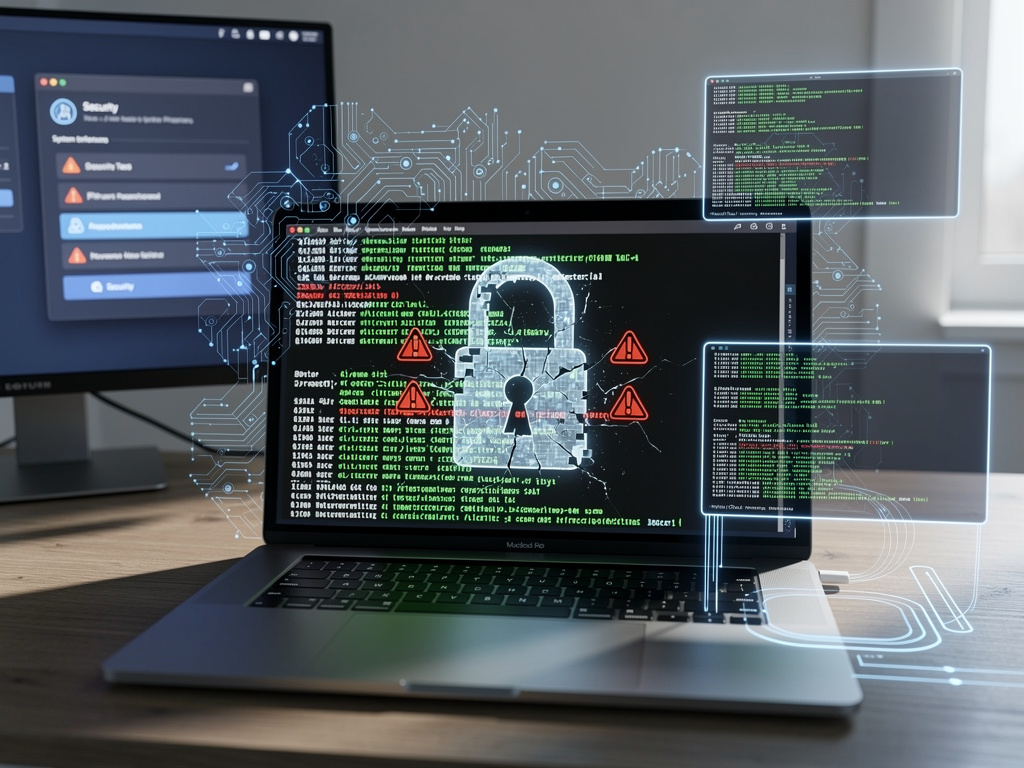
Apple’s macOS operating system, long considered a fortress against malicious attacks, faces an unprecedented security challenge as artificial intelligence agents gain the ability to execute terminal commands. This convergence of AI capabilities and deep system access has created a vulnerability that security researchers warn could fundamentally undermine the platform’s protective measures, potentially exposing millions of users to sophisticated attacks that traditional security protocols were never designed to prevent.
The emergence of AI agents with terminal access represents a paradigm shift in computing security. Unlike conventional applications that operate within clearly defined boundaries, these AI systems can interpret natural language instructions and translate them into powerful system commands. According to AppleInsider, this capability transforms the terminal from a tool used primarily by advanced users into a potential attack vector that could be exploited through seemingly innocent conversational interactions with AI assistants.
The technical architecture of macOS was built on the premise that terminal access would remain the domain of knowledgeable users who understood the implications of their commands. System administrators and developers have historically relied on this command-line interface to perform complex operations, configure system settings, and manage files with precision. However, the introduction of AI agents that can autonomously generate and execute terminal commands has effectively democratized access to these powerful functions, creating a situation where users might inadvertently authorize dangerous operations without understanding the consequences.
The Automation Paradox: When Convenience Becomes Vulnerability
AI agents are designed to streamline workflows and automate repetitive tasks, making them increasingly attractive to both individual users and enterprise environments. These systems can parse complex requests, break them down into actionable steps, and execute them across multiple applications and system layers. The promise of such automation is compelling: imagine asking an AI assistant to “clean up my downloads folder and organize files by project,” only to have it execute a series of terminal commands that accomplish this task in seconds. Yet this same capability becomes a liability when the AI misinterprets instructions or when malicious actors craft prompts designed to trick the system into executing harmful commands.
The security implications extend beyond simple misunderstandings. Sophisticated attackers could potentially craft prompts that appear benign on the surface but contain embedded instructions that cause the AI agent to execute dangerous terminal commands. This technique, known as prompt injection, has already proven effective against various AI systems in controlled research environments. When combined with terminal access, the potential damage escalates dramatically, as attackers could theoretically instruct an AI agent to modify system files, exfiltrate sensitive data, or create persistent backdoors into the operating system.
Traditional macOS security features, including Gatekeeper, System Integrity Protection, and sandboxing, were designed to prevent unauthorized applications from making dangerous system modifications. These protections operate on the assumption that malicious code will attempt to directly manipulate system resources. However, AI agents with legitimate terminal access operate within the bounds of user permissions, effectively bypassing these safeguards by executing commands on behalf of the user. This represents a fundamental shift in the threat model that Apple’s security team must address.
Enterprise Implications and the Corporate Security Dilemma
For enterprise environments, the stakes are considerably higher. Organizations have invested heavily in endpoint security solutions, mobile device management platforms, and security policies designed to protect corporate data on employee devices. The introduction of AI agents with terminal access complicates these security frameworks significantly. IT administrators must now consider scenarios where an employee’s AI assistant could potentially access sensitive corporate databases, modify network configurations, or inadvertently expose proprietary information through seemingly routine automation tasks.
The challenge for corporate security teams lies in balancing the productivity benefits of AI agents against the security risks they introduce. Many organizations are exploring AI-powered tools to enhance employee efficiency, automate routine tasks, and provide intelligent assistance across various workflows. However, granting these systems terminal access requires a complete reassessment of security policies, user permissions, and monitoring capabilities. Traditional approaches to endpoint security, which focus on preventing unauthorized software installation and monitoring network traffic, may prove inadequate when the threat vector operates through legitimate system interfaces.
Financial services firms, healthcare organizations, and technology companies handling sensitive intellectual property face particularly acute challenges. These industries operate under strict regulatory requirements regarding data protection and system security. The introduction of AI agents with terminal access could potentially create compliance issues, as auditors and regulators struggle to assess the security implications of systems that can autonomously execute powerful commands based on natural language instructions. Organizations must develop new frameworks for evaluating, monitoring, and controlling AI agent behavior to maintain compliance with existing regulations.
The Developer’s Dilemma: Building Safe AI Agents
Software developers creating AI agents for macOS face a complex challenge: how to provide useful automation capabilities while preventing misuse or unintended consequences. The development community has begun exploring various approaches to this problem, including command whitelisting, where AI agents can only execute pre-approved terminal commands, and confirmation workflows that require explicit user approval before executing potentially dangerous operations. However, these solutions introduce friction that undermines the core value proposition of AI agents—their ability to seamlessly automate complex tasks without constant user intervention.
Some developers are experimenting with sandboxed environments where AI agents can execute terminal commands in isolated containers that prevent system-wide modifications. This approach offers improved security but limits the utility of AI agents, as many valuable automation tasks require access to system-level resources and user files across different locations. The technical challenge involves creating a security model that distinguishes between legitimate automation needs and potentially harmful operations, a distinction that becomes increasingly difficult as AI agents grow more sophisticated and capable of complex, multi-step operations.
The open-source community has begun developing frameworks and libraries designed to help developers build more secure AI agents. These tools include command parsing systems that analyze terminal commands for potentially dangerous operations, logging mechanisms that create detailed audit trails of AI agent activities, and permission systems that allow users to grant granular access to specific system resources. However, widespread adoption of these security measures remains limited, particularly among smaller development teams and individual developers who may lack the resources or expertise to implement comprehensive security controls.
Apple’s Response and the Platform Security Evolution
Apple has historically maintained a reputation for prioritizing user security and privacy, often implementing restrictive policies that limit application capabilities to protect users from potential threats. The company’s response to the AI agent security challenge will likely shape the future of macOS development and influence how other platform providers approach similar issues. Industry observers anticipate that Apple may introduce new permission systems specifically designed to govern AI agent access to terminal functions, similar to how the company currently manages application access to user data, camera, and microphone resources.
The technical implementation of such controls presents significant challenges. Unlike traditional application permissions, which govern access to specific resources or APIs, terminal access represents a gateway to virtually unlimited system capabilities. Creating a permission system that effectively constrains AI agent behavior while maintaining utility requires careful consideration of use cases, threat models, and user experience. Apple’s engineering teams must develop solutions that protect users without stifling the innovation that makes AI agents valuable in the first place.
Platform-level solutions might include enhanced monitoring systems that track terminal command execution by AI agents, machine learning models that identify suspicious command patterns, and user interfaces that provide clear visibility into AI agent activities. Apple could also implement mandatory code signing requirements for AI agents with terminal access, creating a verification system that ensures only trusted applications can execute system commands. These measures would align with Apple’s existing security philosophy while addressing the unique challenges posed by AI-powered automation.
The User Education Imperative
Beyond technical solutions, addressing the AI agent security challenge requires a significant investment in user education. Many macOS users lack a deep understanding of terminal commands and their potential impact on system security and stability. As AI agents make terminal access more accessible, users need clear guidance on the risks associated with granting such permissions and the warning signs that might indicate malicious activity. This educational challenge extends beyond simple tutorials to encompass a fundamental shift in how users think about AI assistants and their capabilities.
Security researchers emphasize that user awareness represents a critical line of defense against AI agent-related threats. Users should understand that AI agents with terminal access can perform powerful operations that extend far beyond typical application capabilities. This awareness should inform decisions about which AI agents to trust, what permissions to grant, and how to monitor agent activities for suspicious behavior. However, achieving widespread user education on these technical topics presents a significant challenge, particularly given the diversity of macOS user base, which ranges from casual consumers to advanced developers.
The security community has begun developing resources and guidelines to help users navigate these challenges. These materials cover topics such as evaluating AI agent security practices, configuring system permissions appropriately, and recognizing potential security incidents. However, the rapid pace of AI development means that educational resources must continuously evolve to address new threats and capabilities. Organizations and individuals alike must commit to ongoing learning and adaptation as the AI agent ecosystem matures.
Looking Forward: The Future of AI-Powered Computing Security
The convergence of AI agents and terminal access represents just one example of how artificial intelligence is fundamentally reshaping computing security paradigms. As AI systems become more capable and autonomous, security professionals must develop new frameworks for evaluating and mitigating risks that don’t fit neatly into traditional threat categories. The challenge extends beyond macOS to encompass all major computing platforms, each of which must grapple with similar questions about how to enable AI-powered innovation while protecting users from emerging threats.
Industry experts predict that the next generation of operating systems will incorporate AI-aware security features designed specifically to monitor and control intelligent agents. These systems might employ AI-powered security tools that can understand and evaluate the behavior of other AI agents, creating a technological arms race between beneficial and malicious artificial intelligence. The development of such capabilities will require collaboration between platform providers, security researchers, AI developers, and regulatory bodies to establish standards and best practices that protect users while fostering innovation.
The macOS security challenge posed by AI agents with terminal access serves as a warning and an opportunity for the broader technology industry. It highlights the need for proactive security thinking that anticipates the implications of emerging technologies before they become widespread. As AI continues to advance and integrate more deeply into computing platforms, the industry must prioritize security considerations from the earliest stages of development, ensuring that the systems we build to enhance productivity and convenience don’t inadvertently create new vulnerabilities that undermine the digital infrastructure upon which modern society depends.


 WebProNews is an iEntry Publication