
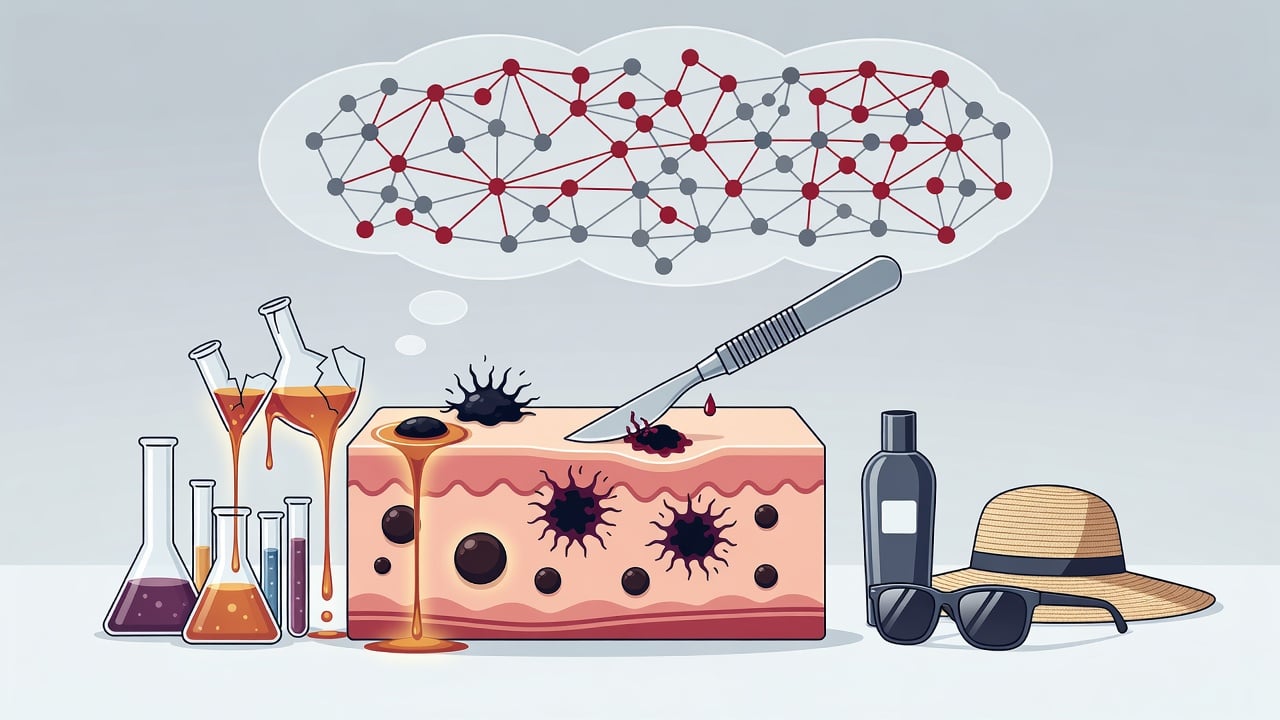
A dermatological surgeon at one of the world’s leading cancer centers has drawn a direct line between a popular gray-market peptide and the cancerous moles he now removes from patients. Melanotan II, often called the Barbie drug on social media, promises a deep tan without sun exposure. Users inject it or spray it into their noses. The results appear quickly. So do the problems.
Dr. Anthony Rossi, a dermatological surgeon at Memorial Sloan Kettering Cancer Center, told Axios he has seen moles change dramatically in patients who used the peptide. “People who inject melanotan, their moles start to change,” he said. He has removed cancerous moles from at least one user. “I don’t really see a medical benefit of it at all.” (Futurism, July 4, 2026)
Short. Direct. And increasingly common in clinics worldwide.
Melanotan II is a synthetic version of a hormone that stimulates melanocytes, the cells responsible for pigment. It ramps up melanin production far beyond what the body does naturally. Early research decades ago explored it as a possible shield against UV damage and skin cancer. Reality has not matched the hope. Instead of protection, the compound appears to fuel erratic pigment cell behavior. Moles darken, multiply, and turn atypical. Some transform fast enough to raise melanoma fears.
In Australia, dermatologists report a surge in young patients showing up with clusters of abnormal moles after using the peptide. Dr. Lisa Byrom described one teenage boy who developed nearly 40 moles on his back. She examined them and felt tears come. “I did tear up. I just thought, ‘what has this young person done?’” The moles looked atypical and worrying. Although biopsies came back negative for melanoma, she warned the teen now faces heightened risk for the rest of his life. “They are now at an increased risk of melanoma … for the rest of their lives.” (ABC News, June 5, 2026)
Dr. Leona Yip, another Australian dermatologist, put it bluntly. “It’s not just a wellness or cosmetic product that you use and it’s banal and it’s harmless … it’s not.” She listed additional reported effects: nausea, vomiting, headaches, kidney failure, even brain swelling. Dr. Katherine Armour noted the peptide’s comeback ties to broader peptide stacking trends fueled by social media. “The misinformation problem is getting bigger and bigger.”
But. The data remains patchy. No large, long-term controlled studies exist. Regulators never approved Melanotan II for human use. The U.S. Food and Drug Administration has not cleared it. Australia’s Therapeutic Goods Administration calls it unapproved and warns of significant risks. The UK and several other countries ban its sale. Yet online vendors ship it anyway. Users mix their own solutions or buy pre-filled syringes from unregulated labs. Contamination, incorrect dosing, and infection risks compound the biological hazards.
Case reports paint a consistent picture across years and continents.
A 2012 report described a 16-year-old girl who used Melanotan II alongside UV tanning beds. She developed more than 50 new moles. One required removal. A 2014 case involved a 20-year-old who developed melanoma after injections. More recent literature, including a 2025 review cited by Healthline, points to possible malignant melanoma development. A 2026 case report documented oral mucosal changes after 64 days of use. (Healthline)
Westlake Dermatology, in an April 2026 analysis, cataloged the full range of concerns. Existing moles darken. New pigmented lesions appear. Mole changes happen rapidly and irregularly, which can mask early skin cancer signs. “A tan is the skin’s response to injury,” the practice noted. Even if users achieve the desired color, the risks outweigh any cosmetic gain. “Even if a tan is achieved, it does not justify the risks involved.” (Westlake Dermatology, April 15, 2026)
And the side effects extend beyond skin. Spontaneous erections, prolonged painful erections known as priapism, nausea, flushing, dizziness, fatigue. One case detailed a man suffering a 22-hour erection requiring emergency drainage of 700 milliliters of blood. His erectile function had not fully recovered a month later. WebMD warns that Melanotan may increase melanoma risk and advises against use for anyone with a history of skin cancer. (WebMD, October 2025)
Cancer Research UK states the products have not been tested for safety, quality, or effectiveness. Harmful unlisted chemicals could lurk inside. Australia’s TGA reported removing thousands of illegal online advertisements in early 2025. The pattern repeats globally. Vendors pivot to new platforms. TikTok videos and bodybuilding forums spread dosing instructions and before-and-after photos. Young men, not just women chasing a Barbie aesthetic, dominate user surveys. One 2025 interview study of 29 users found an average age of 39, with most introduced through gym culture.
Dermatologists see the disconnect. Patients often hide their peptide use. They distrust doctors’ knowledge or fear judgment. Yet those same doctors now report seeing the consequences in real time. Dr. Byrom shudders at what the next five to 10 years may bring. “I shudder to think what we’re going to be seeing on the skin of people who have used MT-II in the next five to 10 years.”
So what drives continued demand? The allure of a year-round tan without burns or time in the sun proves powerful. Some users claim it prevents sunburn, which they equate to cancer protection. Evidence suggests the opposite. The peptide activates the same pigment pathways triggered by UV damage. It does not confer the DNA repair benefits of natural melanin response. A base tan, whether from sun or syringe, fails to shield against deeper harm.
Alternatives exist. Self-tanners containing dihydroxyacetone offer temporary color without UV or systemic effects. Professional spray tans provide even results lasting a week or more. Broad-spectrum sunscreen, protective clothing, and shade remain the evidence-based tools for skin health. Dermatologists emphasize that no safe tan from ultraviolet exposure exists. “There is no such thing as a safe UV tan.”
The peptide trend reflects larger forces. Social media amplifies unverified health hacks. Bodybuilding communities normalize experimental compounds. Regulatory gaps allow gray-market sales to flourish. Physicians call for coordinated action among health agencies, influencers, and platforms to counter the misinformation.
Until stronger data emerges, the medical consensus holds firm. The potential for accelerated mole changes, detection interference, and elevated melanoma risk makes Melanotan II a gamble not worth taking. One injection can darken skin. Multiple injections can darken a medical chart with concerning findings. The tan fades. The cellular changes may not.
Patients who have used it should disclose that history to their dermatologist. Regular skin checks become more important. And those considering it now have clearer warnings from specialists on the front lines. The moles don’t lie. Neither do the doctors removing them.


 WebProNews is an iEntry Publication