
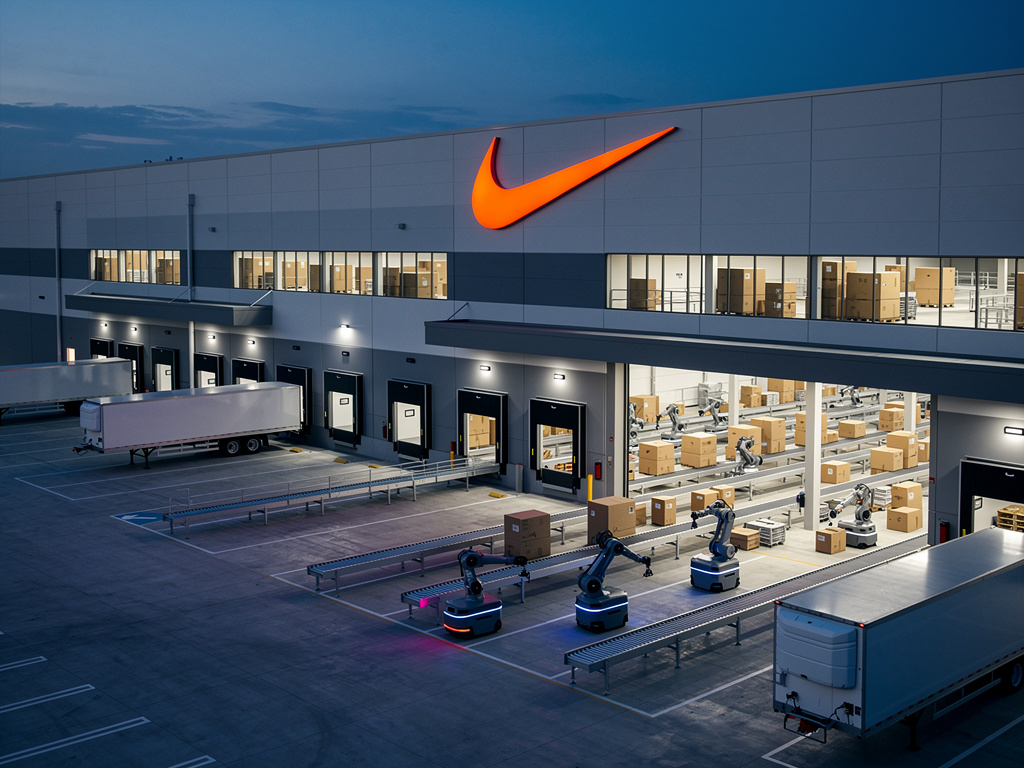
BEAVERTON, Ore. – In a move sending ripples through the logistics industry, Nike Inc. is shuttering a massive Memphis distribution center and eliminating 775 jobs, a stark signal of the company’s aggressive pivot toward an automated future. The closure of the Tom Liddell Distribution Center is not an isolated event but a calculated step in a sweeping, multi-billion-dollar overhaul designed to remake the athletic apparel giant’s operational backbone for a new era of digital commerce and intense competition.
The layoffs, scheduled to begin in April and conclude with the facility’s permanent closure in early 2026, represent one of the most significant operational workforce reductions in the company’s recent history. Nike framed the decision as a necessary part of a “multi-year supply chain digital transformation” aimed at creating a more efficient and responsive network. In a statement provided to Business Insider, the company said the goal is to build a “more premium, efficient, and digitally connected supply chain” that can better serve customers directly.
A Multi-Billion Dollar Bet on Digital and Automation
This strategic shift is anchored by a formidable cost-saving initiative announced late last year. Nike is targeting $2 billion in cumulative cost reductions over the next three years, a plan that has already seen the company trim its corporate ranks. In February, the sneaker titan confirmed it was cutting about 2% of its global workforce, amounting to more than 1,600 positions, as reported by Reuters. The Memphis closure demonstrates that the quest for efficiency now extends deep into its physical logistics footprint.
The core of the strategy is to accelerate investments in automation and technology to streamline everything from inventory management to order fulfillment. During the company’s third-quarter earnings call, executives emphasized a focus on simplifying the business. “We are in the process of building a multiyear pipeline of gross margin improvement, fueled by a healthier marketplace and a supply chain and product engine that will be faster and more efficient,” Nike Chief Financial Officer Matthew Friend told analysts, according to a transcript from The Motley Fool. This pursuit of speed and efficiency is now being paid for, in part, by human capital.
The Human Cost of a Streamlined Supply Chain
For the city of Memphis, the closure marks the end of an era for a key local employer. The Tom Liddell facility, a sprawling 1.1 million-square-foot plant, has been a fixture of the North Memphis industrial area for years. The phased layoffs, detailed in a Worker Adjustment and Retraining Notification (WARN) Act notice filed with the state of Tennessee, will create a significant economic hole in the community. The decision to close the plant, which primarily handles footwear and apparel, underscores a broader consolidation of Nike’s distribution network into newer, more technologically advanced hubs.
While Nike has offered affected employees the option to apply for positions at its other Memphis-area facilities, the sheer scale of the cuts makes a soft landing for all 775 workers unlikely. The move is a tangible example of the labor displacement that often accompanies large-scale automation drives. According to the Memphis Commercial Appeal, the closure is part of a plan to integrate operations into its digitally-focused North America Logistics Campus elsewhere in the city, a facility better equipped for the company’s high-tech ambitions.
From ‘Just Do It’ to ‘Direct to You’
The operational overhaul is inextricably linked to Nike’s long-term commercial strategy: the “Consumer Direct Acceleration” initiative. For years, Nike has been methodically shifting its business away from a reliance on wholesale partners like Foot Locker and Dick’s Sporting Goods toward a direct-to-consumer (DTC) model. Selling directly through its own website, apps, and flagship stores offers higher profit margins and, crucially, direct control over brand experience and customer data.
However, a successful DTC operation requires an exceptionally sophisticated and agile supply chain. Fulfilling millions of individual online orders is a far more complex logistical challenge than shipping pallets of sneakers to a handful of retail chains. This is where automation becomes not just a cost-saver but a competitive necessity. Robotics for picking and packing, AI-driven demand forecasting, and integrated inventory systems are the engines that make a global DTC business run, allowing Nike to promise faster shipping and more personalized service while managing costs.
Wall Street’s Cautious Applause
Investors and market analysts have been watching Nike’s transformation with a mix of optimism and apprehension. The company’s stock has faced headwinds amid concerns over slowing growth, particularly in Greater China, and intensifying competition from upstarts like Hoka and On Running, which have captured the attention of a new generation of consumers. In this environment, Wall Street has largely viewed the $2 billion cost-cutting plan as a necessary, if painful, dose of financial discipline.
The challenge for Nike is to execute this complex transition without disrupting its current business or ceding further ground to rivals. The savings from automation and layoffs must be strategically reinvested into product innovation and marketing to reignite top-line growth. The market’s reaction suggests that while the cost-cutting measures are welcome, the ultimate verdict will depend on whether this leaner, more automated Nike can also be a more innovative and faster-growing one. The path forward involves navigating immense operational risk while simultaneously fighting a fierce battle for market share.
The Blueprint for the Future Warehouse
The Memphis closure offers a glimpse into the future of logistics, not just for Nike but for the entire retail sector. The modern distribution center is rapidly evolving from a place of manual labor to a high-tech hub of robotics and data science. As detailed by industry publication Supply Chain Dive, Nike’s investments are part of an industry-wide race to automate that was supercharged by the e-commerce boom. The goal is to build a supply chain that is not just efficient, but also predictive and resilient.
This involves deploying autonomous mobile robots (AMRs) to ferry goods across the warehouse floor, using AI to optimize inventory placement, and leveraging advanced analytics to anticipate consumer demand before it even materializes. By centralizing its most advanced technology in newer facilities, Nike is creating a template for its global logistics network. The Tom Liddell center, an older facility, ultimately became a casualty of a future it was not built to accommodate, a narrative playing out across legacy industries worldwide.
As Nike continues its sweeping transformation, the moves in Memphis will be seen as a critical test case. The company is betting that the short-term pain of job cuts and facility closures will yield long-term gains in profitability, speed, and competitive advantage. For the 775 workers in Tennessee, and for the broader labor market, it is a potent reminder that the relentless march of automation waits for no one. The race is on, not just to sell more sneakers, but to build the machine that sells them faster and cheaper than anyone else.
The coming years will reveal whether Nike’s high-stakes gambit pays off. The company must prove it can not only streamline its operations but also recapture the innovative spark that has long defined its brand. For competitors, investors, and workers alike, the message from Beaverton is clear: the future of the Swoosh is being built now, and it will be powered as much by silicon and robotics as by celebrity endorsements and iconic design.


 WebProNews is an iEntry Publication