
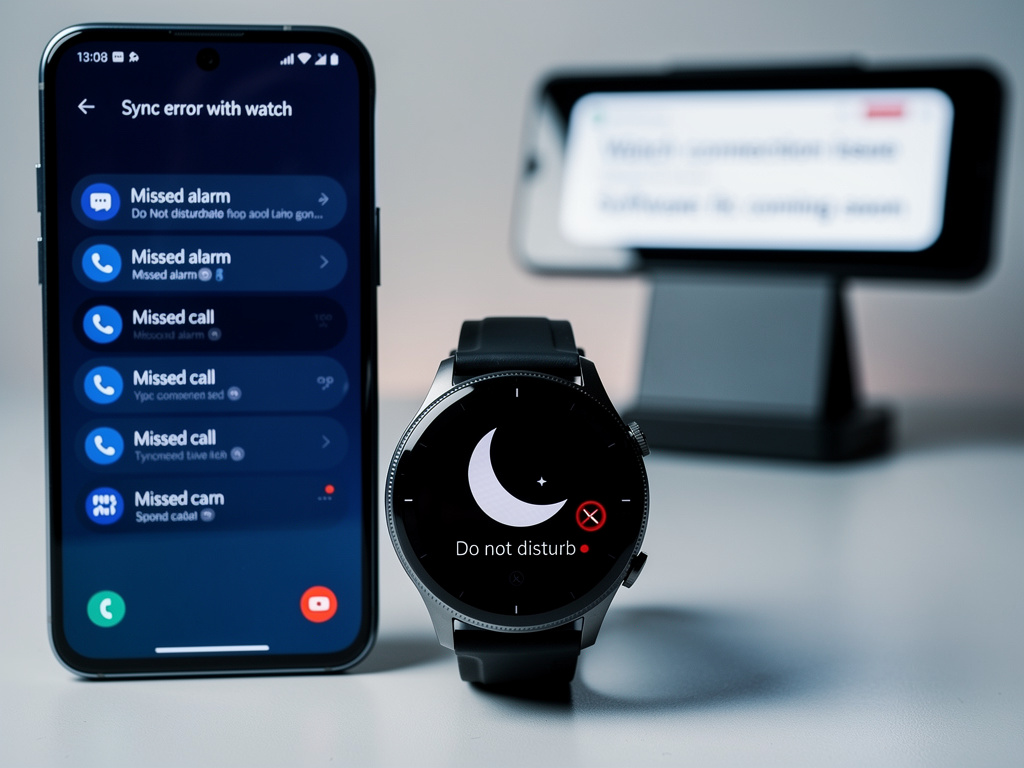
For many, the modern smartwatch is a digital tether—a silent partner that ensures a crucial work notification or a morning alarm is never missed. But for a growing number of Samsung Galaxy Watch owners, that tether has frayed. A persistent software glitch is causing the “Do Not Disturb” mode to fall out of sync between their watches and smartphones, leading to a cascade of missed alerts and mounting frustration, particularly for users outside of Samsung’s own hardware ecosystem.
The issue manifests in a deceptively simple, yet maddening, way. When a user’s Android phone, such as a Google Pixel, enters a scheduled “Bedtime Mode,” the connected Galaxy Watch correctly mirrors this and silences notifications. The problem arises when the schedule ends. While the phone wakes up, the watch often remains stuck in its silent state, its owner oblivious to the calls, messages, and alarms piling up. This desynchronization effectively turns a high-tech communicator into a simple timepiece, undermining its core purpose and leaving users feeling disconnected when they expect to be most dialed-in.
A Widening Chasm in the Android Ecosystem
The bug appears to disproportionately affect owners of the Galaxy Watch 4, 5, and 6 series who have paired their devices with non-Samsung smartphones. Online forums on Reddit and Samsung’s own community pages are replete with accounts from users detailing missed work alarms and important family calls. This points to a deeper challenge in the Android wearable space: fragmentation. While Samsung’s adoption of Google’s Wear OS was heralded as a move that would unify the platform and create a formidable competitor to the Apple Watch, glitches like this highlight the persistent seams between hardware and software from different manufacturers.
The experience stands in contrast to the more tightly integrated ecosystems of Apple, or even Google’s own Pixel Watch and Pixel phone pairing, where such fundamental features tend to operate seamlessly. For Samsung, which stands as the largest and most critical hardware partner for Wear OS, the inability to ensure a consistent experience across all Android phones threatens to tarnish the reputation of both its hardware and the underlying platform. The promise of Wear OS is a cohesive experience, regardless of the phone in one’s pocket, but this bug suggests that promise has yet to be fully realized.
Samsung Acknowledges the Silence
After weeks of user complaints gaining traction, the South Korean technology giant has officially acknowledged the problem. In a statement provided to Android Central, the company confirmed it is “aware of the isolated cases of the Do Not Disturb feature not syncing between the Galaxy Watch and a smartphone.” More importantly for beleaguered users, Samsung stated that its developers are “working to release a new software update to resolve this matter as soon as possible.”
This official confirmation is a crucial step, moving the issue from the realm of anecdotal user complaints to a recognized software defect with a dedicated fix in the pipeline. While no firm timeline was provided for the update’s release, the acknowledgment itself provides a measure of relief for customers who felt their concerns were going unheard. The focus now shifts to the nature and speed of the forthcoming patch, which will be a critical test of Samsung’s commitment to supporting the broader Android user base that has invested in its popular wearables.
Tracing the Ghost in the Machine
While Samsung has not detailed the technical cause of the glitch, industry observers speculate it lies within the complex software handshake between the Galaxy Wearable companion app, Samsung’s One UI Watch overlay, and the core Wear OS platform. The “Do Not Disturb” sync is a feature that requires constant and reliable communication between the watch and the phone. Any interruption or misinterpretation in that data stream could cause the watch to miss the “wake up” signal from the phone, leaving it in a silent state.
Reports suggest the problem has become more pronounced in recent months, leading to speculation that a recent app or firmware update may have inadvertently exacerbated an underlying issue. As noted by a report from 9to5Google, while sync issues have occasionally been reported in the past, the current wave of widespread complaints points to a more systemic failure. This software-level complexity is a hallmark of the open Android model, offering choice and variety at the potential cost of the flawless integration found in more closed ecosystems.
The High Stakes of Software Polish
In the fiercely competitive wearables market, reliability is paramount. A smartwatch is an intimate device, trusted with personal health data, private communications, and critical time-sensitive alerts. Software bugs that erode this trust can have an outsized impact on a brand’s reputation. For every user who posts about the problem on a forum, there are likely many more who silently grow frustrated, potentially influencing their decision when it comes time to upgrade their watch, or even their phone.
This incident serves as a stark reminder that hardware is only half the battle. As Samsung and Google continue their partnership to challenge Apple’s dominance in the market, the quality and consistency of the software experience will be the ultimate arbiter of success. A powerful processor or a vibrant display means little if the user misses a job interview reminder because of a simple sync failure. The forthcoming fix for this “Do Not Disturb” issue is more than just a routine bug patch; it is a referendum on Samsung’s ability to be a reliable steward of the Wear OS experience for all Android users.


 WebProNews is an iEntry Publication