
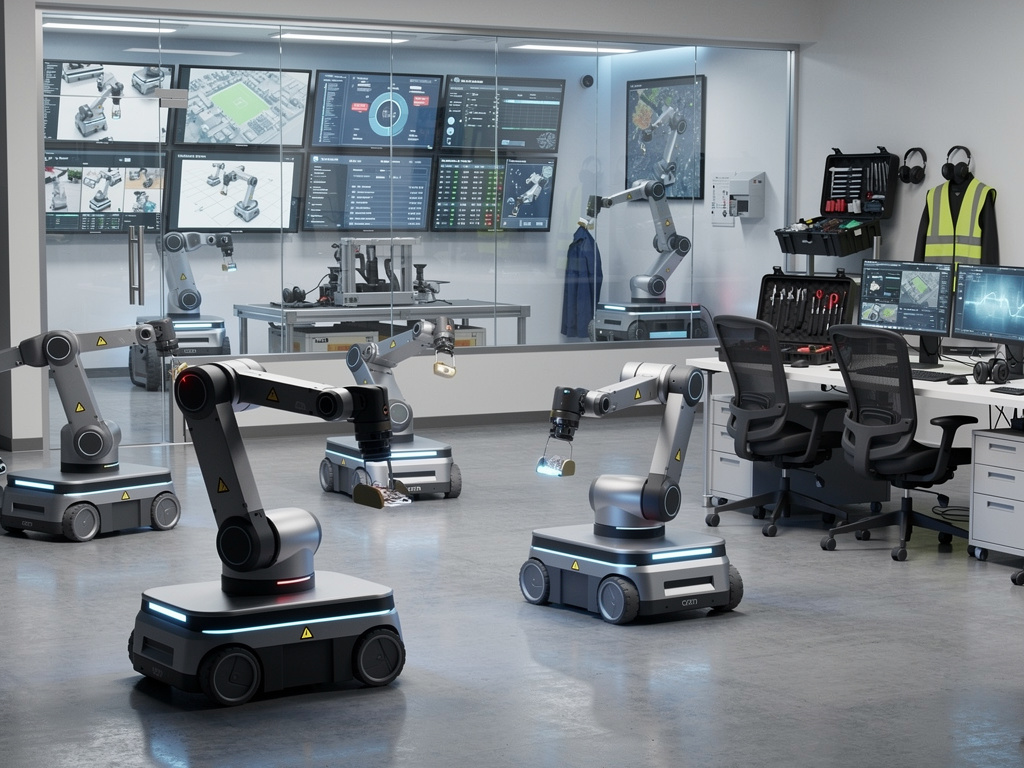
As factories, warehouses, and logistics centers race to deploy robots at unprecedented scale, a paradox has emerged: the more machines companies install, the more they need a specific kind of human worker to keep them running. The job title varies — robot wrangler, robot technician, automation babysitter — but the role is becoming indispensable. These are the people who monitor, troubleshoot, and intervene when robots inevitably stumble, and their growing importance tells us something profound about the real limits of automation.
According to a report by Futurism, the concept of the robot wrangler has moved from a niche curiosity to a mainstream workforce category. Companies deploying fleets of autonomous machines — from Amazon’s warehouse robots to self-driving delivery vehicles — are discovering that robots require constant human oversight. The machines break down, get confused by unexpected situations, and need someone on hand who understands both the hardware and the software well enough to get them back on track quickly.
When Robots Need a Human Hand
The term “robot wrangler” may sound whimsical, but the job is anything but. In Amazon’s fulfillment centers, for instance, workers known as “amnesty” technicians are tasked with rescuing robots that have gotten stuck, dropped items, or collided with one another. These technicians work alongside hundreds of autonomous mobile robots that shuttle shelving units across warehouse floors. When one goes haywire — and they do, regularly — a human must step in to clear the jam, reset the machine, or physically move it out of the way so the rest of the fleet can continue operating.
The same dynamic plays out in the autonomous vehicle industry. Companies like Waymo and Cruise have employed remote operators who can take control of self-driving cars when they encounter situations their software cannot handle — a construction zone with confusing signage, an unusual pedestrian scenario, or simply a software glitch. These remote operators are, in essence, robot wranglers for vehicles that weigh two tons and travel at highway speeds. The stakes could not be higher, and the need for skilled human oversight has not diminished as the technology has matured. If anything, it has grown as these vehicles encounter more edge cases on public roads.
A Workforce Category That Defies the Automation Narrative
For years, the dominant narrative around industrial automation has been one of displacement: robots replace human workers, costs go down, and efficiency goes up. But the emergence of the robot wrangler complicates that story considerably. Rather than eliminating human labor, the deployment of robots often transforms it. Workers who once performed repetitive manual tasks are now being retrained — or replaced by new hires — to perform the more complex work of managing robotic systems.
This shift has significant implications for the labor market. The skills required to be an effective robot wrangler are not trivial. These workers need mechanical aptitude, basic programming knowledge, an understanding of sensor systems, and the ability to diagnose problems quickly under pressure. They occupy a middle ground between traditional blue-collar manufacturing work and white-collar engineering — a category that labor economists have struggled to define but that employers are increasingly desperate to fill.
The Economics of Keeping Robots Running
From a business perspective, the robot wrangler represents a cost that many companies did not fully anticipate when they began their automation investments. Robots are expensive to purchase and install, but they are also expensive to maintain and supervise. Downtime is the enemy of any automated operation: a single malfunctioning robot on a warehouse floor can create a bottleneck that slows down an entire facility. The wrangler’s job is to minimize that downtime, making them a critical link in the chain of productivity.
Amazon, which operates more than 750,000 robots across its global operations, has invested heavily in training programs for these roles. The company’s “Mechatronics and Robotics Apprenticeship” program, launched in recent years, is designed to produce workers who can maintain and troubleshoot the company’s growing fleet of machines. Other major employers, including Tesla, FedEx, and various automotive manufacturers, have developed similar programs. The message is clear: robots are not replacing the need for skilled workers; they are creating new categories of skilled work.
The Psychological Dimension of Human-Robot Collaboration
Beyond the technical skills, there is a psychological component to the robot wrangler’s job that is often overlooked. Working alongside autonomous machines requires a different mindset than working alongside other humans. Robots do not communicate frustration, fatigue, or confusion in ways that humans intuitively understand. A wrangler must learn to read the subtle signs of a machine in distress — an unusual sound, an unexpected movement pattern, a blinking error light — and respond appropriately.
Research from MIT’s Computer Science and Artificial Intelligence Laboratory has explored the dynamics of human-robot teaming, finding that effective collaboration depends heavily on the human’s ability to build a mental model of what the robot is “thinking.” Workers who develop this skill become dramatically more effective at preventing and resolving problems. It is a form of expertise that takes time to develop and is not easily replaced, which gives experienced robot wranglers considerable job security and bargaining power in the labor market.
What Happens When the Wranglers Aren’t There
The consequences of insufficient human oversight of robotic systems have been demonstrated repeatedly. In 2023, a Cruise autonomous vehicle in San Francisco dragged a pedestrian who had been struck by another car, an incident that led to the company’s permits being suspended by California regulators. Investigations revealed gaps in the remote monitoring and intervention systems that were supposed to prevent exactly this kind of outcome. The incident underscored a hard truth: autonomous systems operating in complex, unpredictable environments need competent human backup, and the cost of skimping on that backup can be catastrophic.
In warehouse settings, the consequences are typically less dramatic but still significant. Facilities that understaff their robot maintenance and oversight teams experience higher rates of downtime, more product damage, and lower overall throughput. Some companies have learned this lesson the hard way, initially cutting human headcount aggressively after deploying robots only to find that productivity actually declined because there were not enough people to keep the machines running smoothly.
The Training Gap and the Opportunity Ahead
One of the most pressing challenges facing the robot wrangler workforce is training. Community colleges and technical schools have been slow to develop curricula that match the specific needs of this emerging role. Traditional mechanical and electrical programs provide a foundation, but the interdisciplinary nature of modern robotics — which blends mechanical engineering, computer science, sensor technology, and data analysis — means that existing programs often fall short.
Some companies have taken matters into their own hands. Amazon’s apprenticeship program is one example, but smaller robotics companies have also begun offering in-house training. Locus Robotics, which makes autonomous mobile robots for warehouses, provides extensive onboarding for the technicians at its client sites. The company has found that investing in human training directly correlates with the performance of its robotic systems — a finding that would surprise no one who has spent time on a warehouse floor watching a skilled wrangler coax a balky robot back to life.
The Future Belongs to Those Who Can Work With Machines
The robot wrangler phenomenon points to a broader truth about the future of work: the most valuable workers will not be those who compete with machines, but those who complement them. As artificial intelligence and robotics become more capable, the nature of human work will continue to shift toward supervision, exception handling, and the kind of creative problem-solving that machines still cannot match.
For workers willing to acquire the right skills, this represents a significant opportunity. Robot wrangler positions typically pay well above the median for comparable roles, reflecting the scarcity of qualified candidates and the critical nature of the work. As reported by Futurism, the demand for these roles is expected to grow substantially as more industries adopt robotic systems and discover what Amazon, Waymo, and others have already learned: that the robot revolution is not about replacing humans with machines. It is about finding the right humans to work alongside them. The companies that figure this out fastest will have a decisive competitive advantage. Those that don’t will find their expensive robots sitting idle, waiting for a wrangler who isn’t there.


 WebProNews is an iEntry Publication