
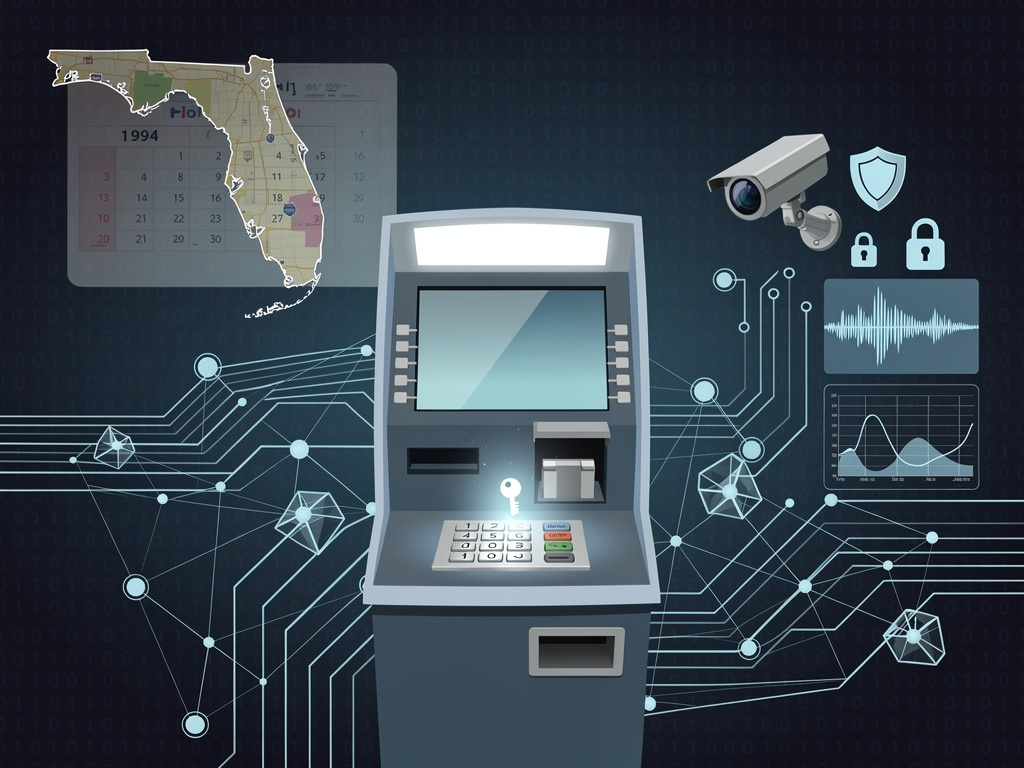
For more than three decades, a deceptively simple idea has circulated through legislative chambers, internet forums, and the collective imagination of ATM users everywhere: What if you could enter your PIN number backwards during a robbery, secretly summoning police while the machine dispensed cash as if nothing were wrong? The concept, long dismissed by the banking industry as technically impractical and potentially dangerous, is now finding new life thanks to advances in artificial intelligence — a development that could finally bridge the gap between a compelling public safety idea and the engineering realities that have kept it on the shelf.
The renewed conversation arrives at a moment when ATM-related crimes remain a persistent concern for law enforcement agencies and financial institutions alike. And it is being driven not by banks or regulators, but by technologists who believe AI can solve the very problems that made the reverse-PIN concept unworkable in the first place.
A Tragedy That Launched a Movement — and a Myth
The origins of the reverse-PIN idea trace back to 1994 and a horrific crime at the Town Center Mall in Boca Raton, Florida. As reported by CBS 12, two women were abducted from the mall parking lot, forced to withdraw money from ATMs, and subsequently murdered. The brutal crime galvanized a Chicago businessman named Joseph Zingher, who in 1998 filed a patent for what he called the “SafetyPIN” system — a mechanism that would allow ATM users to enter their personal identification number in reverse to trigger a silent alarm to law enforcement while still completing the transaction to avoid escalating the situation with the criminal.
The idea was elegant in its simplicity. If your PIN is 1234, entering 4321 during a coerced withdrawal would alert authorities to your location without tipping off the robber. Zingher’s patent was granted, and the concept quickly captured public attention. Chain emails and social media posts spread the idea virally, with many people believing the feature already existed on their bank cards. It did not.
Why Banks Said No: The Technical and Practical Barriers
Despite its intuitive appeal, the reverse-PIN system faced a wall of opposition from the banking industry and ATM network operators. According to CBS 12’s reporting, the objections were numerous and substantive. First, there was the palindrome problem: PINs that read the same forwards and backwards — such as 1221 or 7337 — would be inherently incompatible with the system. For customers with such PINs, the feature would simply not work, creating an uneven layer of protection that regulators found troubling.
Second, industry critics argued that the stress of being robbed at gunpoint would make it exceedingly difficult for victims to think clearly enough to reverse their PIN on the spot. A fumbled attempt could result in a failed transaction, potentially enraging an already volatile criminal. Third, the infrastructure costs of retrofitting hundreds of thousands of ATMs across the country, reprogramming banking software, and coordinating with law enforcement dispatch systems were deemed prohibitive. The banking lobby successfully fought off legislative efforts in multiple states that attempted to mandate the technology, and the idea largely faded from serious policy discussion.
Artificial Intelligence Changes the Calculus
What has changed in recent years is the maturation of artificial intelligence and machine learning technologies that could address many of the original objections without requiring the reverse-PIN mechanism at all. Modern AI systems are capable of analyzing behavioral biometrics — the way a person types, the pressure they apply to a touchscreen, their cadence of interaction with a machine — to detect signs of duress in real time.
As CBS 12 reported, AI-powered camera systems integrated into ATMs could potentially detect the presence of a second person standing unusually close to the user, identify weapons, or recognize facial expressions and body language consistent with fear or coercion. These systems would not require the user to remember anything or take any deliberate action during the most terrifying moments of their life — a critical improvement over the original reverse-PIN concept.
Beyond the PIN Pad: Computer Vision and Behavioral Analytics
The AI approach to ATM safety extends well beyond simply replacing a reversed PIN with an algorithm. Computer vision systems, already deployed in retail environments for loss prevention, can be trained to recognize specific threat scenarios. An individual wearing a mask and standing within inches of an ATM user at 2 a.m. presents a very different risk profile than a mother holding a child in line at a bank vestibule on a Saturday afternoon. Modern neural networks can parse these contextual differences with remarkable accuracy.
Behavioral analytics add another layer. Financial institutions already use AI to flag unusual transaction patterns — a sudden withdrawal of the maximum amount from an ATM in a neighborhood the cardholder has never visited, for example, or a rapid series of withdrawals from multiple machines in quick succession. When combined with visual and biometric data from the ATM itself, these transaction-level signals could create a comprehensive threat-detection system that operates silently and automatically.
Legislative Interest Is Stirring Again
The AI angle has rekindled interest among lawmakers who remember the reverse-PIN debates of the early 2000s. Several states previously considered legislation mandating the SafetyPIN system, and while those bills uniformly failed, the underlying public appetite for ATM safety measures never disappeared. Consumer advocacy groups have long argued that banks have a moral obligation to protect customers who are, by design, handling cash in public and often isolated locations.
The political dynamics may be more favorable now than they were two decades ago. Public awareness of AI capabilities has grown enormously, and the technology industry’s willingness to partner with financial institutions on safety initiatives has expanded. Moreover, the cost equation has shifted: cloud-based AI processing means that much of the analytical heavy lifting can occur on remote servers rather than requiring expensive hardware upgrades to individual ATM units. Camera systems capable of supporting AI analysis are already standard in many newer ATM models.
The Privacy Tightrope: Surveillance Concerns Loom Large
Not everyone is enthusiastic about the prospect of AI-powered surveillance at every ATM. Civil liberties organizations have raised concerns about the collection and storage of biometric data, facial recognition technology’s documented biases across racial and demographic groups, and the potential for mission creep — where systems designed to detect robberies are eventually repurposed for broader law enforcement surveillance or commercial data harvesting.
These concerns are not trivial. The deployment of facial recognition technology by law enforcement has already prompted bans or moratoriums in several major American cities, and any ATM safety system that relies on similar technology would likely face intense scrutiny from privacy advocates and regulators. Financial institutions considering such systems will need to navigate a complex web of state and federal privacy laws, including the Illinois Biometric Information Privacy Act and similar statutes that impose strict requirements on the collection and use of biometric identifiers.
The Human Element Remains Central
For all the technological promise, experts caution that no AI system can replace the fundamental elements of ATM safety: well-lit locations, visible security cameras that deter criminals before they act, and public awareness of basic precautions. The FBI and local law enforcement agencies continue to advise ATM users to be aware of their surroundings, avoid using machines in isolated areas at night, and to comply with robbers’ demands rather than risk physical harm.
Joseph Zingher’s original SafetyPIN patent has long since expired, but the problem he sought to address remains stubbornly persistent. ATM robberies, while not among the most common violent crimes, are uniquely terrifying because they exploit a routine financial transaction and turn it into a moment of extreme vulnerability. The victims of the 1994 Boca Raton murders — and countless others who have been robbed, assaulted, or killed at ATMs in the years since — represent the human cost of a problem that technology has yet to fully solve.
What artificial intelligence offers is not a silver bullet, but a sophisticated set of tools that could make the silent-alarm concept viable in ways that a simple reversed PIN never could. Whether the banking industry, regulators, and the public can align on an approach that balances safety, privacy, and cost remains the central question. But for the first time in decades, the conversation has moved beyond a clever idea that couldn’t work — and toward a technological framework that just might.


 WebProNews is an iEntry Publication