
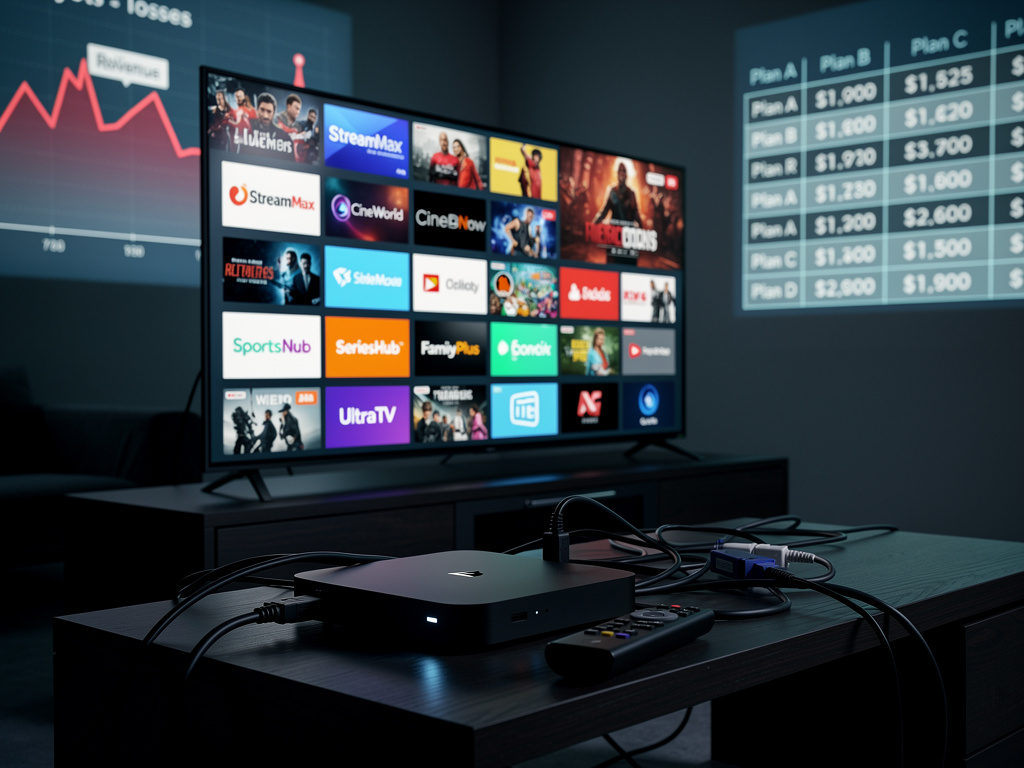
The streaming revolution promised consumers a liberating alternative to expensive cable bundles, but a decade later, the industry has come full circle. As major platforms continue raising prices and fragmenting content across multiple services, a shadowy market of illicit streaming devices is experiencing a renaissance that recalls the early days of digital piracy. These “rogue streaming boxes,” once relegated to the fringes of consumer electronics, are now finding their way into mainstream households as frustrated subscribers seek relief from mounting entertainment bills.
According to Digital Trends, the resurgence of these devices directly correlates with the steady climb in streaming subscription costs. Netflix, which began its streaming service at $7.99 per month, now charges up to $22.99 for its premium tier. Disney+ has increased its ad-free plan to $13.99 monthly, while HBO Max, now rebranded as Max, commands $19.99 for its top-tier offering. When combined with other popular services like Hulu, Paramount+, and Peacock, American households can easily spend over $100 monthly on streaming subscriptions alone—rivaling or exceeding traditional cable bills.
The devices themselves represent a technological evolution from their predecessors. Modern rogue streaming boxes, often based on modified Android operating systems, provide access to copyrighted content through a combination of unlicensed IPTV services, torrent streaming applications, and aggregated links to pirated material hosted on remote servers. Unlike the Kodi boxes that dominated headlines five years ago, today’s devices feature more sophisticated interfaces, reliable streaming quality, and even customer support networks that mimic legitimate services.
The Economics of Entertainment Fatigue
The mathematics driving consumers toward these illicit alternatives is straightforward. A household subscribing to Netflix, Disney+, Max, Hulu, Amazon Prime Video, Apple TV+, and Paramount+ would pay approximately $90 monthly, or $1,080 annually. By contrast, rogue streaming devices typically cost between $100 and $300 upfront, with some requiring additional monthly fees ranging from $10 to $30 for IPTV services—still representing substantial savings over legitimate subscriptions.
Industry analysts have long warned that subscription fatigue would eventually push consumers toward alternative solutions. The phenomenon has intensified as studios have pulled content from third-party platforms to populate their own streaming services. Warner Bros. Discovery’s decision to remove numerous titles from HBO Max, Disney’s content rotation strategies, and the general fragmentation of once-centralized libraries have created a frustrating experience where subscribers must maintain multiple services to access desired content.
Legal Battles and Enforcement Challenges
The entertainment industry has not remained passive in the face of this growing threat. Major studios and streaming platforms have intensified legal action against manufacturers and distributors of these devices. In recent years, courts have handed down significant judgments against sellers of pre-loaded streaming boxes, with some defendants facing six-figure penalties and criminal charges for copyright infringement and facilitating piracy.
However, enforcement remains a game of whack-a-mole. As authorities shut down one operation, others emerge to fill the void, often operating through overseas servers and cryptocurrency payment systems that complicate prosecution efforts. The devices themselves exist in a legal gray area; the hardware is typically legitimate, and even the software may be legal in its base form. The illegality arises from the pre-installed applications and configured services that provide access to copyrighted material without authorization.
Law enforcement agencies have struggled to keep pace with the distributed nature of modern piracy operations. Unlike the centralized file-sharing networks of the Napster era, today’s piracy ecosystem consists of countless small operators, decentralized hosting services, and peer-to-peer technologies that make comprehensive enforcement nearly impossible. Additionally, many of these services operate from jurisdictions with weak intellectual property protections, further complicating legal remedies.
The Streaming Industry’s Self-Inflicted Wound
Industry insiders acknowledge that streaming platforms have contributed to their own piracy problems through aggressive pricing strategies and poor content management. The initial promise of streaming was simplicity and value—a single, affordable service replacing expensive cable bundles. As each major media company has launched its own platform, that promise has evaporated, replaced by a fragmented ecosystem that requires multiple subscriptions to access popular content.
The situation has been exacerbated by the introduction of advertising tiers and the removal of password-sharing privileges. Netflix’s crackdown on account sharing, while financially motivated, alienated many subscribers who viewed the practice as an informal family plan. Similarly, the proliferation of ad-supported tiers, while offering lower-cost options, has degraded the user experience that initially attracted subscribers away from traditional television.
Content availability has become increasingly unpredictable as licensing agreements expire and studios prioritize their proprietary platforms. A movie or series available on one service today may disappear tomorrow, forcing subscribers to either purchase the content separately or subscribe to yet another platform. This instability has eroded the value proposition of legitimate streaming services and made the comprehensive, if illegal, libraries offered by rogue devices more appealing to frustrated consumers.
Technical Sophistication and User Experience
The current generation of illicit streaming devices has learned from past mistakes, offering user experiences that rival legitimate services. Modern interfaces feature sophisticated search functions, recommendation algorithms, and even integration with popular voice assistants. Some devices provide 4K streaming quality and support for advanced audio formats, matching or exceeding the technical capabilities of authorized platforms.
Behind the scenes, these devices employ increasingly sophisticated technologies to evade detection and ensure reliable service. Advanced versions utilize virtual private networks (VPNs) to mask user locations, distributed content delivery networks to prevent service disruptions, and even blockchain technologies for payment processing. The technical infrastructure supporting modern streaming piracy represents a significant investment and demonstrates the profitability of the underground market.
Consumer Rationalization and Moral Hazard
Interviews with users of rogue streaming devices reveal a common narrative of justification. Many consumers view their use of these products as a response to what they perceive as corporate greed and anti-consumer practices. They argue that they would gladly pay for legitimate services if pricing remained reasonable and content remained accessible through a single or limited number of subscriptions. The fragmentation of content and escalating costs, they contend, have forced them toward alternatives they would otherwise avoid.
This rationalization, while legally indefensible, reflects genuine frustration with the current streaming market structure. Consumer advocates have noted that the industry’s trajectory mirrors the conditions that spawned widespread music piracy in the early 2000s—high prices, inconvenient access, and a fragmented market. The music industry eventually addressed piracy through comprehensive, affordable services like Spotify and Apple Music, suggesting a potential path forward for video streaming.
The Path Forward for Legitimate Services
Some industry observers believe the streaming market is approaching an inflection point that will force consolidation and repricing. The current model, with each major studio operating its own streaming service, appears financially unsustainable for all but the largest players. Recent discussions of mergers and content licensing agreements suggest that executives recognize the need for change, though any restructuring will likely take years to materialize.
In the interim, streaming platforms are exploring alternative strategies to combat piracy and retain subscribers. These include bundling services at discounted rates, offering annual subscriptions with significant savings, and developing exclusive content that cannot be easily pirated. Some platforms are also investing in improved user experiences and features that add value beyond content access, such as enhanced social viewing options and interactive programming.
The effectiveness of these strategies remains uncertain. As long as legitimate streaming services collectively cost more than many households are willing to pay, and as long as content remains fragmented across multiple platforms, rogue streaming devices will maintain their appeal. The fundamental challenge facing the industry is whether it can restructure its business model to compete with piracy on price and convenience before losing another generation of consumers to illicit alternatives.
The resurgence of rogue streaming devices represents more than a simple return to an earlier era of digital piracy. It reflects a broader failure of the streaming industry to deliver on its original promise of affordable, convenient access to entertainment. Until platforms address the underlying issues driving consumers toward these illegal alternatives—excessive pricing, content fragmentation, and poor user experiences—the underground market for illicit streaming will continue to thrive, siphoning billions in potential revenue and undermining the sustainability of legitimate services. The question is no longer whether the industry will respond, but whether it will do so before the damage becomes irreversible.


 WebProNews is an iEntry Publication