
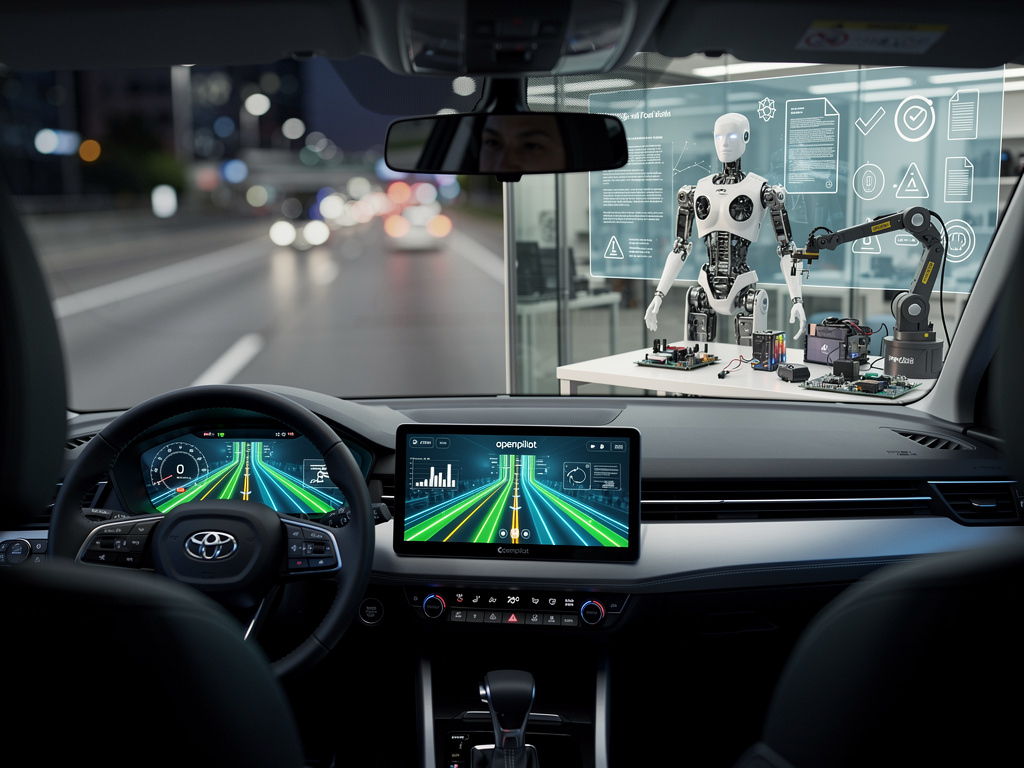
SAN DIEGO — In an industry defined by massive, multi-billion dollar research and development budgets and secretive, walled-off technology ecosystems, Comma.ai operates as a stark, and perhaps intentional, anomaly. Led by the mercurial George Hotz, the famed hacker who first unlocked the iPhone and later breached the PlayStation 3, the company is not just building a product; it’s fostering a movement. Its goal is to deliver something akin to Tesla’s Autopilot to the masses, not in a new electric vehicle, but in the Toyota Corolla or Honda Civic already sitting in your driveway, using a combination of sophisticated open-source software and off-the-shelf hardware that looks more like a high-end dashcam than a revolutionary control system.
The company’s core offering, an advanced driver-assistance system (ADAS) called openpilot, is a direct challenge to the automotive establishment’s incremental and expensive approach. While giants like GM’s Cruise and Alphabet’s Waymo pursue the capital-intensive goal of full Level 5 autonomy, Comma focuses on perfecting Level 2, which handles steering, acceleration, and braking under active driver supervision. This pragmatic approach has allowed it to ship thousands of its hardware kits, the latest being the Comma 3X, turning a growing fleet of ordinary cars into data-gathering nodes and creating a powerful, real-world development loop that legacy automakers struggle to replicate with their test fleets.
An Open-Source Gambit in a Closed-System World
At the heart of Comma’s strategy is the open-source nature of its openpilot software. The code is publicly available on GitHub, allowing a global community of developers and enthusiasts to contribute, scrutinize, and improve it. This transparency is a radical departure from the proprietary “black box” systems used by virtually every major automaker. For industry insiders, this presents a fascinating case study: can a decentralized, community-driven development model out-innovate and prove safer than the closed, top-down engineering culture that has defined automotive manufacturing for a century? The company argues that more eyes on the code lead to a more robust and rapidly improving system.
The business model is equally disruptive. Comma gives away the software for free and makes its money selling the hardware required to run it. The Comma 3X device, priced to be accessible to tech-savvy consumers, contains the cameras and processing power needed to interpret the road ahead. According to a report from TechCrunch, this focus on shipping an affordable product has been a priority since Mr. Hotz returned to the CEO role in May 2023 after a brief hiatus. This hardware-centric approach lowers the barrier to entry for consumers and creates a direct-to-consumer relationship that bypasses the dealership networks and long production cycles of traditional car manufacturers.
Navigating the Shadow of Regulation
Comma.ai’s journey has not been without significant turbulence, particularly with federal regulators. The company’s confrontational posture was established early on. In 2016, the National Highway Traffic Safety Administration (NHTSA) sent a special order to the company expressing concerns about the safety of its first-generation product, the Comma One. Rather than engage in a protracted regulatory battle, Mr. Hotz abruptly canceled the product, a move documented by The Verge, and pivoted to the open-source model that defines the company today. This strategy effectively placed the onus on the end-user, reframing openpilot as a piece of experimental research software.
This cat-and-mouse game with oversight bodies continues to define the company’s operational reality. While openpilot includes a robust driver monitoring system—using an internal camera to ensure the driver is paying attention—its very existence as a powerful, user-installed aftermarket system occupies a gray area that the established regulatory framework was not designed to handle. The company maintains that its system, which is based on a vast repository of real-world driving data, promotes safety. However, the potential for misuse remains a persistent concern for safety advocates and a potential flashpoint for future regulatory action as ADAS technology becomes more widespread.
The Hotz Factor: Visionary or Liability?
It is impossible to separate Comma.ai from the personality of its founder. George Hotz’s reputation as a brilliant, anti-establishment figure is both the company’s greatest marketing asset and a potential risk. His public statements and unfiltered presence on platforms like X (formerly Twitter) generate immense grassroots support and media attention, but his candid, often abrasive style has also created friction. After stepping down as CEO to explore a brief internship at Twitter, his return to the helm signaled a renewed focus on the company’s core mission. As Bloomberg noted upon his return, the emphasis shifted back to shipping products and growing the user base, a back-to-basics approach for the startup.
This leadership style informs the entire corporate culture, which prioritizes rapid iteration and engineering prowess over corporate bureaucracy. In a detailed interview on the Lex Fridman Podcast, Mr. Hotz articulated a vision of solving problems through elegant code and first-principles thinking, a philosophy that resonates with his developer-focused community. For investors and potential partners in the automotive sector, the central question is whether this agile, hacker-centric ethos can scale into a sustainable business that can withstand the immense pressures of the automotive supply chain and regulatory environment.
A Pivot Beyond the Automobile
While perfecting driving assistance remains the primary objective, Comma.ai has begun to signal ambitions that stretch far beyond the dashboard. In late 2023, the company quietly unveiled a new project: the Comma Body. This endeavor aims to build a general-purpose humanoid robot, leveraging the vast expertise in AI, machine learning, and computer vision that the company has developed for its automotive applications. The goal, as outlined on the company’s blog, is to create a useful robot for under $10,000, applying the same principles of open-source software and accessible hardware to the world of robotics.
This move is strategically significant. It suggests that Mr. Hotz and his team view Comma not merely as a car company, but as an AI and robotics company that started with cars as the most immediate and data-rich application. By tackling the challenge of humanoid robotics, Comma is entering a field populated by giants like Tesla, Boston Dynamics, and a host of other well-funded startups. It is a high-risk, high-reward bet on the convergence of AI technologies and a clear signal that the company’s long-term vision involves embedding its intelligence into a variety of physical forms, unlocking a far larger total addressable market than the automotive aftermarket alone.
An Uncharted Road Ahead
Comma.ai stands at a critical juncture. It has successfully cultivated a loyal community and proven that a small, agile team can produce a driver-assistance system that rivals, and in some metrics exceeds, those from automakers with decades of experience. The company’s vast collection of real-world driving miles is a formidable data asset, and its open-source model provides a unique and powerful engine for innovation. The path forward, however, is fraught with challenges that will test the limits of its unconventional approach.
The company must continue to navigate a complex and evolving regulatory environment, manage the perception of safety around its products, and scale its hardware production to meet growing demand. Furthermore, as incumbent automakers improve their own ADAS offerings and make them standard features, Comma will face increasing pressure to demonstrate a compelling and persistent value proposition. Its foray into robotics is an ambitious and potentially lucrative diversification, but it also risks distracting from the core automotive business. For industry observers, Comma.ai remains a captivating experiment: a test of whether Silicon Valley’s “move fast and break things” ethos can fundamentally rewrite the rules of the road.


 WebProNews is an iEntry Publication