
Cardiovascular disease kills more people worldwide than any other cause. Not cancer. Not accidents. Not infectious disease. Heart disease. And yet the most powerful intervention available to most Americans doesn’t come from a pharmacy or a surgical suite — it comes from a grocery store.
A growing body of nutritional research is converging on a deceptively simple premise: that strategic, targeted food substitutions — not wholesale dietary overhauls — may be among the most effective tools for reducing cardiovascular risk. The idea isn’t new. But the specificity of the guidance now emerging from leading nutrition scientists is.
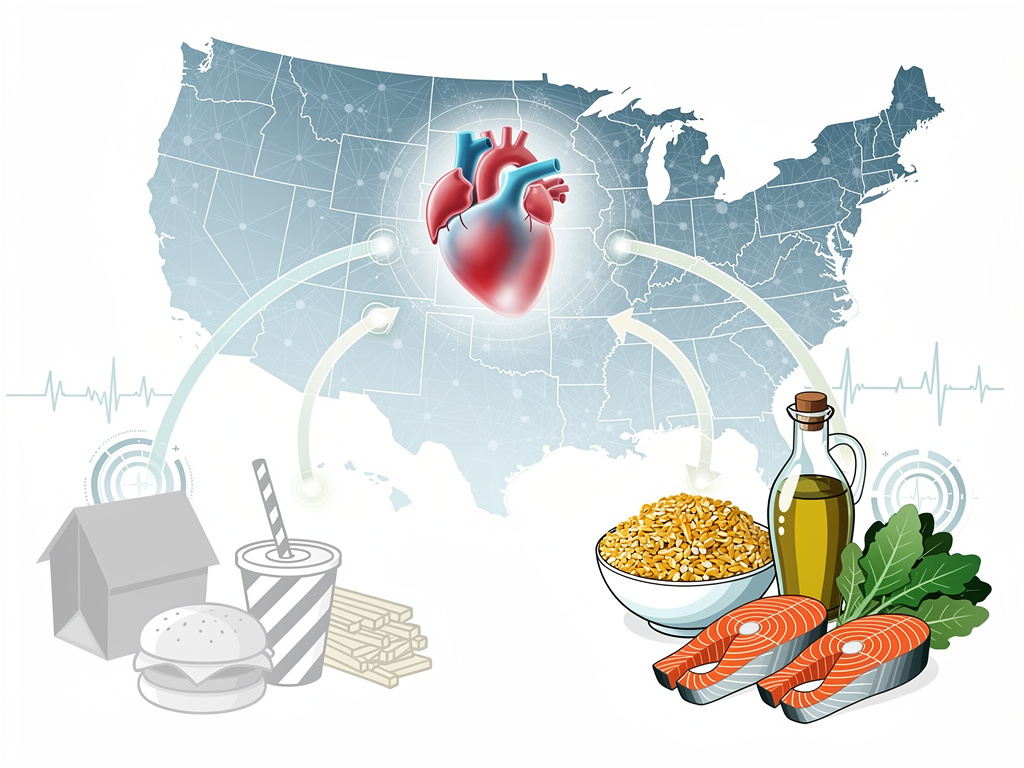
As Business Insider reported, a nutrition scientist recently shared a set of practical food swaps designed to make everyday meals more heart-healthy. The recommendations don’t involve exotic superfoods or expensive supplements. They’re grounded in decades of epidemiological data and clinical trials, distilled into choices most people can make at a regular supermarket. Swap refined grains for whole grains. Choose fatty fish over red meat. Reach for olive oil instead of butter. Replace sugary drinks with water or unsweetened alternatives. These aren’t radical ideas. But the evidence behind them has never been stronger.
The scientist’s approach reflects a broader shift in how nutrition researchers communicate with the public. Gone are the days of sweeping dietary commandments — eat this, never eat that. The modern framework is more granular and more forgiving. It acknowledges that people eat meals, not nutrients, and that the most effective dietary advice is the kind people will actually follow.
That matters enormously. Heart disease claimed roughly 702,880 lives in the United States in 2022, according to the Centers for Disease Control and Prevention. The American Heart Association has estimated that nearly half of all American adults have some form of cardiovascular disease. And while pharmaceutical interventions like statins have significantly reduced mortality rates over the past three decades, diet remains the single largest modifiable risk factor for heart disease globally, according to a landmark 2019 analysis published in The Lancet.
So why don’t more people eat better?
The answer is complicated. Cost is one factor. Time is another. But perhaps the biggest barrier is confusion. Americans have been subjected to decades of contradictory nutritional messaging — fat is bad, then fat is fine; eggs will kill you, then eggs are a perfect protein; carbs are essential, then carbs are the enemy. The result is a population that is simultaneously overwhelmed with dietary information and deeply uncertain about what to actually eat.
The food-swap model cuts through much of that noise. Rather than asking people to adopt an entirely new dietary identity — Mediterranean, DASH, plant-based, keto — it asks them to make one substitution at a time. This incremental approach aligns with behavioral science research showing that small, specific changes are far more likely to become permanent habits than dramatic lifestyle overhauls.
Consider the swap from refined grains to whole grains. A 2023 meta-analysis published in The BMJ found that higher intake of whole grains was associated with a 16% reduction in cardiovascular mortality. That’s a significant effect size for a single dietary change. And it doesn’t require anyone to give up bread or pasta — just to choose a different version of it.
Or take the substitution of olive oil for butter and other saturated fats. Research from the Harvard T.H. Chan School of Public Health, published in the Journal of the American College of Cardiology in 2020, found that replacing just 5 grams per day of butter, margarine, or mayonnaise with an equivalent amount of olive oil was associated with a 5% to 7% lower risk of cardiovascular disease. Five grams. That’s roughly a teaspoon.
The fatty fish recommendation is similarly well-supported. Omega-3 fatty acids — found abundantly in salmon, mackerel, sardines, and herring — have been shown to reduce triglycerides, lower blood pressure, and decrease the risk of arrhythmias. The American Heart Association recommends at least two servings of fish per week, particularly fatty fish. Yet the average American eats fish only about once a week, and much of that is fried.
What’s notable about the food-swap framework highlighted in the Business Insider piece is how well it maps onto the dietary patterns that have the strongest evidence base. The Mediterranean diet, the DASH diet, and the recently updated Dietary Guidelines for Americans all emphasize the same core principles: more fruits and vegetables, more whole grains, more healthy fats, less processed food, less added sugar, less sodium. The swaps are essentially a practical translation of these patterns into discrete, actionable decisions.
And the timing of this conversation is not incidental. The American Heart Association updated its dietary guidance in late 2021, placing renewed emphasis on whole foods and dietary patterns rather than individual nutrients. The organization explicitly recommended replacing highly processed foods with minimally processed alternatives — a stance that represented a notable evolution in its messaging. More recently, the 2025 Dietary Guidelines Advisory Committee has continued to reinforce the centrality of diet quality in cardiovascular prevention, with particular attention to ultra-processed food consumption.
Ultra-processed foods deserve special attention here. A growing body of research — including a massive 2024 umbrella review published in The BMJ that analyzed data from nearly 10 million participants — has linked high consumption of ultra-processed foods to increased risks of heart disease, stroke, type 2 diabetes, and premature death. These aren’t fringe findings. They’re emerging from some of the most rigorous epidemiological studies ever conducted.
The food-swap approach implicitly addresses this problem. When you replace a bag of chips with a handful of nuts, or swap a sugary cereal for oatmeal topped with berries, you’re not just changing the nutrient profile of your meal. You’re moving down the processing spectrum — from products engineered for maximum palatability and shelf life to foods that more closely resemble what they looked like when they were harvested.
Not everyone is convinced the swap model goes far enough. Some cardiologists and nutrition researchers argue that incremental changes, while better than nothing, can create a false sense of progress. Dr. Kim Williams, former president of the American College of Cardiology, has long advocated for more aggressive dietary interventions, including plant-based diets, arguing that the scale of the cardiovascular epidemic demands correspondingly bold responses.
There’s tension there. And it’s productive tension.
The pragmatists argue that perfect is the enemy of good — that getting millions of people to make small improvements will save more lives than getting a few thousand to adopt an optimal diet. The idealists counter that small improvements may simply slow the trajectory of disease without fundamentally altering it. Both sides can point to data supporting their position.
But here’s what isn’t in dispute: the current American diet is catastrophically misaligned with cardiovascular health. According to a 2019 study published in JAMA, poor diet was associated with more than 400,000 cardiovascular and metabolic deaths annually in the United States. Nearly half of those deaths were linked to just 10 dietary factors — led by excess sodium, insufficient nuts and seeds, high processed meat consumption, and low intake of omega-3 fatty acids.
The economic dimensions are staggering. The American Heart Association has projected that direct and indirect costs of cardiovascular disease in the United States will exceed $1 trillion annually by 2035. Medicare and Medicaid bear a disproportionate share of that burden. Any intervention that meaningfully reduces cardiovascular incidence — even modestly — has enormous fiscal implications.
And food swaps are cheap. Choosing brown rice over white rice costs pennies more per serving, if anything. Buying canned sardines instead of deli meat can actually save money. Replacing soda with water is practically free. The cost-effectiveness ratio of dietary improvement, compared to pharmaceutical or surgical interventions, is almost absurdly favorable.
This is why the food-swap conversation matters beyond the kitchen. It’s a public health strategy, a fiscal policy argument, and a behavioral science challenge all rolled into one. And it’s why nutrition scientists like the one featured in the Business Insider article are increasingly focused on translating complex nutritional science into language — and action steps — that ordinary people can actually use.
The food industry, predictably, has responded with a mix of genuine innovation and cynical marketing. Whole grain labels now adorn products that contain only token amounts of whole grain flour. “Heart-healthy” claims appear on packaging for foods loaded with sodium or added sugar. The FDA’s proposed updates to the definition of “healthy” on food labels — first announced in 2022 and still working through the regulatory process — represent an attempt to close some of these gaps. But enforcement remains uneven, and consumer confusion persists.
There’s also the question of access. Food swaps are only useful if the healthier options are available. In the roughly 19 million Americans living in food deserts — areas with limited access to affordable, nutritious food — the advice to swap salmon for sausage rings hollow. Addressing cardiovascular disease through dietary change requires confronting the structural inequities in the American food system, from agricultural subsidies that favor commodity crops over fruits and vegetables to the concentration of fast-food outlets in low-income neighborhoods.
None of this diminishes the value of the swap-based approach. It simply contextualizes it. For the millions of Americans who do have access to a reasonably stocked grocery store, the evidence is clear: small, consistent changes in food choices can meaningfully reduce cardiovascular risk. Not eliminate it. Reduce it. And in a disease that kills nearly 700,000 Americans every year, reduction matters.
The science will continue to evolve. Ongoing trials are examining the effects of specific dietary patterns on cardiovascular biomarkers with greater precision than ever before. The NIH’s Precision Nutrition initiative, launched in 2022, aims to understand how individual genetic, metabolic, and microbiome differences affect dietary responses — potentially enabling personalized food-swap recommendations in the future.
But we don’t need to wait for personalized nutrition to act on what we already know. The evidence supporting whole grains over refined grains, fish over processed meat, olive oil over butter, and water over soda is not preliminary or contested. It’s been replicated across populations, geographies, and study designs for decades.
Sometimes the most powerful medical intervention is the simplest one. A different oil in the pan. A different grain in the bowl. A glass of water instead of a can of something sweet. These aren’t glamorous interventions. They don’t make headlines the way a new drug or a novel surgical technique does. But accumulated over years, across millions of meals, they bend the curve of cardiovascular mortality in ways that few pharmaceutical breakthroughs can match.
The heart, it turns out, keeps careful score of what you feed it. And the arithmetic isn’t complicated.


 WebProNews is an iEntry Publication