
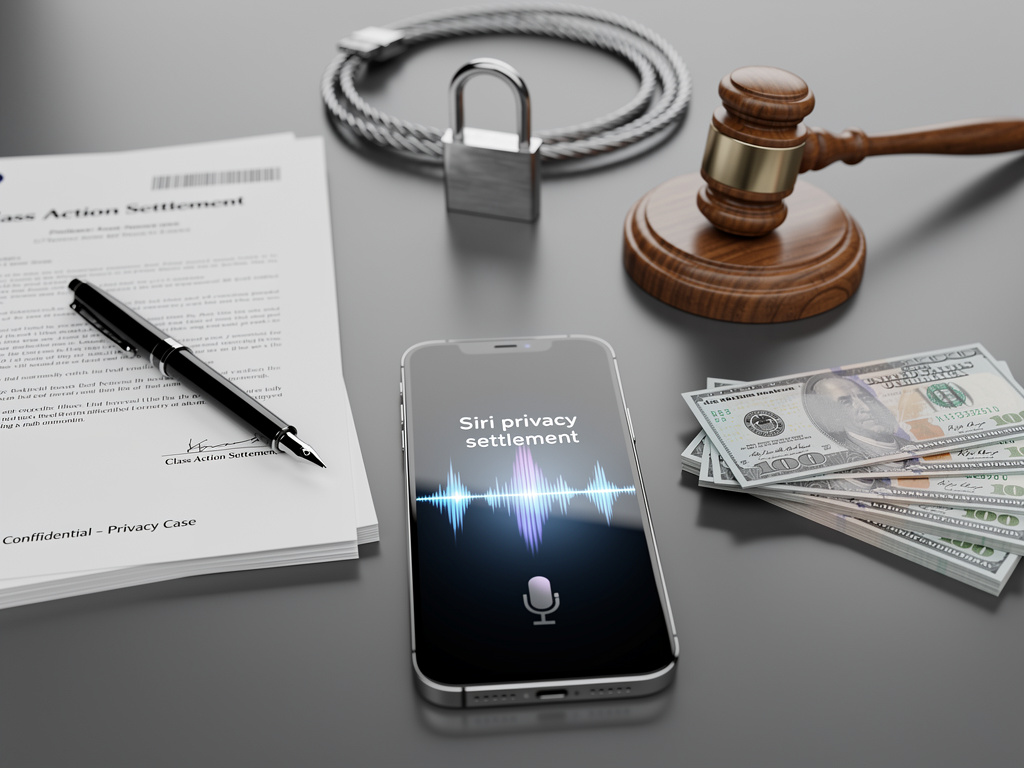
CUPERTINO, Calif. — In the world of Big Tech, accountability often arrives not with a bang, but with a quiet digital transfer. For thousands of Apple device owners, that transfer materialized in late January as payments of approximately $129 began appearing in their accounts. These payments represent the final chapter in a contentious legal battle over user privacy, culminating in a $95 million settlement that forces a reckoning with how Silicon Valley’s ubiquitous voice assistants were built on the back of private user conversations.
The settlement resolves a nationwide class-action lawsuit, In re: Apple Inc. Device Privacy Litigation, which alleged that Apple’s Siri voice assistant was routinely activated without user intent, recording sensitive private conversations that were subsequently reviewed by human contractors. The payouts, now being distributed via Zelle and physical checks, close a case that struck at the core of Apple’s carefully curated image as a champion of user privacy. While the dollar amount is a rounding error for a company of Apple’s scale, the case serves as a costly postscript to a scandal that engulfed not just Apple, but the entire smart speaker industry.
A Whistleblower’s Warning Ignites a Firestorm
The origins of the lawsuit trace back to a bombshell 2019 report from a whistleblower. The anonymous source, a former Apple contractor, revealed to The Guardian that a global team of workers was tasked with listening to and “grading” a vast trove of anonymized Siri audio recordings. The stated purpose was quality control—to improve Siri’s accuracy and responsiveness. However, the report detailed how these recordings frequently included highly sensitive and personal data, captured when Siri was activated by mistake. Contractors reported hearing everything from confidential medical discussions and business deals to criminal activity, all without the users’ explicit knowledge that a human might be listening.
The revelations shattered the common user perception that interactions with digital assistants were a private affair between person and machine. Apple, which had built a significant portion of its brand identity on safeguarding user data, found itself in a deeply uncomfortable position. The company initially defended the program, known as “grading,” as a standard industry practice essential for improving the service. But as public and political pressure mounted, this defense quickly became untenable. The company was forced to act, first by suspending the global grading program and later by issuing a formal apology.
Apple’s Calculated Response and Policy Shift
In a move to regain user trust, Apple announced significant changes to its privacy protocols in an August 2019 press release. The company stated it would no longer retain audio recordings of Siri interactions by default and, crucially, would make human review of audio samples a strictly opt-in feature. The changes, detailed on its own newsroom site, were a direct response to the privacy backlash and formed the basis of its current policy. This shift represented a major concession, fundamentally altering the data collection pipeline that had powered Siri’s development for years. But by then, the legal machinery was already in motion, as consumers who felt their privacy had been violated began to organize.
The class-action lawsuit consolidated numerous complaints, alleging that Apple had violated federal wiretap laws and various state privacy statutes. The settlement, which received preliminary court approval in 2022, was a strategic decision by Apple to avoid a protracted and potentially more damaging public trial. According to CNET, the agreement allows Apple to resolve the claims without admitting any wrongdoing, a standard feature of such corporate settlements. The class includes U.S. residents who owned an iPhone, iPad, Apple Watch, or HomePod between June 1, 2016, and the settlement date. The final payouts began reaching claimants in January 2024, as confirmed by recipients and reported by publications like 9to5Mac.
An Echo Chamber of Industry-Wide Privacy Lapses
Apple was far from alone in this controversy. The 2019 revelations opened a Pandora’s box for the tech industry, revealing that human review of voice assistant recordings was a common, if poorly disclosed, practice. Shortly before the Siri story broke, reports had emerged that Amazon employed thousands of workers to listen to audio clips from its Alexa-powered Echo speakers. A subsequent investigation by The Verge found that Google was engaged in a similar program for its Google Assistant, with contractors listening to user recordings to improve the AI’s language recognition capabilities. These companies, like Apple, argued the reviews were critical for product improvement, but the lack of transparency sparked a widespread consumer and regulatory backlash.
The collective scandals underscored a fundamental disconnect between tech companies and their users about the nature of AI development. While companies viewed the data as an anonymized, essential resource for training machine learning models, users felt a profound sense of violation. The incidents prompted swift changes across the board, with Amazon and Google also introducing options for users to opt out of human review and delete their voice recordings. The episode served as a harsh lesson for Silicon Valley: convenience could not come at the cost of core privacy expectations, at least not without clear and explicit consent.
The Price of Trust in an AI-Powered Future
For a company that generates hundreds of billions of dollars in annual revenue, a $95 million settlement is little more than a line item in an accounting ledger. It is a calculated cost of doing business, far preferable to the brand damage and potential for higher penalties that could result from a jury trial. However, the true impact of the Siri privacy scandal and its resulting settlement is not measured in dollars, but in the erosion and subsequent rebuilding of user trust. The saga forced Apple and its competitors to be more transparent about their data practices and accelerated the industry’s push toward on-device processing, where sensitive data is handled directly on a user’s device rather than being sent to the cloud.
As the tech world barrels forward into a new era dominated by generative AI and large language models, the lessons from the voice assistant privacy battles are more relevant than ever. These new, more powerful AI systems are exponentially more data-hungry, raising the stakes for user privacy. The quiet arrival of a $129 check in a user’s bank account is a tangible reminder that privacy, when breached, has a price. For Apple and the rest of the industry, the Siri settlement stands as a permanent case study on the immense cost of failing to align technological ambition with user trust.


 WebProNews is an iEntry Publication