
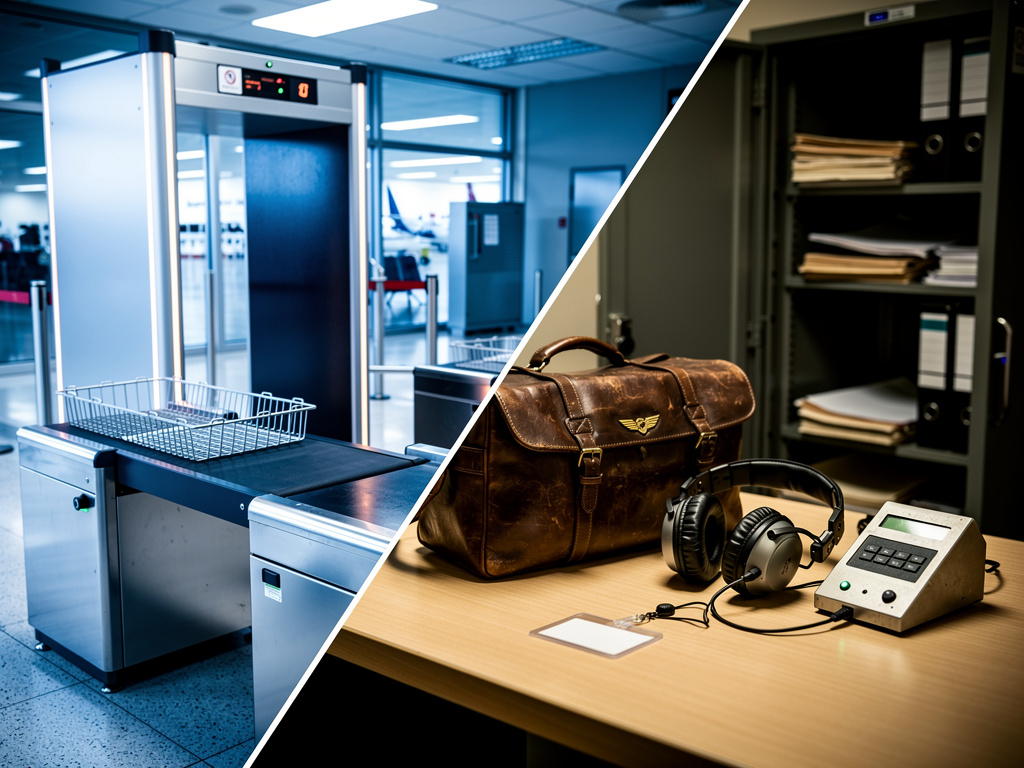
In an era when airline passengers routinely endure lengthy security screenings and strict identification protocols, a recent case of alleged pilot impersonation has exposed troubling vulnerabilities in the aviation industry’s credibility verification systems. The arrest of a man who allegedly posed as an airline pilot to secure free flights has sent shockwaves through the commercial aviation sector, raising fundamental questions about how thoroughly airlines verify the credentials of individuals claiming professional status within their ranks.
According to Business Insider, the suspect managed to exploit weaknesses in airline verification procedures to gain unauthorized access to cockpit jump seats and other pilot privileges across multiple carriers. The case represents far more than a simple fraud scheme—it illuminates systemic deficiencies in how airlines authenticate professional credentials and manage access to sensitive areas of their operations. Industry experts warn that while this particular incident involved someone seeking free transportation, the same vulnerabilities could potentially be exploited for far more nefarious purposes.
The implications extend beyond individual airlines to encompass broader questions about inter-carrier communication, industry-wide security protocols, and the effectiveness of existing safeguards designed to prevent unauthorized individuals from accessing restricted areas of airports and aircraft. As federal investigators piece together the full scope of the alleged deception, aviation security specialists are calling for comprehensive reviews of credentialing systems that have remained largely unchanged for decades despite dramatic transformations in other aspects of airline security.
The Mechanics of Deception: How the Scheme Allegedly Operated
The alleged impersonator’s methodology reportedly involved presenting himself at airline counters and gates with sufficient knowledge of industry terminology and protocols to convince gate agents and crew members of his legitimacy. Sources familiar with the investigation indicate the suspect possessed detailed understanding of pilot scheduling systems, uniform requirements, and the informal codes of conduct that govern interactions between flight crews. This insider knowledge, combined with confidence and the assumption of authenticity that airline personnel typically extend to individuals in pilot uniforms, created a pathway for repeated successful deceptions.
Jump seat privileges—which allow off-duty pilots and certain authorized aviation personnel to occupy cockpit observer seats when passenger cabins are full—became the primary mechanism through which the suspect allegedly secured free travel. This long-standing professional courtesy within the aviation community operates largely on trust, with verification procedures varying significantly between carriers and even between individual gate agents at the same airline. The informal nature of these arrangements, while facilitating legitimate crew positioning and professional development, simultaneously creates opportunities for exploitation by individuals with sufficient knowledge of the system.
Historical Precedents and Pattern Recognition
This case is not without precedent in aviation history. The industry has witnessed several high-profile instances of pilot impersonation over the past decades, though most have been discovered before individuals gained access to actual flight operations. What distinguishes the current case is the apparent duration and geographic scope of the alleged deception, suggesting that existing detection mechanisms may have become less effective even as other security measures have intensified in the post-9/11 era.
Aviation security analysts note a troubling pattern: while passenger screening has become increasingly sophisticated and intrusive, credentialing systems for aviation professionals have not kept pace with technological capabilities. The industry continues to rely heavily on visual inspection of identification documents and uniforms, supplemented by databases that are not universally accessible across all carriers and are not always consulted during routine interactions. This asymmetry in security emphasis creates what experts describe as a “trusted insider” vulnerability—the assumption that individuals presenting themselves as aviation professionals are legitimate unless proven otherwise.
Regulatory Framework and Enforcement Challenges
The Federal Aviation Administration maintains strict regulations governing pilot certification and the falsification of aviation credentials, with violations carrying potential criminal penalties including substantial fines and imprisonment. However, enforcement of these regulations depends heavily on detection, and the current case suggests that detection mechanisms may be inadequate when faced with determined and knowledgeable imposters. The Transportation Security Administration, while responsible for passenger and baggage screening, has more limited jurisdiction over the verification of aviation professional credentials, creating potential gaps in oversight.
Industry insiders acknowledge that the decentralized nature of credentialing verification—with individual airlines maintaining their own databases and protocols—complicates efforts to create comprehensive safeguards. Unlike passenger screening, which follows standardized TSA protocols at all U.S. airports, pilot verification procedures can vary dramatically between carriers and even between different airports served by the same airline. This fragmentation makes it difficult to implement universal standards and creates opportunities for individuals to exploit inconsistencies in verification rigor.
Technology Solutions and Implementation Barriers
Biometric authentication systems, blockchain-based credential verification, and real-time database queries represent potential technological solutions to the vulnerabilities exposed by this case. Several major airlines have begun pilot programs incorporating fingerprint or facial recognition technology for crew member authentication, while industry consortiums are exploring shared databases that would allow instant verification of pilot credentials across multiple carriers. However, implementation of these systems faces significant obstacles including cost considerations, privacy concerns, and the complexity of integrating new technologies into existing operational frameworks.
The aviation industry’s historically conservative approach to operational changes—driven by legitimate safety concerns and the need for extensive testing before implementation—means that even promising technological solutions may require years to deploy widely. Meanwhile, the informal professional courtesies and trust-based systems that facilitated the alleged impersonation continue to operate largely unchanged. Industry observers note the irony that passengers face increasingly sophisticated screening technologies while professional credentialing often relies on visual inspection methods that have remained essentially unchanged for decades.
Financial and Reputational Implications for Carriers
Beyond immediate security concerns, the case carries significant financial and reputational implications for affected airlines. Each instance of fraudulent travel represents direct revenue loss, but more substantially, the revelation of verification vulnerabilities may undermine public confidence in airline security more broadly. In an industry where consumer trust is paramount and where security incidents can have immediate impacts on booking patterns and stock valuations, airlines face pressure to demonstrate swift and comprehensive responses to exposed vulnerabilities.
Insurance and liability considerations add another dimension to airline concerns. If an impersonator were to gain access to sensitive operational information or restricted areas that could facilitate future security breaches, affected carriers could face regulatory sanctions and civil liability. The current case, while apparently motivated by desire for free travel rather than malicious intent, nonetheless demonstrates that existing safeguards are insufficient to prevent unauthorized individuals from exploiting pilot privileges—a realization that has prompted urgent internal reviews at multiple major carriers.
Industry-Wide Response and Future Protocols
Major airline industry associations have begun coordinating responses to the vulnerabilities highlighted by this case, with preliminary discussions focusing on standardized verification protocols and enhanced information sharing between carriers. The International Air Transport Association and Airlines for America have reportedly convened working groups to examine credentialing systems and develop recommendations for strengthened verification procedures that balance security needs with operational efficiency.
However, implementation of industry-wide standards faces challenges beyond technology and cost. Labor agreements with pilot unions, privacy regulations governing biometric data, and competitive concerns about sharing proprietary operational information all complicate efforts to create unified credentialing systems. Some industry observers suggest that meaningful reform may require regulatory mandates rather than voluntary industry initiatives, potentially involving FAA rulemaking or congressional legislation to establish minimum verification standards across all carriers.
Broader Security Architecture Reassessment
The alleged impersonation scheme forces a fundamental reassessment of assumptions underlying aviation security architecture. The post-9/11 security regime focused intensively on preventing unauthorized individuals from accessing aircraft as passengers or from introducing prohibited items into secure areas. The implicit assumption was that aviation professionals—pilots, flight attendants, mechanics, and other credentialed workers—represented a trusted population requiring less scrutiny than passengers. This case challenges that assumption and suggests that insider threat mitigation deserves greater attention within the overall security framework.
Security specialists emphasize that effective aviation security requires a layered approach addressing multiple threat vectors rather than focusing exclusively on passenger screening. Credentialing verification, background check processes, behavioral analysis, and technological authentication systems all contribute to comprehensive security architecture. The current case reveals that one of these layers—credentialing verification for aviation professionals—may have become dangerously thin, creating vulnerabilities that could be exploited not only for free travel but potentially for more serious security breaches. As federal prosecutors pursue charges in this case and airlines implement enhanced verification procedures, the incident serves as a stark reminder that security systems are only as strong as their weakest components, and that complacency in any area can create opportunities for exploitation.


 WebProNews is an iEntry Publication