
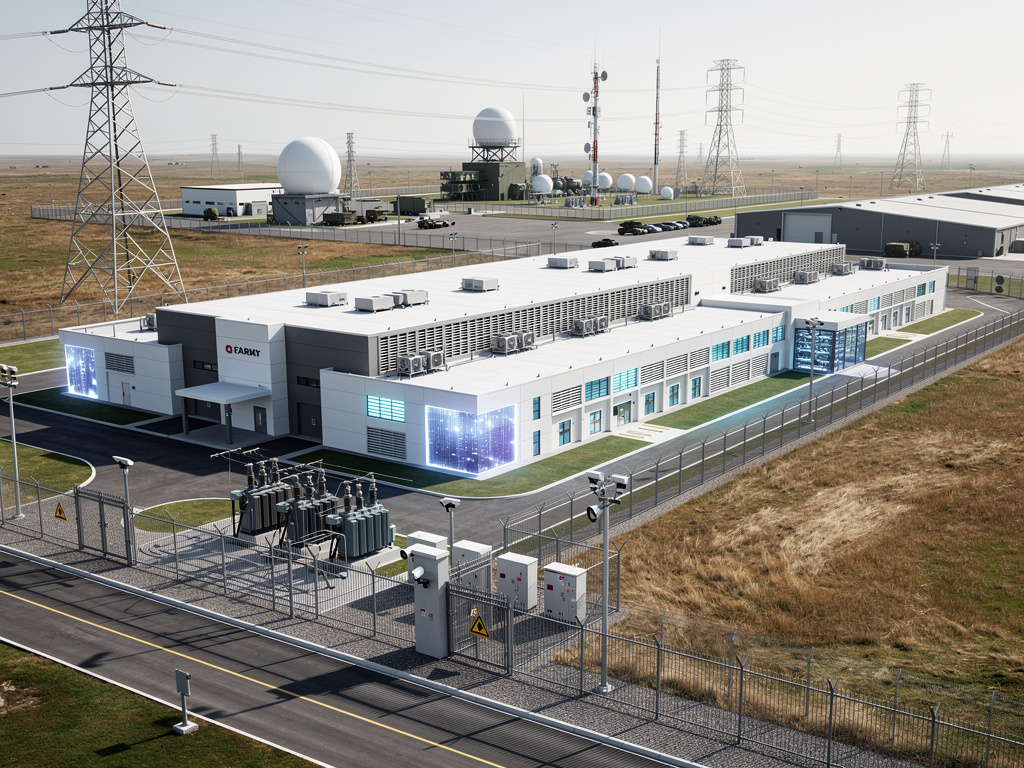
The U.S. Army is about to become one of America’s most unusual commercial landlords. Four major military installations will soon host privately built and operated data centers on underused Army land, a first-of-its-kind arrangement that marries the Pentagon’s sprawling real estate portfolio with the tech industry’s insatiable appetite for power and space.
The announcement, made by Secretary of the Army Daniel Bissell in late June 2025, marks a dramatic pivot in how the Defense Department thinks about its physical footprint. Fort Gregg-Adams in Virginia, Fort Cavazos in Texas, Fort Liberty in North Carolina, and Joint Base Lewis-McChord in Washington state will each offer parcels to commercial data center operators. The Army isn’t building these facilities itself. Instead, it’s acting as lessor, offering land and proximity to power infrastructure in exchange for rental income and broader strategic benefits. As TechRadar reported, the initiative was formally unveiled at the Army’s annual posture hearing before Congress.
This isn’t philanthropy. It’s economics.
The United States faces a well-documented data center capacity crisis. Artificial intelligence workloads have sent demand for compute power soaring, and developers are scrambling to secure two things that are increasingly scarce: land with adequate power connections and the permits to build on it. Military bases, many of which were sized for Cold War force structures far larger than today’s, often have both. They sit on thousands of acres, much of it fallow. They’re connected to substantial electrical grids originally designed to support entire small cities’ worth of military operations. And they already have security perimeters, road access, and water supplies.
Secretary Bissell framed the initiative as a way to generate revenue for the Army while supporting national competitiveness in AI. “We have underutilized land and infrastructure on our installations that can serve a dual purpose,” Bissell said during the hearing, according to reporting by TechRadar. The Army estimates it has tens of thousands of excess acres across its domestic installation portfolio — land that costs money to maintain but generates no return.
The four chosen bases weren’t selected at random. Each has distinct advantages. Fort Gregg-Adams, located near Petersburg, Virginia, sits within the Northern Virginia data center corridor, already the densest concentration of data center capacity on Earth. Loudoun County alone hosts more than 300 data centers. But land there has grown prohibitively expensive, and utility providers like Dominion Energy have struggled to keep pace with power demand. Fort Gregg-Adams offers a pressure valve — available acreage with grid connections, just far enough south of the congested corridor to be viable.
Fort Cavazos in central Texas taps into the state’s booming energy market and deregulated grid, though ERCOT’s reliability record will inevitably raise questions from risk-conscious operators. Fort Liberty, formerly Fort Bragg, gives operators a foothold in the Southeast, where data center construction has accelerated sharply over the past two years. Joint Base Lewis-McChord opens access to the Pacific Northwest, where cheap hydroelectric power and proximity to undersea cable landing points make Washington state attractive for hyperscale builds.
The structure of these deals will matter enormously. The Army plans to use Enhanced Use Leases, a mechanism Congress authorized years ago that allows military services to lease underused property to private entities. EULs have been employed before — for hotels, housing, and renewable energy projects on base land — but never at this scale for data center development. Under an EUL, the Army retains ownership of the land. The commercial tenant builds, owns, and operates the facility. Lease terms can stretch decades.
Revenue flows back to the installation. That’s the carrot for base commanders who’ve watched maintenance budgets shrink while infrastructure ages. A single large-scale data center campus could generate millions in annual lease payments, money that can be reinvested in on-base facilities, roads, and housing — chronic pain points for military families.
But there are complications. Significant ones.
Environmental review under the National Environmental Policy Act will be required for each site. Data centers are water-intensive — many use evaporative cooling systems that consume millions of gallons annually — and bases in Texas and North Carolina already face water stress. Power demand is another flashpoint. A large hyperscale data center can draw 100 megawatts or more, equivalent to powering roughly 80,000 homes. If commercial tenants compete with military operations for grid capacity, the arrangement could become a liability rather than an asset.
The Army says it has anticipated this. Bissell indicated that lease agreements will include provisions ensuring military operations retain priority access to power and water. Commercial tenants will be expected to bring their own power solutions in many cases, potentially including on-site generation or dedicated utility feeds that don’t draw from the installation’s allocation. Some developers may propose co-locating natural gas plants or solar-plus-storage systems alongside the data centers themselves — a model already gaining traction in private-sector builds across Texas and Virginia.
Security is the other elephant in the room. Military installations are controlled-access environments. Personnel are screened. Vehicles are inspected. Hosting a commercial data center means allowing civilian workers, contractors, and potentially foreign-national employees onto base property regularly. The Army will need to establish clear demarcation between the leased commercial zone and the active military installation. Physical and cyber separation protocols will be essential, particularly given the sensitivity of some operations at bases like Fort Liberty, home to the Army’s Special Operations Command, and Joint Base Lewis-McChord, which hosts I Corps and major deployable units.
Industry reaction has been cautiously optimistic. Data center developers and real estate investment trusts have been hunting for new sites with increasing desperation. The vacancy rate for existing U.S. data center space has hovered near historic lows — under 3% in primary markets, according to CBRE’s most recent market reports. New construction has surged, with more than 5,000 megawatts of capacity under development nationally, but permitting delays and utility interconnection queues have pushed timelines out by years in some regions. Military land with existing grid ties could shave 12 to 24 months off a typical development cycle. That time advantage translates directly into revenue for operators racing to serve AI customers like OpenAI, Microsoft, Google, and Meta.
The political dimensions are equally charged. The Trump administration has pushed aggressively to accelerate AI infrastructure buildout, framing it as a national security imperative and an economic competitiveness issue against China. President Trump signed executive orders in early 2025 aimed at streamlining permitting for energy and data center projects. The Army’s announcement aligns neatly with that agenda, giving the administration a tangible example of federal assets being repurposed to support AI growth.
Congressional support appears bipartisan, at least for now. Lawmakers from states hosting the four bases stand to benefit from construction jobs, tax revenue (to the extent commercial activity generates off-base economic effects), and the political currency of attracting tech investment. But skeptics exist. Some defense hawks worry about privatizing any portion of military installations, even underused acreage. Others question whether the Army should be in the landlord business at all when it has more pressing modernization needs.
There’s historical precedent for this kind of tension. The military’s experience with privatized housing — where bases leased land to private developers who built and managed on-base residential units — has been a cautionary tale. What began as a promising public-private partnership in the late 1990s devolved into scandal, with widespread reports of mold, lead paint, and predatory management practices documented in congressional investigations and media exposés over the past decade. Soldiers and families bore the brunt. The Army will need to demonstrate that its commercial data center leases include far stronger oversight mechanisms and performance standards than the housing privatization model provided.
So what happens next? The Army is expected to issue solicitations for each of the four sites later this year, with initial lease agreements potentially finalized by mid-2026. Construction timelines will vary by site, but industry sources suggest that a well-capitalized operator could have a facility operational within 18 to 30 months of breaking ground, assuming permits and power interconnections proceed on schedule.
The scale of what’s being contemplated is substantial. If each base hosts even a single 100-megawatt campus — a moderate size by current hyperscale standards — the program would add 400 megawatts of new capacity to the national grid. That’s roughly equivalent to what an entire mid-tier market like Nashville or Portland currently supports. And the Army hasn’t ruled out expanding the program to additional installations if the initial four prove successful.
For the tech industry, the appeal is straightforward: access to land, power, and physical security at a time when all three are in short supply. For the Army, it’s a chance to turn a cost center into a revenue stream while contributing to a national priority. For the communities surrounding these bases, it could mean hundreds of construction jobs and dozens of permanent operations positions per site.
The risks are real. But so is the math. The Army is sitting on some of the most strategically located, power-rich, physically secure real estate in the country. And it’s finally decided to do something with it.
Whether the execution matches the ambition will depend on contract design, utility coordination, environmental mitigation, and the Army’s willingness to enforce standards that protect both military readiness and the commercial viability of the projects. The privatized housing debacle proved that good intentions and bad contracts produce terrible outcomes. The data center initiative will be a test of whether the Pentagon has learned that lesson — or is doomed to repeat it at hyperscale.


 WebProNews is an iEntry Publication