
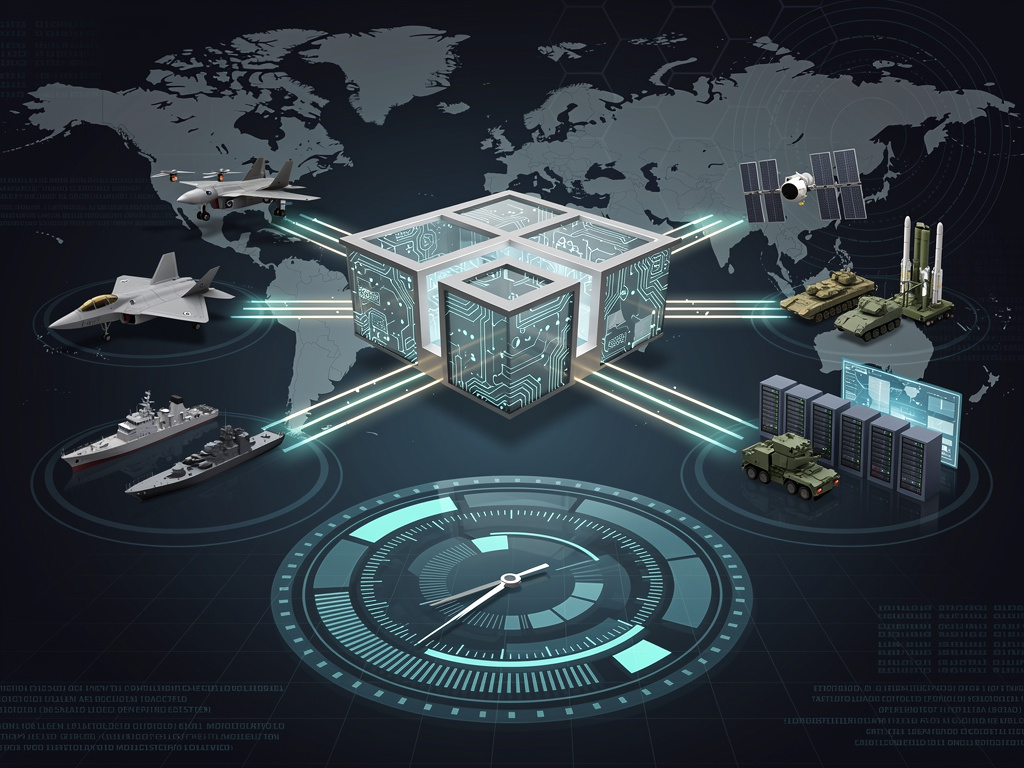
A single memo from the Department of Defense, dated June 23, 2025, may have just redrawn the map of how the United States military thinks, plans, and fights. Deputy Secretary of Defense Stephen Feinberg directed all branches of the armed forces to adopt Palantir Technologies’ Maven Smart System as a “core enterprise system” — a designation that effectively embeds the Denver-based company’s artificial intelligence software into the permanent infrastructure of American defense. Not a pilot program. Not an experiment. A mandate.
The implications are staggering, both for the Pentagon’s operational future and for the commercial dynamics of the defense-technology sector.
According to reporting by MSN, the memo instructs military services and combatant commands to integrate Maven as their primary system for intelligence fusion, sensor data processing, and AI-enabled targeting. The system, built on Palantir’s software platform, has been in use in various capacities since 2017, when Google originally won the Project Maven contract before employee protests forced the tech giant to walk away. Palantir picked up the work. Now, eight years later, that bet has paid off in a way few in Silicon Valley or the Beltway anticipated.
Feinberg’s memo doesn’t merely recommend adoption. It requires it. Every military department must submit integration plans within 90 days. That’s not a suggestion — it’s an order with a deadline, carrying the weight of the deputy secretary’s office. The language is unusually direct for Pentagon bureaucracy, reflecting both urgency and a clear institutional preference for speed over deliberation.
For Palantir, this is vindication on a massive scale. The company, co-founded by Peter Thiel and led by CEO Alex Karp, spent years fighting entrenched defense contractors and a procurement system that seemed designed to exclude Silicon Valley newcomers. Palantir sued the U.S. Army in 2016 over what it called an unfair contracting process. It won. And it kept pushing.
Karp has long argued that Western democracies face an existential technology gap with adversaries like China and Russia — that legacy defense systems, built over decades by traditional primes like Lockheed Martin, Raytheon, and Northrop Grumman, are too slow, too siloed, and too expensive to match the pace of modern threats. The Maven designation suggests the Pentagon’s leadership now agrees, at least in part.
The stock market noticed immediately. Palantir shares surged more than 7% in after-hours trading following reports of the memo, pushing the company’s market capitalization past $280 billion. That figure places Palantir in rarefied air — larger than many of the traditional defense contractors it has spent years trying to displace. Investors are pricing in not just the Maven contract itself, which is valued in the hundreds of millions, but the downstream implications: if Maven becomes the connective tissue of the U.S. military’s data architecture, every future program, sensor, and weapons system will need to talk to it.
That’s where the real money is. And the real power.
The Maven Smart System does something deceptively simple in concept but extraordinarily difficult in practice. It ingests data from satellites, drones, ground sensors, signals intelligence, human intelligence reports, and open-source information, then fuses it into a unified operational picture that commanders can act on in near-real time. Think of it as the nervous system connecting the military’s eyes, ears, and fists. Before Maven, much of this fusion happened manually — analysts sitting in front of multiple screens, cross-referencing feeds, making phone calls. It was slow. In a conflict with a peer adversary, slow means dead.
The system has already been tested in real-world operations. U.S. Central Command used Maven extensively in the Middle East, and it played a role in operations against ISIS. Ukraine’s military has used Palantir tools in its ongoing war with Russia, providing a live demonstration of how AI-enabled battlefield management performs under the most demanding conditions imaginable. Those real-world deployments gave Palantir something no amount of PowerPoint presentations could: credibility with warfighters.
But the designation as a core enterprise system changes the calculus entirely. Previously, individual commands and services could choose whether to adopt Maven, creating a patchwork of usage. Some embraced it. Others resisted, either because of institutional inertia, competing programs, or genuine concerns about vendor lock-in. Feinberg’s memo eliminates that optionality. The system is now policy.
This raises questions that defense analysts and competitors are already asking. Chief among them: what happens to the billions of dollars in existing command-and-control programs that Maven will now either absorb or render redundant? The Army’s own intelligence systems, the Air Force’s Advanced Battle Management System (ABMS), the Navy’s Project Overmatch — all of these have overlapping ambitions. Some will integrate with Maven. Others may wither. The bureaucratic battles ahead will be fierce, even with a directive from the deputy secretary’s desk.
There’s also the vendor lock-in concern. By designating a single company’s product as the core system, the Pentagon is making a bet that Palantir will continue to innovate, keep prices competitive, and remain aligned with government interests for decades. That’s a long time in technology. Critics argue that true competition — multiple vendors building interoperable systems — produces better outcomes. Supporters counter that the military doesn’t have time for a perfect process; it needs something that works now, and Maven works.
The political dimensions are impossible to ignore. Feinberg, a billionaire investor and co-founder of Cerberus Capital Management, was appointed by President Trump. Thiel, Palantir’s co-founder and chairman, was one of Trump’s earliest and most prominent supporters in Silicon Valley. Karp, despite his more progressive personal politics, has cultivated relationships across the political spectrum and has been a vocal advocate for Western defense spending. The connections between Palantir’s leadership and the current administration have drawn scrutiny from lawmakers and watchdog groups who question whether the process was truly merit-based.
Pentagon officials have pushed back on those concerns, noting that Maven’s selection followed years of operational testing and competitive evaluation. The system’s performance in CENTCOM operations, they argue, speaks for itself. And Feinberg’s memo explicitly references the need for speed in adopting AI capabilities, framing the decision as a national security imperative rather than a political favor.
Still, the optics are complicated. And in Washington, optics matter.
The broader defense-tech industry is watching closely. Companies like Anduril Industries, Shield AI, and Scale AI have all positioned themselves as next-generation defense suppliers. Anduril, founded by Palmer Luckey, has focused on autonomous systems and hardware-software integration. Shield AI builds autonomous drones. Scale AI provides data labeling and AI infrastructure. All of them have Pentagon contracts. None of them just got designated as a core enterprise system.
The Maven decision could create a gravitational pull. If Palantir’s platform becomes the standard data layer, other companies will need to build products that integrate with it — effectively making Palantir the platform provider and everyone else an app developer. That’s an enormously powerful position, analogous to what Microsoft achieved with Windows in the enterprise software world or what Apple built with iOS in mobile. Platform owners set the rules.
Palantir has signaled it understands this dynamic. The company has increasingly positioned itself not as a point solution but as an operating system for government and military operations. Its Gotham platform serves intelligence agencies. Its Foundry platform serves commercial clients. Maven, built on the same underlying architecture, serves warfighters. The common thread is data integration — taking disparate, messy, real-world information and making it usable at speed.
For the traditional defense primes, the memo represents both a threat and an opportunity. A threat because Palantir is eating into territory they’ve dominated for decades. An opportunity because the largest contractors — Lockheed, Northrop, RTX — build the hardware that generates much of the data Maven consumes. Satellites, aircraft, ships, and missiles aren’t going away. But the software layer that connects them is now Palantir’s domain, and that layer is where an increasing share of military value — and profit — will accrue.
The timeline is aggressive. Ninety days for integration plans means the services need to start moving immediately. In Pentagon terms, that’s practically tomorrow. Expect resistance from program offices that see their budgets threatened, from uniformed leaders who prefer systems they helped develop, and from contractors who stand to lose revenue. But also expect compliance, because Feinberg’s memo carries the authority of the secretary’s office, and the current administration has shown little patience for bureaucratic delay.
One detail in the memo deserves particular attention. It specifies that Maven will serve as the backbone for the Pentagon’s Combined Joint All-Domain Command and Control (CJADC2) initiative — the long-sought goal of connecting every sensor and shooter across all military domains (air, land, sea, space, cyber) into a single network. CJADC2 has been the holy grail of defense transformation for years, discussed endlessly in white papers and congressional hearings but never fully realized. If Maven becomes its foundation, the concept moves from aspiration to architecture.
That’s a profound shift.
International implications are significant too. Allied nations — the UK, Australia, Japan, NATO members — are all pursuing their own AI-enabled defense modernization programs. The U.S. decision to standardize on Palantir could influence allied procurement decisions, either pulling them toward the same platform for interoperability or pushing them to develop alternatives to avoid dependence on a single American vendor. Palantir already has contracts with the UK Ministry of Defence and several other allied governments, so the groundwork for international expansion is already laid.
Back in Denver, Palantir’s engineering teams are likely already scaling up. The company reported approximately 3,700 employees as of its last filing, a fraction of the headcount at legacy defense firms. Scaling to support enterprise-wide military adoption while maintaining software quality and security will be the company’s biggest operational challenge. Hiring cleared engineers — those with the security clearances necessary to work on classified programs — remains one of the tightest bottlenecks in the defense-tech sector.
Wall Street analysts have begun revising their models upward. The Maven designation doesn’t just mean one contract. It means recurring revenue, expansion into adjacent programs, and a structural advantage in every future competition where data integration is a factor. Which, in modern defense, is nearly all of them. Some analysts now see a path to Palantir generating $5 billion or more in annual government revenue within five years, up from roughly $1.2 billion in 2024.
Those are big numbers. But the Pentagon’s budget is bigger — over $850 billion annually — and the share devoted to software, AI, and data systems is growing faster than any other category.
The Maven memo is, in many ways, the culmination of a decade-long argument about how America should build and buy military technology. The old model — massive hardware programs developed over 15 to 20 years by a handful of prime contractors — is not dead, but it’s no longer sufficient. The new model, exemplified by Palantir’s approach, emphasizes software, speed, iteration, and data. It borrows from Silicon Valley’s playbook while adapting to the unique demands of national security.
Whether this bet pays off depends on execution. A memo is just words on paper until systems are deployed, soldiers are trained, and operations are improved. The Pentagon has a long history of ambitious technology initiatives that stalled in implementation — the Future Combat Systems program, the F-35’s software struggles, the Army’s failed modernization efforts of the 2000s. Palantir will need to deliver not just software but outcomes, and it will need to do so under the harshest possible scrutiny from Congress, competitors, and the press.
But for now, the signal is unmistakable. The United States military has chosen its AI platform. And it’s Palantir.


 WebProNews is an iEntry Publication