
For more than two decades, ReactOS has occupied one of the most improbable positions in open-source software: an attempt to build a free, ground-up replacement for Microsoft Windows, binary-compatible with Windows applications and drivers. Not a Linux distribution dressed up with a compatibility layer. Not Wine running on top of a Unix kernel. A standalone operating system that aims to run Windows software natively, right down to the driver level.
Most people in the industry wrote it off years ago. They were premature.
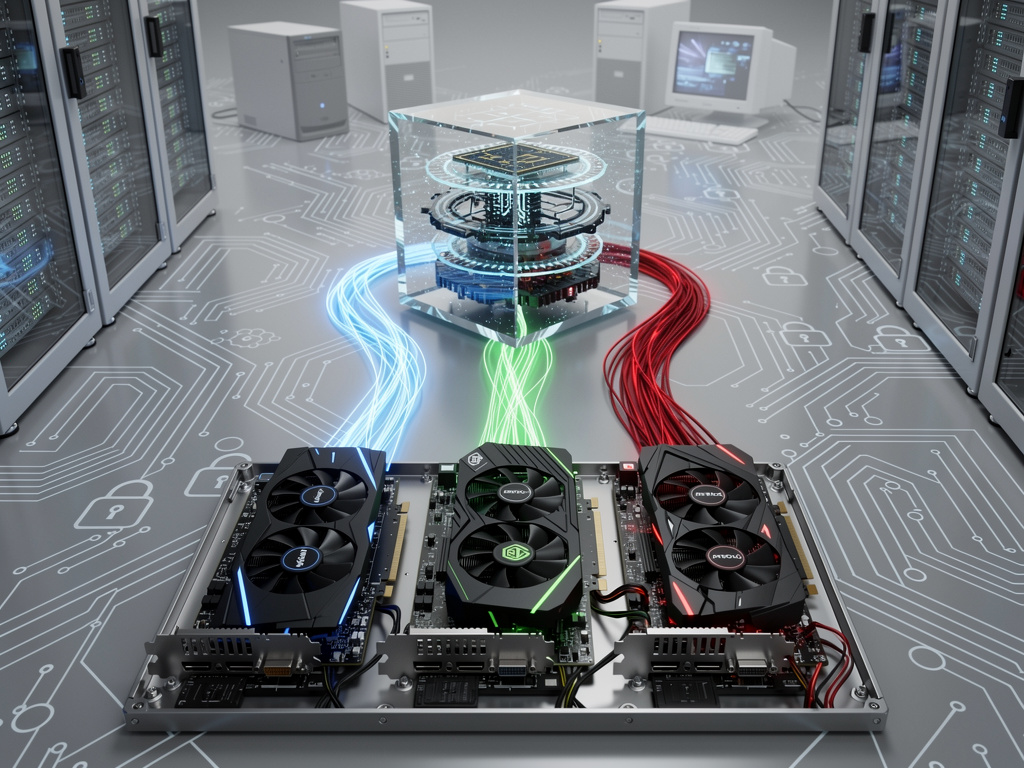
In March 2025, the ReactOS project announced that GPU drivers from all three major vendors — Intel, Nvidia, and AMD — now function on the platform. Not perfectly. Not with full feature parity. But functionally, with hardware-accelerated graphics output, marking what developers and observers are calling the most significant milestone in the project’s history.
The achievement, reported by Slashdot, was the result of years of painstaking reverse-engineering work — not cooperation from Intel, Nvidia, or AMD. None of the three chipmakers contributed code, documentation, or official support. The ReactOS community did it alone, working from publicly available specifications, behavioral analysis of Windows driver interfaces, and sheer persistence.
Inside the Engineering That Made It Possible
To understand why this matters, you need to understand what GPU driver compatibility actually requires. Modern graphics drivers are among the most complex pieces of software that run on a personal computer. They interact with the operating system at multiple levels: kernel-mode driver interfaces, user-mode display driver APIs, memory management subsystems, interrupt handling, and power management. On Windows, these interactions are governed by the Windows Display Driver Model (WDDM) and its predecessors, including XDDM (the older XP Display Driver Model).
ReactOS doesn’t have access to Microsoft’s proprietary source code. It doesn’t have licensing agreements with GPU vendors. What it has is a clean-room implementation of Windows-compatible APIs and kernel interfaces, built by studying documented behavior, testing against real Windows drivers, and iterating through thousands of bug reports.
The GPU work specifically required implementing or completing support for several critical subsystems. The win32k subsystem — Windows’ kernel-side graphics and windowing engine — needed substantial work. So did the Plug and Play manager, which handles device enumeration and driver loading. And the memory manager had to correctly handle the kind of large, contiguous allocations that GPU drivers demand for framebuffers and command queues.
According to ReactOS developer discussions and project communications, Intel’s integrated GPUs were the first to show signs of life, largely because Intel’s older driver architectures (particularly those targeting Windows XP-era hardware) are comparatively simpler than the full WDDM stacks used by modern discrete GPUs. Nvidia and AMD followed, with varying degrees of functionality depending on the specific hardware generation and driver version.
This isn’t about running the latest AAA games at 4K. It’s about the operating system being able to load a vendor’s actual Windows driver binary, initialize the GPU, set a display mode, and render a desktop with hardware acceleration. That alone is a massive technical accomplishment for a project of this scale.
Why It Matters Beyond the Hobbyist Community
The instinctive reaction from many industry professionals will be skepticism. ReactOS has a tiny user base. Its hardware support remains incomplete. It can’t run most modern Windows applications without issues. So why should anyone in enterprise technology or the semiconductor industry care?
Several reasons.
First, there’s the embedded and legacy systems angle. Thousands of industrial control systems, medical devices, point-of-sale terminals, and manufacturing tools still run Windows XP or Windows Embedded. Microsoft ended extended support for Windows XP in 2014. These systems don’t get security patches. They can’t be easily migrated because the software running on them was written for a specific Windows version and often can’t be recompiled or replaced without enormous cost. ReactOS, if it matures sufficiently, could offer a maintained, open-source platform that runs these legacy binaries without emulation overhead and without depending on a vendor that has moved on.
Second, the GPU driver milestone has implications for understanding the Windows driver model itself. The ReactOS project’s clean-room implementation serves as a form of living documentation for how Windows internals actually work — documentation that Microsoft has never fully published. Security researchers, driver developers, and forensic analysts all benefit from this kind of independent implementation.
Third, there’s a geopolitical dimension that has grown more relevant in 2025. Several governments — notably in Russia, China, and parts of the EU — have expressed interest in reducing dependence on American software platforms. ReactOS has received attention in Russian government technology circles for years, and the project has historically had a notable concentration of contributors from Eastern Europe. A Windows-compatible OS that isn’t Windows, and isn’t controlled by any single corporation, has obvious appeal in that context.
And then there’s the philosophical dimension. The fact that a volunteer-driven project can reverse-engineer compatibility with proprietary GPU drivers from three of the world’s largest semiconductor companies says something meaningful about the limits of proprietary lock-in. It doesn’t mean the walls are coming down. But it demonstrates they have cracks.
The project still faces enormous challenges. Driver compatibility is fragile and version-specific. The ReactOS kernel doesn’t yet support many features expected by modern Windows applications, including recent versions of the .NET runtime, DirectX 11 and later, and the full Windows security model. Development resources are thin — the project relies on a small core team and sporadic volunteer contributions, supplemented by modest donations.
But the trajectory is notable. In the last two years alone, ReactOS has improved its NTFS write support, enhanced USB driver compatibility, and now achieved what many considered the hardest single problem in the project’s roadmap: making third-party GPU drivers work.
The major GPU vendors have had no public reaction to the development. Intel, Nvidia, and AMD have not commented on ReactOS compatibility, and there’s no indication any of them plan to. Their drivers are proprietary binaries distributed under license terms that technically may not contemplate use on a non-Windows operating system, though the legal implications remain untested and ambiguous.
For the ReactOS community, that silence is fine. They’ve been working in silence themselves for 25 years. The GPUs lighting up on their screens are proof enough that the work continues — and that it’s producing results nobody outside the project expected to see.


 WebProNews is an iEntry Publication