
NEW YORK – For the modern knowledge worker, the desk is often a digital battleground of competing allegiances. A MacBook Pro sits open for its powerful creative software and stable operating system. Beside it, a Windows machine hums, a necessary concession for a piece of proprietary corporate software. A high-end Android phone rests nearby, essential for app testing or simply personal preference. This multi-device reality, a daily friction point for millions of developers, designers, and power users, is the very problem Ilia Fedorovich, an entrepreneur with a bold vision, intends to solve.
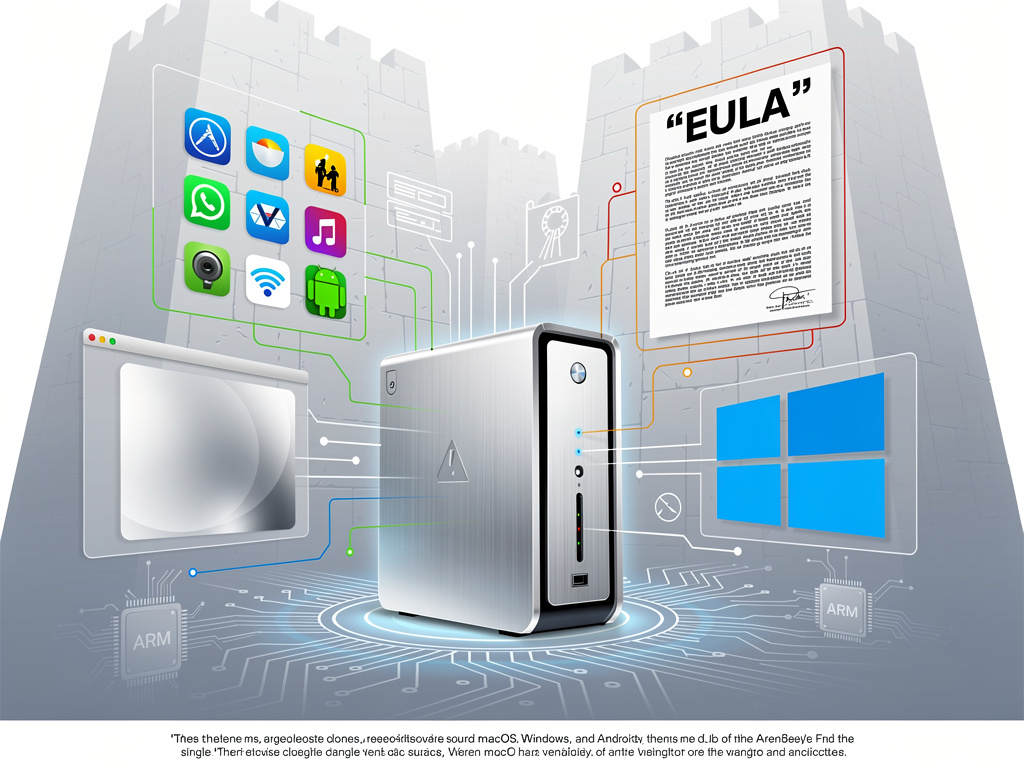
His startup, Aluminium, is not merely proposing another productivity app or a cloud-based workaround. Instead, it is undertaking a far more fundamental challenge: building a single piece of hardware capable of running macOS, Windows, and Android natively and seamlessly. The goal is to collapse the digital toolkit of the modern professional into one elegant, portable device. In an interview with TechRepublic, Mr. Fedorovich articulated a future free from the compromises of carrying multiple gadgets, envisioning a “meta-device” that adapts to the user’s needs, rather than forcing the user to adapt to the limitations of the hardware.
A New Architectural Approach
At the heart of Aluminium’s ambitious project is a custom-built hypervisor, a type of software that creates and runs virtual machines. Unlike consumer-grade virtualization software like Parallels or VMware, which run one operating system as an application on top of another, Aluminium’s technology is designed to operate at a much deeper level. The plan is to build this hypervisor directly on top of the ARM architecture, the increasingly dominant chip design powering everything from Apple’s M-series Macs to Microsoft’s next-generation Surface devices. This, the company claims, will allow each operating system to run with near-native performance, directly accessing the device’s hardware without the significant overhead that typically plagues virtualization.
The timing of this venture is critical, capitalizing on the industry’s seismic shift away from the x86 architecture, long dominated by Intel, toward the more power-efficient and mobile-friendly ARM platform. Apple’s stunning success with its M-series silicon has validated ARM’s performance capabilities for professional-grade computing, while Microsoft and its hardware partners, like Qualcomm, are aggressively pushing a new generation of “Windows on ARM” devices. This convergence on a common architecture, in theory, makes the dream of a universal device more technically plausible than ever before. It presents a potential crack in the foundation of the siloed ecosystems that Big Tech has spent decades constructing.
Confronting the Walled Gardens
While the technical vision is compelling, the business and legal hurdles are monumental, chief among them being the tightly controlled software ecosystems of the tech giants. Microsoft has shown some flexibility with its Windows licensing, but Apple represents a near-impenetrable fortress. The End User License Agreement (EULA) for macOS explicitly forbids the installation of the operating system on any non-Apple-branded hardware. This policy has been central to Apple’s strategy for decades, creating a seamless, high-margin integration of its hardware and software that competitors have long envied and that courts have consistently upheld.
For Aluminium to succeed, it would need to either find a revolutionary legal workaround to Apple’s EULA or, in a far less likely scenario, convince Apple to grant it a license—something the Cupertino giant has never done. Any device sold with the promise of running macOS without Apple’s blessing would immediately face a formidable legal challenge that could cripple the startup before it ever ships a product. This reality places a significant question mark over the entire business model, shifting the primary obstacle from the engineering lab to the courtroom.
The Search for a Market and a Following
Assuming the company can navigate this legal minefield, the question of the target market remains. Aluminium is aiming its concept squarely at professionals who already live at the intersection of these different operating systems—software developers, 3D artists, and security researchers. This is a discerning and technically sophisticated niche, but also a relatively small one. For a hardware venture, which requires immense capital for research, manufacturing, and distribution, a niche market can be a perilous starting point. The product would have to offer a truly revolutionary experience to justify its existence against a user’s existing, albeit cumbersome, setup.
The company’s online presence, including its conceptual website Aluminium.computer, presents the idea as a sleek, minimalist “meta-OS.” It speaks a language of fluidity and power that resonates with its target demographic. Yet, the project remains largely conceptual. Without a working prototype demonstrated publicly or significant venture capital backing announced, it exists as a tantalizing idea more than a tangible product. The challenge for Mr. Fedorovich is to convert this powerful concept into a viable entity that can attract the engineering talent and, crucially, the capital required to wage a multi-front war against the industry’s most powerful incumbents.
Precedent and the Path Forward
The history of computing is littered with failed attempts at creating universal or multi-boot devices. Projects like the dual-boot Android/Windows phones of the mid-2010s failed to gain traction, proving that simply offering choice was not enough; the integration had to be seamless and solve a real problem without introducing new complexities. Aluminium’s hypervisor-based approach is technologically more advanced, promising a smoother transition between environments than a simple reboot. However, the core challenge of user experience remains. How would files be shared between operating systems? How would peripherals and drivers be managed universally? A clunky solution could be worse than the multi-device problem it aims to solve.
The path forward for Aluminium is fraught with risk. The company must first prove its core technology works as advertised, delivering on the promise of native performance with no compromises. It must then chart a course through an unforgiving legal environment created by companies that have every incentive to protect their domains. Finally, it must convince a demanding niche of power users that its all-in-one device is not a master of none, but the true master of all their digital worlds. It is a quest that is as audacious as it is fascinating, a direct challenge to the established order of the digital age.


 WebProNews is an iEntry Publication