
The role of the Chief Information Security Officer has evolved from network guardian to strategic business enabler, and nowhere is this transformation more evident than in the priorities emerging for 2026. As organizations accelerate their adoption of artificial intelligence, cloud infrastructure, and distributed workforces, security leaders face an unprecedented convergence of technological complexity and threat sophistication that demands a fundamental rethinking of enterprise defense strategies.
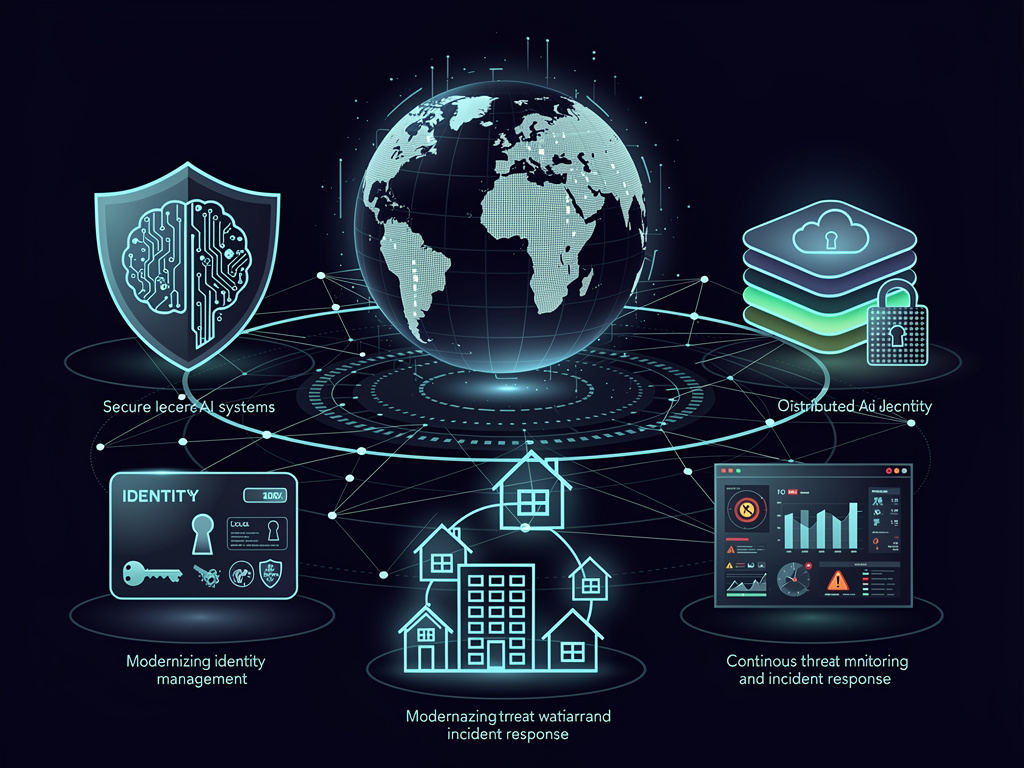
According to Google Cloud’s latest CISO perspectives report, the security priorities for 2026 center on five critical domains: securing artificial intelligence systems, modernizing identity and access management, strengthening supply chain security, advancing zero trust architectures, and building resilient security operations. These priorities reflect a maturation of the security function from reactive threat response to proactive risk management integrated into every aspect of business operations.
The shift represents more than incremental improvement in existing practices. CISOs are now tasked with securing technologies that didn’t exist in mainstream enterprise environments just five years ago, while simultaneously managing legacy systems that cannot be immediately retired. This duality creates a tension between innovation and stability that defines the modern security leader’s challenge, requiring diplomatic skills to navigate boardroom politics alongside technical expertise to understand emerging attack vectors.
Artificial Intelligence Security Emerges as Primary Battleground
The integration of artificial intelligence into business operations has created entirely new categories of security risks that traditional frameworks were never designed to address. Model poisoning, prompt injection attacks, data leakage through training sets, and adversarial machine learning represent threats that require fundamentally different defensive approaches than conventional cybersecurity measures. Organizations deploying large language models for customer service, code generation, or decision support systems face the dual challenge of protecting these AI systems from compromise while ensuring they don’t inadvertently expose sensitive corporate or customer data.
Google Cloud’s security team emphasizes that AI security extends beyond protecting the models themselves to encompass the entire machine learning pipeline, from data collection and preparation through model training, deployment, and ongoing monitoring. This end-to-end approach recognizes that vulnerabilities can emerge at any stage of the AI lifecycle, and that attackers are increasingly sophisticated in identifying and exploiting these weaknesses. The report highlights that organizations must implement robust governance frameworks that define acceptable use cases for AI, establish clear data handling protocols, and create audit trails that enable security teams to investigate incidents involving AI systems.
The challenge is compounded by the speed at which AI capabilities are evolving and being adopted across enterprises. Security teams that might have taken months to evaluate and approve new software tools are now being asked to enable AI deployments in weeks or even days, creating pressure to accelerate security assessments without compromising thoroughness. This velocity mismatch between business demand and security due diligence represents one of the most significant friction points in modern enterprise technology adoption, forcing CISOs to develop new methodologies for rapid risk assessment that maintain appropriate safeguards.
Identity and Access Management Undergoes Fundamental Transformation
The traditional perimeter-based security model has given way to identity-centric architectures where authentication and authorization decisions occur continuously rather than once at login. Modern identity and access management systems must handle not only human users but also service accounts, API keys, machine identities, and increasingly, AI agents that act autonomously on behalf of users or systems. This explosion in the number and types of identities requiring management has pushed IAM from a supporting infrastructure component to a critical control plane that determines access to virtually every enterprise resource.
According to the Google Cloud analysis, organizations are prioritizing the implementation of passwordless authentication, context-aware access controls, and just-in-time privilege elevation to reduce the attack surface associated with credential theft and misuse. These technologies represent a philosophical shift from static, permission-based access models to dynamic, risk-based decision making that considers factors including user behavior patterns, device health, network location, and the sensitivity of requested resources. The goal is to make authentication both more secure and more seamless, eliminating the friction that has historically led users to circumvent security controls.
The convergence of workforce identity management with customer identity and access management creates additional complexity for security teams. Organizations must maintain separate but integrated systems that provide appropriate security for employees accessing internal systems while delivering frictionless experiences for customers interacting with digital services. This dual mandate requires sophisticated identity platforms capable of enforcing strong authentication for privileged users while enabling social login and progressive profiling for consumers, all while maintaining unified visibility and governance across both populations.
Supply Chain Security Demands Comprehensive Visibility
The software supply chain has emerged as one of the most significant attack vectors facing enterprises, with adversaries increasingly targeting the dependencies, build systems, and distribution channels that underpin modern application development. High-profile incidents involving compromised open source libraries and build tool vulnerabilities have demonstrated that organizations can be breached through components they didn’t even know they were using, creating an urgent need for comprehensive software bill of materials tracking and continuous monitoring of third-party code.
Google Cloud’s security recommendations emphasize the importance of implementing automated scanning tools that can identify vulnerabilities in dependencies, verify the integrity of software artifacts through cryptographic signing, and maintain detailed inventories of all components used in production systems. This approach extends beyond traditional vulnerability management to encompass provenance tracking that documents the complete history of how software was built, tested, and deployed. Organizations are investing in platforms that can enforce policies requiring all production code to originate from trusted sources and pass through verified build pipelines with appropriate security controls.
The challenge extends beyond software to encompass hardware supply chains, cloud service providers, and the complex web of vendors that support enterprise operations. CISOs must develop frameworks for assessing and monitoring third-party risk that go beyond annual questionnaires to include continuous evaluation of vendor security posture, contractual requirements for security controls, and incident response procedures that account for supply chain compromises. This holistic approach recognizes that an organization’s security is only as strong as its weakest vendor, requiring ongoing diligence rather than point-in-time assessments.
Zero Trust Architecture Transitions from Concept to Implementation
The zero trust security model, which assumes no user or system should be automatically trusted regardless of network location, has moved from theoretical framework to practical implementation priority for organizations seeking to secure distributed workforces and cloud-native applications. This architectural shift requires organizations to instrument their networks with granular policy enforcement points, implement micro-segmentation to limit lateral movement, and deploy continuous monitoring systems that can detect anomalous behavior indicating potential compromise.
The Google Cloud report identifies several key components of successful zero trust implementations, including strong device management to ensure only healthy, compliant endpoints can access corporate resources, network segmentation that limits the blast radius of potential breaches, and comprehensive logging that provides visibility into all access requests and data flows. These technical controls must be supported by clear policies that define acceptable use, establish baseline behaviors for different user populations, and specify the conditions under which access should be granted or denied. The transition to zero trust represents a multi-year journey for most organizations, requiring careful planning to avoid disrupting business operations while progressively tightening security controls.
Implementation challenges center on the cultural and organizational changes required to operationalize zero trust principles. Security teams must work closely with application owners, network engineers, and business stakeholders to define appropriate security boundaries, implement controls without degrading performance, and manage the increased operational complexity that comes with fine-grained access policies. This collaborative approach requires CISOs to build coalitions across the organization, demonstrating how zero trust principles enable business objectives rather than merely imposing restrictions. Success depends on framing security as an enabler of digital transformation rather than an impediment to progress.
Security Operations Centers Evolve to Handle Increased Complexity
Modern security operations centers face an overwhelming volume of alerts, telemetry data, and potential threats that exceed human capacity to analyze and respond effectively. Organizations are investing in security orchestration, automation, and response platforms that can handle routine triage and remediation tasks, freeing human analysts to focus on complex investigations and strategic threat hunting. This evolution from manual incident response to automated security operations represents a fundamental shift in how organizations detect and respond to threats, leveraging machine learning and artificial intelligence to identify patterns that would be invisible to human observers.
The Google Cloud analysis emphasizes the importance of integrating security tools to provide unified visibility across cloud environments, on-premises infrastructure, and software-as-a-service applications. This integrated approach enables security teams to correlate events across multiple systems, identifying multi-stage attacks that might appear benign when viewed in isolation. Organizations are adopting security information and event management platforms that can ingest data from diverse sources, apply advanced analytics to identify genuine threats amid the noise, and orchestrate response actions across security tools. The goal is to reduce the time from initial detection to containment, minimizing the window during which attackers can operate within compromised environments.
Building resilient security operations requires more than technology investment; it demands skilled personnel capable of operating sophisticated tools and making sound decisions under pressure. The persistent shortage of cybersecurity talent forces organizations to be creative in how they staff and structure their security operations centers, with many adopting follow-the-sun models that leverage global teams or partnering with managed security service providers to extend their capabilities. CISOs are increasingly focused on creating career development pathways that can attract and retain security talent, recognizing that human expertise remains irreplaceable despite advances in automation. This includes investing in training programs, creating opportunities for advancement, and fostering cultures that value continuous learning and knowledge sharing.
Regulatory Compliance Drives Security Investment Priorities
The proliferation of data protection regulations, sector-specific security requirements, and emerging AI governance frameworks is forcing organizations to elevate compliance from a checkbox exercise to a strategic imperative that shapes security architecture and operations. CISOs must navigate an increasingly complex regulatory environment where requirements vary by jurisdiction, industry, and data type, creating compliance obligations that can conflict or overlap in ways that complicate implementation. This regulatory complexity is particularly acute for multinational organizations that must simultaneously comply with the European Union’s General Data Protection Regulation, California’s Consumer Privacy Act, China’s Personal Information Protection Law, and dozens of other frameworks with different requirements and enforcement mechanisms.
The challenge is exacerbated by the dynamic nature of regulatory requirements, with governments worldwide actively developing new rules to address emerging technologies and evolving threat environments. AI regulations, in particular, are in flux, with different jurisdictions taking varied approaches to governing the development and deployment of machine learning systems. Organizations must build compliance programs that can adapt to changing requirements without requiring wholesale redesigns of security controls, favoring flexible architectures that can accommodate new obligations through configuration changes rather than fundamental rebuilds. This adaptability requires close collaboration between legal, compliance, and security teams to translate regulatory requirements into technical controls and operational procedures.
Demonstrating compliance has become as important as achieving it, with regulators increasingly demanding detailed documentation of security controls, incident response procedures, and risk management processes. Organizations are investing in governance, risk, and compliance platforms that can automate evidence collection, maintain audit trails, and generate reports demonstrating adherence to various regulatory frameworks. This documentation burden represents a significant operational cost, particularly for organizations subject to multiple overlapping requirements, driving interest in frameworks that can satisfy multiple regulations simultaneously. CISOs are advocating for risk-based approaches to compliance that focus resources on the most significant threats rather than treating all requirements as equally important, though this prioritization must be carefully justified to satisfy auditors and regulators.
Cloud Security Posture Management Becomes Essential Practice
The rapid adoption of cloud infrastructure has created new security challenges as organizations struggle to maintain visibility and control over dynamically provisioned resources spread across multiple cloud providers and regions. Cloud security posture management tools have emerged as essential platforms for identifying misconfigurations, detecting policy violations, and ensuring that cloud deployments adhere to security best practices. These tools continuously scan cloud environments, comparing actual configurations against desired states and alerting security teams to deviations that could introduce vulnerabilities or compliance risks.
According to industry analysis, misconfigurations remain one of the leading causes of cloud security incidents, with publicly accessible storage buckets, overly permissive identity policies, and unencrypted data stores creating opportunities for data breaches. Cloud security posture management addresses these risks by codifying security requirements as policies that can be automatically enforced, preventing developers from deploying resources that violate security standards. This shift-left approach embeds security into the development process rather than treating it as a post-deployment concern, enabling organizations to identify and remediate issues before they reach production environments. The challenge lies in balancing security requirements with developer productivity, implementing guardrails that prevent dangerous configurations without creating friction that slows innovation.
The multi-cloud reality facing most enterprises adds complexity to cloud security posture management, as organizations must maintain consistent security policies across platforms with different native security controls and management interfaces. CISOs are seeking tools that can provide unified visibility and policy enforcement across Amazon Web Services, Microsoft Azure, Google Cloud Platform, and other cloud providers, abstracting away platform-specific details while enabling security teams to define requirements once and enforce them everywhere. This abstraction layer must be sophisticated enough to account for the unique characteristics of each cloud platform while simple enough that security teams can manage it without becoming experts in every provider’s security model.
Measuring Security Effectiveness Remains Elusive Goal
Despite significant investments in security tools and personnel, many organizations struggle to quantify the effectiveness of their security programs in ways that resonate with business leaders and board members. Traditional security metrics like the number of vulnerabilities patched or incidents detected provide operational visibility but fail to communicate whether the organization is becoming more or less secure over time. CISOs are seeking new approaches to security measurement that tie defensive capabilities to business risk, expressing security posture in terms that non-technical executives can understand and use to make informed decisions about resource allocation.
The challenge of security measurement is compounded by the difficulty of proving negative outcomes—demonstrating that investments prevented breaches that would otherwise have occurred. This attribution problem makes it difficult to justify security spending using traditional return-on-investment calculations, forcing CISOs to rely on risk-based arguments that may not carry the same weight as concrete financial projections. Some organizations are adopting probabilistic risk assessment methodologies that attempt to quantify the likelihood and potential impact of various threat scenarios, expressing security posture in terms of expected annual loss. While these approaches provide a framework for comparing different security investments, they depend on assumptions about threat probability and impact that are inherently uncertain.
Building Security Culture Requires Executive Leadership
Technology alone cannot secure organizations; effective security requires creating cultures where every employee understands their role in protecting corporate and customer data. CISOs are increasingly focused on security awareness programs that go beyond annual compliance training to embed security thinking into daily operations. This cultural transformation requires visible executive sponsorship, with CEOs and board members demonstrating commitment to security through their actions and resource allocation decisions. When security is treated as a shared responsibility rather than solely the domain of the IT department, organizations develop immune systems that can detect and respond to threats more effectively than any technical control.
The most successful security awareness programs move beyond fear-based messaging to help employees understand how security practices protect both the organization and their personal interests. By framing security in terms of protecting customer trust, maintaining competitive advantage, and enabling innovation rather than merely avoiding breaches, CISOs can build positive associations with security practices that drive voluntary compliance. This approach recognizes that humans are both the weakest link and the strongest defense in security architectures, capable of detecting social engineering attempts and anomalous activities that automated systems might miss. Investing in security culture pays dividends that extend beyond immediate threat prevention to create organizations that are fundamentally more resilient and adaptable.
As organizations navigate the complex security challenges of 2026 and beyond, the role of the CISO continues to expand from technical specialist to strategic business leader. The priorities identified by Google Cloud and other industry analysts reflect this evolution, emphasizing not just the implementation of security controls but the integration of security thinking into every aspect of business operations. Success in this environment requires CISOs who can communicate effectively with diverse stakeholders, balance competing demands for security and usability, and build programs that protect organizations while enabling the innovation necessary to compete in digital markets. The security leaders who thrive will be those who can navigate this complexity while maintaining focus on the fundamental mission of protecting the people, data, and systems that organizations depend on to create value.


 WebProNews is an iEntry Publication