
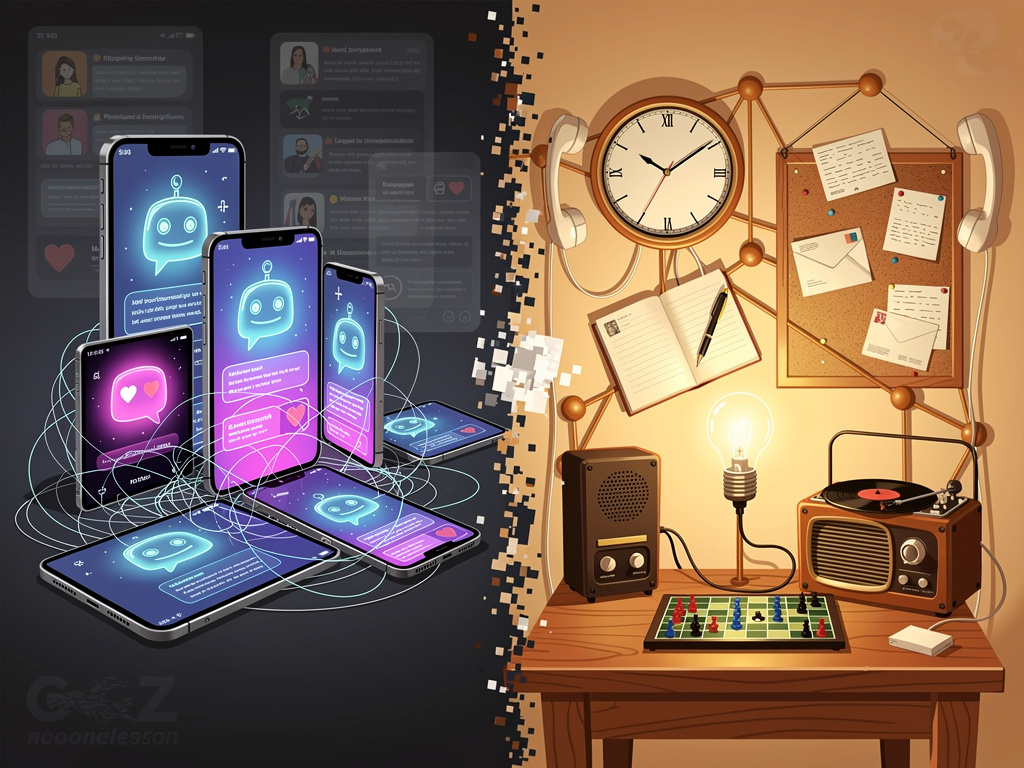
In an era where artificial intelligence companions promise to solve loneliness and tech giants race to embed AI into every aspect of daily life, a countermovement is emerging from an unexpected source: the generation that grew up with smartphones in their hands. Young entrepreneurs and digital natives are now leading a charge against what they see as the most insidious form of technology addiction yet—AI friendship apps that threaten to replace genuine human connection with algorithmic surrogates.
The movement, spearheaded by organizations like Appstinence, represents a fundamental reckoning with how technology shapes human relationships and personal development. Founded by young activists who witnessed firsthand the isolating effects of excessive screen time, these groups are making a bold argument: that the proliferation of AI companions isn’t solving loneliness but exacerbating a deeper crisis of human disconnection. Their message resonates particularly with those who came of age during the pandemic, when virtual interactions became the default and the line between digital and physical reality blurred beyond recognition.
According to TechRadar, Appstinence founder Emma Rathbone articulates the core philosophy driving this movement: “We want to encourage other people in our generation to be the types of people who do not even want to have an AI friend.” This isn’t merely about reducing screen time or taking digital detoxes—it’s about fundamentally reshaping how young people conceive of companionship and self-worth in an increasingly algorithmic world.
The Rise of AI Companions and the Loneliness Paradox
The AI companion industry has exploded in recent years, with applications like Replika, Character.AI, and numerous others attracting millions of users seeking emotional support, conversation, and even romantic relationships with artificial entities. These platforms leverage sophisticated language models to create personalized interactions that can feel remarkably human, adapting to users’ preferences and providing consistent, judgment-free engagement. For many isolated individuals, particularly during the COVID-19 pandemic’s darkest days, these AI friends offered a lifeline when human contact felt dangerous or impossible.
Yet the very features that make AI companions appealing—their constant availability, perfect attentiveness, and lack of conflict—may be precisely what makes them problematic. Critics argue that these relationships, while providing short-term comfort, ultimately atrophy the social skills and emotional resilience necessary for navigating real human relationships. Unlike human friends who challenge us, disagree with us, and require compromise, AI companions exist solely to please, creating a feedback loop that can make genuine human interaction seem unnecessarily difficult and unrewarding.
A Generation’s Digital Awakening
The Appstinence movement emerges from a generation that has unique insight into technology’s double-edged nature. These are individuals who grew up with social media, experienced the dopamine manipulation of infinite scroll, and watched as their peers disappeared into digital worlds. Their critique comes not from technophobia but from intimate familiarity with how persuasive technology works and what it costs. As TechRadar reports, these activists are positioning themselves as the antidote to an industry that profits from human isolation.
The movement’s approach differs significantly from previous anti-technology campaigns. Rather than advocating for complete digital abandonment or romanticizing pre-internet life, Appstinence promotes what might be called “intentional analog living.” This involves making deliberate choices about when and how to engage with technology, prioritizing face-to-face interactions, and cultivating the ability to be alone without digital mediation. It’s a nuanced position that acknowledges technology’s benefits while drawing firm boundaries around its intrusion into the most intimate aspects of human experience.
The Psychological Stakes of Artificial Intimacy
Mental health professionals have begun weighing in on the potential consequences of widespread AI companionship adoption. While some see therapeutic potential in AI-assisted mental health support, others warn of dependency formation and the erosion of human support networks. The concern isn’t simply about time spent with AI versus humans, but about how these interactions might fundamentally alter expectations for human relationships. If people become accustomed to companions who never have bad days, never misunderstand, and never require emotional labor, the messy reality of human connection may become increasingly intolerable.
Research into parasocial relationships—one-sided emotional connections with media figures or fictional characters—provides a framework for understanding AI companion dynamics. However, AI relationships introduce a novel element: the illusion of reciprocity. Unlike a celebrity or fictional character, an AI companion appears to know you, remember your conversations, and respond specifically to your needs. This simulation of genuine relationship can be powerful enough to trigger real emotional attachment, with users reporting feelings of love, dependency, and even grief when access to their AI companions is disrupted.
Economic Incentives Behind Digital Isolation
The business model underlying AI companion apps reveals troubling incentives that the Appstinence movement seeks to expose. Many of these platforms operate on freemium models, offering basic interaction for free while charging subscription fees for enhanced features, longer conversations, or more sophisticated personality customization. This creates a financial incentive to deepen user engagement and emotional investment—the more attached users become to their AI companions, the more likely they are to pay for premium features. In essence, these companies profit directly from cultivating dependency on artificial relationships.
This monetization of loneliness represents a new frontier in attention economy capitalism. While social media platforms profit from keeping users engaged with content, AI companion apps monetize the deepest human need for connection itself. The ethical implications are profound: companies are essentially selling synthetic intimacy to people who may be vulnerable, isolated, or struggling with mental health challenges. The Appstinence movement argues that this represents a line that shouldn’t be crossed, regardless of whether users find short-term comfort in these services.
Practical Strategies for Digital Resistance
Appstinence and similar organizations are developing concrete practices to help people reduce their dependence on digital mediation of social life. These include organized “analog socials”—gatherings where phones are collected at the door and participants engage in conversation, games, or shared activities without digital documentation. The movement also promotes “boredom tolerance training,” encouraging people to sit with uncomfortable feelings of loneliness or restlessness without immediately reaching for a device. These practices aim to rebuild the psychological muscles that constant connectivity has allowed to atrophy.
The movement also emphasizes what they call “friction-building”—intentionally making it harder to access certain technologies. This might involve using apps that limit phone usage, keeping devices in another room during certain hours, or even switching to less sophisticated phones that don’t support AI companion applications. The goal isn’t to make technology impossible to use, but to create enough pause between impulse and action that conscious choice becomes possible. In a world designed to minimize friction and maximize engagement, these activists are deliberately introducing obstacles to automated behavior.
Corporate Responses and Industry Pushback
The AI industry has largely dismissed concerns about companion apps as overblown, arguing that these tools serve legitimate needs and can complement rather than replace human relationships. Companies point to users who credit AI companions with helping them through difficult periods, providing practice for social situations, or offering support when human help wasn’t available. Some developers are incorporating features designed to encourage users to maintain real-world relationships, such as reminders to contact human friends or prompts to engage in offline activities.
However, critics note that these gestures may be insufficient given the fundamental business model incentives at play. As long as companies profit from user engagement with AI companions, there will be pressure to make those relationships more compelling, more addictive, and more central to users’ emotional lives. The Appstinence movement argues that voluntary industry self-regulation is unlikely to adequately protect users, particularly young people whose social development may be shaped by early experiences with AI relationships. They advocate for broader societal conversations about appropriate boundaries for AI in intimate contexts.
Cultural Implications and Future Trajectories
The debate over AI companions reflects broader anxieties about technology’s role in human flourishing. As artificial intelligence becomes more sophisticated and more deeply integrated into daily life, questions about authenticity, agency, and what it means to live a meaningful human life become increasingly urgent. The Appstinence movement represents one answer to these questions: that certain domains of human experience should remain protected from technological optimization, that inefficiency and difficulty in relationships aren’t bugs to be fixed but essential features of human growth.
This perspective challenges the dominant narrative of technological progress, which typically frames innovation as inherently beneficial and resistance as reactionary. Instead, these activists argue for a more discriminating approach—embracing technologies that genuinely enhance human capability and connection while rejecting those that substitute for or undermine fundamental human experiences. It’s a vision that requires distinguishing between tools that serve human purposes and those that reshape humans to serve technological systems.
Building Alternative Infrastructure for Connection
Beyond critique, the movement is working to create alternative infrastructure for human connection that doesn’t depend on digital platforms. This includes establishing physical community spaces, organizing regular in-person gatherings, and developing social networks based on geographic proximity rather than algorithmic matching. These efforts recognize that simply telling people to use technology less isn’t effective without providing meaningful alternatives for meeting social needs.
The challenge is substantial: decades of urban planning, economic change, and cultural shift have eroded traditional “third places”—community spaces beyond home and work where people naturally gather. Rebuilding this infrastructure requires not just individual behavior change but collective action and institutional support. Some activists are working with local governments to create more public spaces conducive to unstructured social interaction, while others are reviving older models of community organization like neighborhood associations and hobby clubs.
The Path Forward for Digital Wellbeing
As AI capabilities continue to advance, the questions raised by the Appstinence movement will only become more pressing. Future AI systems will be more convincing, more personalized, and more deeply integrated into various aspects of life. Without intentional boundaries and cultural norms around appropriate AI use, the drift toward increasingly mediated human experience may accelerate. The movement’s insistence on preserving spaces for unmediated human connection represents an attempt to establish those boundaries before the technology becomes so ubiquitous that alternatives seem impossible.
The success of this movement may ultimately depend on whether it can move beyond a niche of concerned activists to influence broader cultural attitudes and policy frameworks. This requires making the case that protecting human connection from excessive technological mediation isn’t nostalgic or anti-progress, but rather essential for human wellbeing and social cohesion. As more people experience the hollow feeling of AI-mediated intimacy or watch relationships atrophy in favor of digital substitutes, the movement’s message may find increasingly receptive audiences. The question is whether this awakening will come soon enough to meaningfully shape how AI companions and similar technologies are developed and deployed, or whether society will first need to experience more severe consequences of artificial intimacy before reconsidering its embrace of these tools.


 WebProNews is an iEntry Publication