
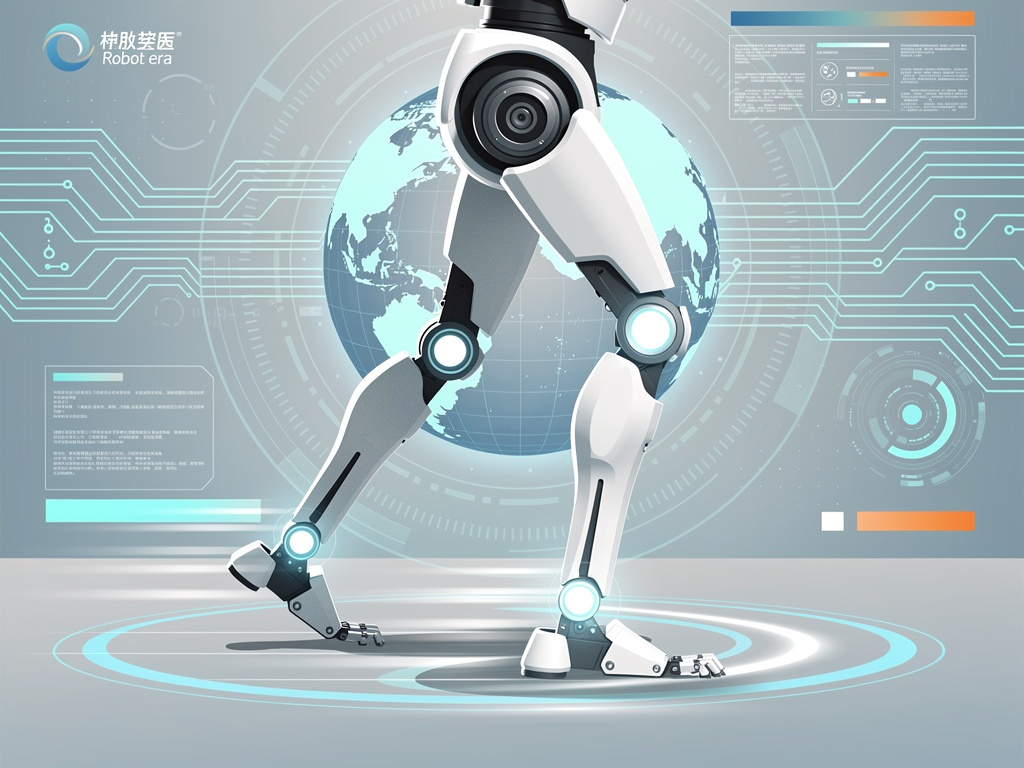
A humanoid robot just moonwalked across a stage in China, and the footage is unsettling in the best possible way. Not because it’s clumsy or stilted, but because it’s good. Fluid. Eerily human. The kind of movement that makes you pause the video and watch it again, trying to spot the telltale jerkiness of a machine pretending to be alive.
You won’t find it.
The robot in question is Star1, built by the Chinese robotics firm Robot Era (also known as Xingchen Jishidai). In a demonstration video that surfaced in recent days and quickly went viral, Star1 performed Michael Jackson’s signature moonwalk with a smoothness that has stunned robotics watchers and casual observers alike. As Digital Trends reported, the robot displayed “lifelike agility” that goes well beyond what most people expect from bipedal machines. The moonwalk was just the headline act. Star1 also demonstrated walking over rough terrain, recovering from pushes, navigating stairs, and performing dynamic movements that suggest a level of balance and coordination that, even two years ago, would have seemed aspirational for most humanoid platforms.
Robot Era isn’t a household name in the West. Not yet. But the Shenzhen-based company has been building toward this moment with a series of increasingly capable prototypes, and Star1 represents something of a coming-out party. The robot stands roughly 171 centimeters tall, weighs about 65 kilograms, and has 44 degrees of freedom — a measure of the independent axes of movement across its joints. That’s a high number. For context, Boston Dynamics’ Atlas, long considered the gold standard in humanoid locomotion, operates with fewer degrees of freedom in its publicly documented configurations.
What makes the moonwalk demonstration matter isn’t the dance move itself — it’s what the dance move implies. Moonwalking requires precise weight shifting, controlled sliding of one foot while the other bears load, and constant micro-adjustments to maintain balance during a fundamentally deceptive motion. The foot that appears to move backward is actually stationary; the planted foot is the one doing the work. For a human, this is hard enough to learn. For a robot, executing it smoothly demands exceptional real-time control, low-latency sensor feedback, and actuators capable of producing forces that are simultaneously strong and delicate.
So what’s actually going on under the hood?
Robot Era has disclosed relatively little about Star1’s control architecture, but the broader trajectory of Chinese humanoid robotics offers clues. Companies across China — Unitree, Fourier Intelligence, UBTECH, and now Robot Era — have been aggressively pursuing reinforcement learning approaches to locomotion. Rather than hand-coding every movement, these systems train in simulation, running millions of iterations of virtual walking, stumbling, and recovering until the neural network controlling the robot converges on policies that generalize to the real world. The sim-to-real transfer problem, once a major bottleneck, has been substantially narrowed by better physics engines, domain randomization techniques, and improved actuator hardware that more faithfully matches the simulated models.
Star1’s demonstrations suggest Robot Era has made significant progress on this front. The robot’s terrain traversal clips show it handling uneven ground, gravel-like surfaces, and inclines with a gait that adapts in real time. When pushed from behind, it doesn’t topple. It staggers, adjusts, and recovers — much the way a human would. These aren’t pre-programmed responses to specific disturbances. They’re emergent behaviors from a policy trained to maintain balance across a wide distribution of perturbations.
The Arms Race in Humanoid Robotics Has Shifted From Walking to Moving Like Us
For years, the benchmark in humanoid robotics was simple: don’t fall down. Boston Dynamics’ hydraulic Atlas spent the better part of a decade impressing the world by doing backflips and parkour, but always with a certain mechanical quality that reminded you a machine was performing. When Boston Dynamics retired the hydraulic Atlas in 2024 and unveiled an all-electric successor, the company signaled that the next phase of competition wouldn’t be about raw athleticism but about fluid, human-like motion suitable for real-world deployment alongside people.
Tesla’s Optimus program has taken a different approach, prioritizing manufacturing scalability and cost reduction over flashy demos. Elon Musk has repeatedly stated that Optimus could eventually become Tesla’s most valuable product line, projecting unit costs that could fall below $20,000 at scale. But Tesla’s public demonstrations have so far been more modest in terms of movement quality — the robot walks, it sorts objects, it folds laundry (slowly). The moonwalk? That’s not in Optimus’s repertoire.
And that gap matters more than it might seem. The ability to perform complex, dynamic, whole-body movements isn’t just a party trick. It’s a proxy for the underlying control sophistication that will determine which robots can actually work in unstructured environments — warehouses with cluttered floors, construction sites with shifting terrain, homes with stairs and pets and toddlers. A robot that can moonwalk can probably also catch itself on an icy sidewalk, step over a cable on a factory floor, or adjust its footing on a moving platform.
China’s investment in this space has been enormous and accelerating. The Chinese government’s 2025 industrial policy targets explicitly identify humanoid robots as a strategic priority, with provincial governments offering subsidies, land grants, and procurement guarantees to domestic manufacturers. Beijing wants a domestically competitive humanoid robotics industry by 2027, and the pace of visible progress suggests that timeline isn’t fantasy.
Unitree’s H1 and G1 robots have already demonstrated remarkable agility at price points that undercut Western competitors by wide margins. Fourier Intelligence’s GR-2 has been deployed in pilot rehabilitation and logistics applications. UBTECH, publicly traded in Hong Kong, has partnerships with major Chinese automakers to deploy humanoids in factory settings. Robot Era’s Star1 enters this crowded field with a locomotion demo that, at least visually, appears to match or exceed what any of its domestic rivals have shown publicly.
The international response has been a mix of admiration and anxiety. On X (formerly Twitter), robotics researchers and engineers shared the Star1 moonwalk clip widely, with reactions ranging from genuine technical respect to concern about the pace at which Chinese firms are closing — and in some cases eliminating — the gap with American and Japanese incumbents. One recurring theme: the speed of iteration. Chinese humanoid robotics companies are shipping new prototypes every few months, a cadence that would be difficult to sustain in the more capital-constrained, regulation-heavy Western market.
But demos aren’t products. The history of robotics is littered with spectacular demonstrations that never translated into commercially viable systems. Boston Dynamics’ original Atlas was a marvel of engineering that never found a sustainable business model; the company has been sold twice. Honda’s ASIMO, once the world’s most famous humanoid, was retired in 2022 without ever achieving meaningful deployment outside of corporate PR events. The question for Robot Era — and for every company in this space — is whether the leap from viral video to factory floor or household can actually be made.
There are reasons for cautious optimism. The actuator technology underpinning these robots has improved dramatically in the past three years, driven largely by advances in quasi-direct-drive motors and proprioceptive control that originated in MIT’s research labs and have since been commercialized, primarily by Chinese manufacturers. Battery energy density continues to climb. And the software stack — the reinforcement learning policies, the perception systems, the task planners — is benefiting from the same scaling laws that have powered the large language model boom. More compute, more simulation, better policies.
Still, manipulation remains the harder problem. Walking, even moonwalking, is a solved problem in the sense that the research community broadly understands the approaches that work. Dexterous manipulation — picking up a glass without crushing it, threading a bolt, handling a flexible cable — is not. Robot Era’s demo focused almost entirely on locomotion. The company’s ability to pair that movement quality with capable hands and arms will ultimately determine Star1’s commercial relevance.
For now, though, the moonwalk is the message. It says: we can do this. We can make machines that move not just functionally but beautifully, with a grace that blurs the line between engineered and organic. Whether that’s thrilling or unnerving depends on your perspective. Probably both.
The next twelve months will be telling. Robot Era has indicated it plans to begin limited commercial deployments of Star1 variants by late 2025, targeting industrial inspection and logistics applications initially. If the real-world performance matches the demo reel, the company will have earned its place among the front-runners in what is shaping up to be one of the most consequential technology races of the decade.
Michael Jackson’s moonwalk debuted on television in 1983 and changed what audiences thought a human body could do. Forty-two years later, a robot in Shenzhen is making people rethink what a machine body can do. The choreography is borrowed. The implications are entirely new.


 WebProNews is an iEntry Publication