
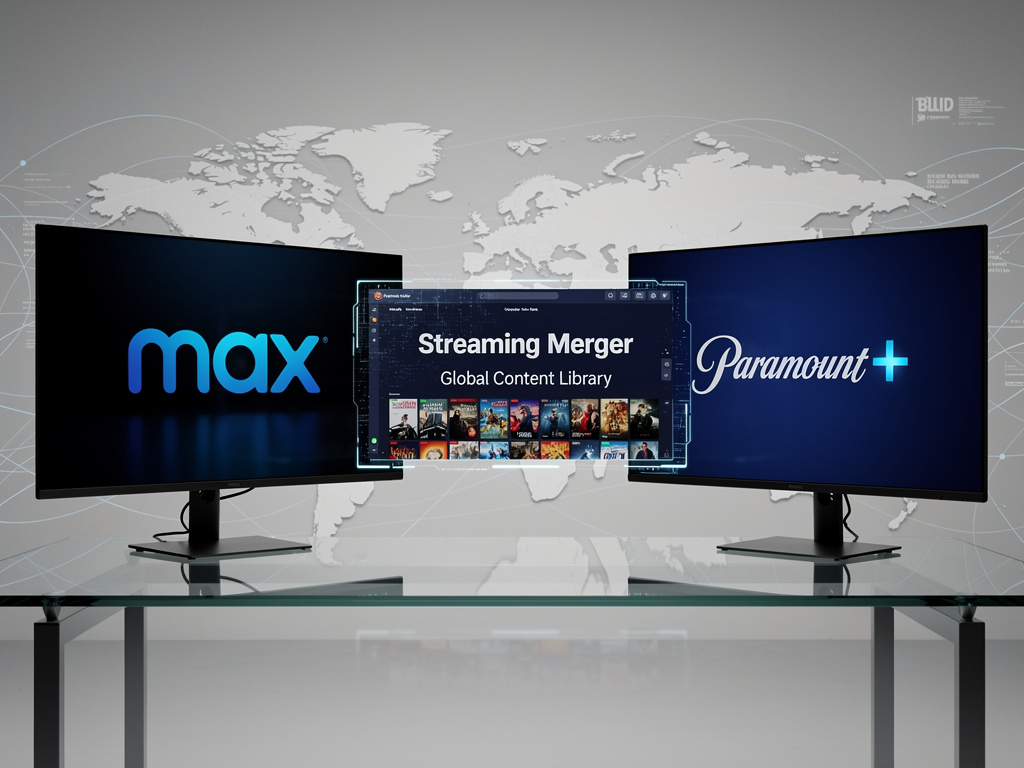
In what may become the most consequential restructuring in the history of streaming entertainment, Warner Bros. Discovery and Paramount Global are in serious discussions to merge their flagship streaming platforms — Max and Paramount+ — into a single service. The potential combination would unite two of Hollywood’s most storied content libraries under one digital roof, creating a formidable competitor to Netflix, Disney+, and Amazon Prime Video at a time when the streaming wars have entered a brutal phase of consolidation.
The talks, first reported by Engadget, signal that the era of every major media company operating its own standalone streaming platform may be drawing to a close faster than anyone anticipated. The discussions come as both companies face mounting pressure from Wall Street to demonstrate a viable path to sustained profitability in streaming — a business that has collectively burned through tens of billions of dollars across the industry.
Two Legacy Studios, One Existential Problem
Warner Bros. Discovery, led by CEO David Zaslav, has spent the past two years aggressively cutting costs, canceling projects, and restructuring its operations after the $43 billion merger of Discovery and WarnerMedia in 2022. Max, the company’s streaming platform that rebranded from HBO Max in 2023, boasts one of the most prestigious content libraries in entertainment — anchored by HBO’s critically acclaimed originals, the DC Universe, Harry Potter, and a deep catalog of Warner Bros. films. As of its most recent earnings report, Max had approximately 110 million global subscribers.
Paramount Global, meanwhile, has been the subject of takeover speculation for years. The company’s streaming service, Paramount+, carries a formidable content arsenal of its own: the Star Trek franchise, Yellowstone and its spinoffs, CBS programming, Nickelodeon content, and a film library that includes the Mission: Impossible and Transformers franchises, as well as classics from the Paramount Pictures vault. Paramount+ had roughly 72 million subscribers globally as of late 2024. But the company has struggled financially, with its stock price declining significantly and its leadership in flux following the departure of CEO Bob Bakish and the complicated saga involving Skydance Media’s acquisition deal with controlling shareholder Shari Redstone’s National Amusements.
The Strategic Logic Behind Combining Forces
The rationale for merging the two streaming services is straightforward, even if the execution would be enormously complex. A combined Max-Paramount+ platform would instantly become one of the largest streaming services in the world by content volume, potentially rivaling Netflix’s breadth if not its subscriber count. The merged library would include HBO dramas, CBS procedurals, Paramount films, Warner Bros. blockbusters, Nickelodeon children’s programming, Discovery’s reality and documentary content, and sports rights from both companies — including CBS’s NFL and Champions League coverage and Warner Bros. Discovery’s NBA package through TNT Sports.
For subscribers, the appeal would be obvious: one subscription fee for an enormous range of content that currently requires two separate payments. For the companies, the merger would allow significant cost savings through the elimination of redundant technology infrastructure, marketing spend, and potentially content acquisition costs. According to reporting from Engadget, the combined entity could offer a more compelling value proposition to consumers who have grown increasingly selective about which streaming subscriptions they maintain amid rising prices across the industry.
A Market Defined by Subscriber Fatigue and Rising Churn
The timing of these discussions is not accidental. The streaming industry in 2025 looks dramatically different from the gold-rush mentality that prevailed just three or four years ago. Consumers are overwhelmed by the number of available services and are increasingly rotating between platforms — subscribing for a month to watch a specific show, then canceling. This phenomenon, known as churn, has become the central anxiety of every streaming executive in Hollywood.
Netflix remains the dominant player with more than 300 million subscribers worldwide, while Disney+ and Amazon Prime Video occupy strong positions behind it. Apple TV+, despite spending billions on original content, has struggled to build a subscriber base commensurate with its investment. For mid-tier players like Max and Paramount+, the math has become increasingly difficult: neither service alone may have enough content breadth or subscriber scale to justify the enormous fixed costs of operating a global streaming platform.
The Skydance Factor and Regulatory Questions
Any merger of the two streaming services would be complicated by the ongoing Skydance Media acquisition of Paramount Global. David Ellison’s Skydance reached a deal in 2024 to acquire National Amusements and merge with Paramount, but the transaction has faced regulatory scrutiny and legal challenges. How a streaming merger with Warner Bros. Discovery would interact with the Skydance deal remains unclear, and sources familiar with the discussions have indicated that negotiations are still in early stages with no guarantee of a final agreement.
Regulatory approval would be another significant hurdle. A combined Warner Bros. Discovery and Paramount streaming platform would concentrate an enormous amount of content — and potentially significant market power — in a single entity. Antitrust regulators at the Federal Trade Commission and the Department of Justice would likely scrutinize whether such a combination would harm competition or raise prices for consumers. However, given that the combined service would still be smaller than Netflix by subscriber count, and given the current administration’s generally more permissive stance toward media consolidation, some industry analysts believe approval is achievable.
What This Means for the Bundle — and for Cable’s Ghost
There is a deep irony in the potential merger. The entire premise of the streaming revolution was unbundling — giving consumers the ability to pay only for the content they wanted, rather than the bloated cable packages that included hundreds of channels most viewers never watched. Now, a decade into the streaming era, the industry appears to be re-bundling at a rapid pace. Disney, Fox, and Warner Bros. Discovery already launched a joint sports streaming service called Venu Sports (though it faced antitrust challenges). Amazon has been adding channels to its Prime Video platform. And virtually every major streamer now offers some form of bundle or partnership with competitors.
A merged Max-Paramount+ service would represent the most dramatic re-bundling move yet, essentially combining two major cable-era content portfolios into a single streaming offering. The pricing of such a service would be critical. If the combined platform were offered at a price point significantly below the cost of subscribing to both services separately — say, $19.99 per month for an ad-free tier versus a combined $33 or more today — it could drive significant subscriber growth. But if the merger is used primarily as a justification to raise prices, consumer backlash could be swift.
Content Creators and Talent Watch Nervously
Hollywood’s creative community is watching these developments with a mixture of interest and apprehension. Consolidation at this scale typically leads to reduced content spending, as the merged entity eliminates overlapping projects and rationalizes its programming slate. Writers, directors, producers, and actors who are still recovering from the financial impact of the 2023 strikes are concerned that fewer buyers in the market means less leverage for talent and fewer opportunities overall.
On the other hand, a larger, better-funded streaming platform could theoretically invest more in high-quality original programming, giving creators bigger budgets and wider audiences. HBO’s track record of prestige television — from The Sopranos to Succession to The Last of Us — combined with Paramount’s franchise muscle could create a platform with both critical credibility and mass-market appeal. The question is whether the corporate imperative to cut costs will override the creative ambition that made both companies’ content valuable in the first place.
The Road Ahead Is Long but the Direction Is Clear
Whether or not this specific deal comes to fruition, the broader trajectory of the streaming industry is unmistakable: consolidation is accelerating, and the number of major standalone streaming services is likely to shrink significantly over the next several years. The companies that survive will be those with the scale, content breadth, and financial discipline to compete against Netflix and the tech giants.
For Warner Bros. Discovery and Paramount Global, a merged streaming service may represent the best — or perhaps the only — path to long-term viability in a business that has punished subscale players mercilessly. As Engadget noted, the discussions are ongoing and fluid, and significant obstacles remain. But the fact that two of Hollywood’s oldest and most prestigious studios are even contemplating such a radical combination tells you everything you need to know about where the streaming business stands in 2025: the era of going it alone is over.


 WebProNews is an iEntry Publication