
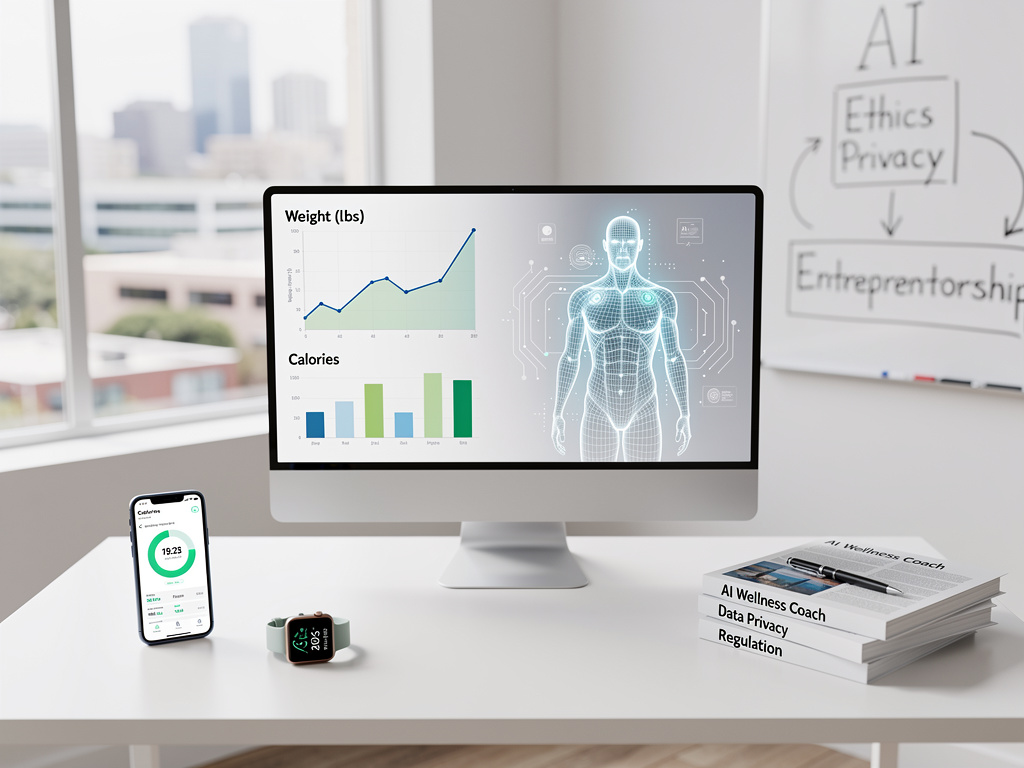
When Todd Nevins shed 75 pounds through disciplined use of a calorie-tracking app, he didn’t just transform his body — he ignited an entrepreneurial vision that sits at the volatile intersection of artificial intelligence, personal health data, and the booming weight-loss industry. Nevins, a 50-year-old based in Austin, Texas, has since created what he calls an AI-powered “digital twin” of himself, a chatbot trained on his personal weight-loss journey that dispenses advice to others seeking similar results.
The concept, as reported by Business Insider, represents a new frontier in how individuals are leveraging generative AI tools to monetize personal experience — and raises thorny questions about the boundaries between personal testimony, health coaching, and medical advice in the age of large language models.
From Calorie Counting to a Digital Doppelgänger
Nevins’s weight-loss story began conventionally enough. Like millions of Americans, he turned to a calorie-tracking application to impose structure on his eating habits. Over time, the rigorous logging of meals, macronutrient ratios, and exercise output helped him drop 75 pounds. But Nevins, who has a background in digital marketing, saw something more than a personal victory in his data. He saw a product.
Using AI tools — including platforms that allow users to build custom chatbots trained on proprietary data — Nevins constructed a digital twin that could replicate his coaching style, dietary philosophy, and motivational approach. The AI version of Nevins draws on his personal logs, his preferred strategies for managing hunger and cravings, and the behavioral frameworks he credits with his success. Users can interact with the bot much as they would with a human health coach, asking questions and receiving tailored responses rooted in Nevins’s lived experience.
A Growing Market for AI-Powered Health Guidance
Nevins’s venture arrives at a moment when the health and wellness industry is undergoing a profound technological shift. The global digital health market is projected to reach $946 billion by 2030, according to research from Grand View Research, and AI-driven health applications are among the fastest-growing segments. From Noom’s behavioral psychology-based weight-loss platform to the explosion of GLP-1 receptor agonist drugs like Ozempic and Wegovy, consumers are demonstrating an enormous appetite for novel approaches to weight management.
What distinguishes Nevins’s approach is its deeply personal provenance. Unlike corporate wellness apps built by teams of engineers and nutritionists, his digital twin is, in essence, a single man’s weight-loss memoir rendered interactive. That personal touch may be precisely what appeals to a certain segment of the market — people who are skeptical of institutional health advice and prefer peer-to-peer guidance from someone who has “been there.” As Nevins told Business Insider, the AI twin allows him to scale his personal story in a way that one-on-one coaching never could.
The Democratization of AI Coaching — and Its Risks
The tools Nevins used to build his digital twin are increasingly accessible. OpenAI’s custom GPT builder, platforms like Delphi.ai that allow individuals to create AI versions of themselves, and a host of no-code chatbot frameworks have made it possible for virtually anyone with a compelling personal narrative to package it as an AI product. This democratization is creating a new class of solopreneur — part influencer, part technologist, part self-help guru — who can operate at scale without traditional business infrastructure.
But the proliferation of AI-powered health advisors built on personal anecdote rather than clinical evidence has drawn concern from medical professionals and regulators alike. Dr. Fatima Cody Stanford, an obesity medicine specialist at Massachusetts General Hospital, has repeatedly cautioned that weight-loss advice must account for the complex interplay of genetics, hormonal regulation, mental health, and socioeconomic factors. A chatbot trained on one person’s successful calorie-deficit journey, however well-intentioned, cannot replicate the nuanced assessment a licensed clinician provides. The risk of harm — from disordered eating patterns to dangerous caloric restriction — is not trivial.
Regulatory Gray Zones and the FTC’s Watchful Eye
From a regulatory standpoint, AI health coaches occupy a murky territory. The Federal Trade Commission has been increasingly aggressive in policing health claims made by digital products. In recent enforcement actions, the FTC has targeted companies that used AI-generated testimonials or made unsubstantiated health promises. While Nevins’s digital twin is based on his genuine experience, the line between sharing a personal story and implicitly promising similar results to paying users is one that regulators are watching closely.
The Food and Drug Administration, meanwhile, has been developing frameworks for the regulation of AI-based software as a medical device, though most consumer-facing wellness chatbots currently fall outside the FDA’s direct purview. Industry observers expect that as AI health tools become more prevalent and more sophisticated — potentially incorporating biometric data from wearables or making specific dietary prescriptions — regulatory scrutiny will intensify. The question of liability when an AI coach dispenses advice that leads to adverse health outcomes remains largely untested in court.
The Economics of Scaling a Personal Brand Through AI
For Nevins, the economics of the digital twin model are compelling. Traditional health coaching requires significant time investment per client, limiting revenue to the number of hours a coach can work. An AI twin, by contrast, can handle thousands of simultaneous conversations at negligible marginal cost. The subscription or per-interaction pricing models common in the AI chatbot space could theoretically generate passive income at a scale that dwarfs conventional coaching fees.
This model is not unique to health and wellness. Across industries, individuals are experimenting with AI replicas that can deliver consulting advice, creative feedback, or educational content. The creator economy, already valued at over $100 billion according to estimates from Goldman Sachs, is beginning to merge with the AI economy in ways that could fundamentally alter how expertise is packaged and sold. Nevins is an early mover in this convergence, but he is unlikely to be alone for long.
Personal Data as Product: Privacy and Ethical Considerations
There is also the matter of data. Nevins’s digital twin was trained on his own personal health data — food logs, weight measurements, exercise records, and subjective reflections on his mental and emotional state during his weight-loss journey. By voluntarily feeding this information into an AI system, he has made an explicit choice about the commercial use of his most intimate health details. But the model raises questions about what happens when users interact with the twin and share their own health data in return.
Who owns the conversation logs? How is user data stored and protected? Could the information shared with an AI health coach be sold to third parties, used for targeted advertising, or subpoenaed in legal proceedings? These are not hypothetical concerns. The health data privacy framework in the United States, anchored by the Health Insurance Portability and Accountability Act (HIPAA), generally does not extend to consumer wellness applications that operate outside the traditional healthcare system. Users of AI health coaches may be sharing sensitive information with far fewer protections than they assume.
What Comes Next for AI-Powered Wellness
Nevins’s story is emblematic of a broader phenomenon: the rapid personalization of AI tools and their deployment in domains that were previously the exclusive province of credentialed professionals. The weight-loss industry, worth an estimated $224 billion globally according to Allied Market Research, is a particularly fertile ground for this kind of disruption. Consumers are hungry — sometimes literally — for solutions that feel authentic, accessible, and affordable.
Whether Nevins’s digital twin proves to be a lasting business or a novelty will depend on several factors: the quality and consistency of the AI’s advice, the regulatory environment’s evolution, and, perhaps most importantly, whether users actually lose weight. In a field littered with failed diets, abandoned gym memberships, and miracle supplements, the bar for sustained success is high. But Nevins has at least one advantage that many wellness entrepreneurs lack — he is the living, 75-pounds-lighter proof of concept. The question is whether an artificial version of that experience can deliver anything close to the real thing.
As AI continues to permeate every corner of daily life, stories like Nevins’s will multiply. The tools are available, the demand is enormous, and the barriers to entry are falling fast. What remains to be built — and what may prove far more difficult than any chatbot — is the trust infrastructure that ensures these digital advisors do more good than harm.


 WebProNews is an iEntry Publication