
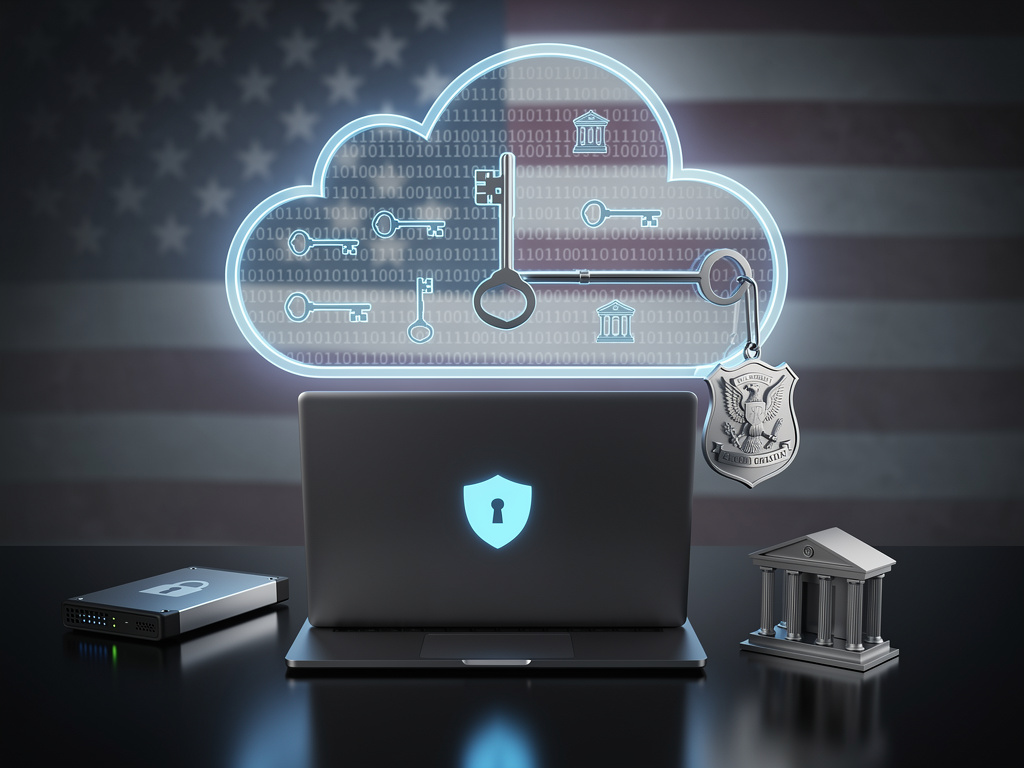
For millions of corporate and individual users, the small padlock icon signifying Microsoft’s BitLocker encryption is a digital seal of security, a promise that sensitive data on a lost or stolen laptop remains impenetrable. This trust is foundational to modern computing, where a company’s trade secrets or a family’s private information resides on easily transportable devices. Yet, the very mechanism designed for user convenience—the automatic cloud backup of the recovery key—has created a silent, persistent access point for federal law enforcement, complicating the narrative of absolute data privacy.
The widespread encryption tool, integrated into most professional versions of Windows for nearly two decades, operates on a simple premise: it scrambles a drive’s contents, rendering them unreadable without the correct password or a lengthy, 48-digit recovery key. By default, when a user sets up a new Windows device using a personal Microsoft account, this critical recovery key is often automatically uploaded and stored on Microsoft’s servers. While this feature has saved countless users from catastrophic data loss after forgetting a password, it also means the key resides within the legal reach of a government subpoena, a reality that stands in stark contrast to the perception of an unbreakable digital lockbox.
A Glimpse Into a Locked Digital Vault
The tension between BitLocker’s security promise and law enforcement’s investigative needs was cast into sharp relief by a years-old case that remains deeply relevant. Court documents unsealed in 2016 from a 2014 fraud and money laundering investigation revealed the Federal Bureau of Investigation’s struggle to access a suspect’s BitLocker-encrypted Microsoft laptop. According to reporting from TechRepublic, which first detailed the filings, prosecutors noted that the data on the device “is not accessible at this time because it is encrypted.” This admission highlighted a significant shift in the dynamic between Redmond and Washington.
The court filings suggested that, prior to the Edward Snowden revelations in 2013, Microsoft may have been more cooperative in providing authorities with access to encrypted data. The 2014 case, however, occurred after Microsoft, along with other tech giants, publicly hardened its stance on user privacy and encryption in response to widespread public backlash over government surveillance programs. In a statement at the time, a Microsoft spokesperson was unequivocal, stating, “We do not provide any government with our encryption keys or the ability to break our encryption.” While technically true, this statement carefully omits the critical nuance of keys provided not by Microsoft, but by the users themselves for safekeeping.
The Post-Snowden Policy and Its Practical Limits
In the wake of the Snowden leaks, Microsoft championed user privacy, implementing stronger encryption across its services and vowing to resist government efforts to create “backdoors.” The company began issuing biannual transparency reports, detailing the volume and nature of legal demands received from governments worldwide. These reports consistently show that Microsoft, like its peers, complies with lawful requests for data. The most recent figures available from the Microsoft Transparency Hub indicate the company received tens of thousands of legal demands for consumer data from U.S. law enforcement in a single six-month period, affecting tens of thousands of accounts.
This is where the distinction between breaking encryption and handing over a key becomes paramount. Microsoft does not need to break BitLocker for authorities if it already possesses the recovery key stored in a user’s OneDrive account. By responding to a valid warrant for the contents of a user’s Microsoft account, the company can provide the BitLocker recovery key, effectively giving law enforcement the means to unlock the physical device. This practice does not involve a backdoor; rather, it leverages a front-door feature designed for user convenience, placing Microsoft in the challenging position of being a custodian of its users’ most sensitive credentials.
The Legislative Wrench: The CLOUD Act’s Long Reach
Any ambiguity about the U.S. government’s authority to obtain these keys was largely erased with the passage of the Clarifying Lawful Overseas Use of Data (CLOUD) Act in 2018. This legislation formally empowers U.S. authorities to compel American companies to produce data they control, regardless of where that data is physically stored globally. For a multinational corporation like Microsoft with data centers scattered across the planet, the CLOUD Act means a U.S. warrant can retrieve a BitLocker key stored on a server in Ireland as easily as one in Virginia.
The law was designed to resolve legal challenges and streamline law enforcement access in the cloud computing era. However, as organizations like the Electronic Frontier Foundation have argued, it significantly expands government surveillance powers without requiring authorities to respect the privacy laws of the countries where the data is stored. For a corporation’s IT department or a privacy-conscious individual, this means the security of their BitLocker-encrypted device is subject to U.S. legal standards, even if the device and its user never leave foreign soil, so long as the recovery key is backed up to a U.S.-based cloud provider.
Technical Cracks in the Armor
Beyond the legal avenues for access, the physical security of BitLocker is not absolute. Security researchers continuously probe for weaknesses, and recent findings demonstrate that with physical access, even drives protected by some of the most robust hardware-based security can be compromised. In early 2024, a researcher discovered a method to bypass BitLocker on certain laptops by physically sniffing data exchanged between the CPU and the Trusted Platform Module (TPM), the dedicated security chip that often stores the encryption key. As detailed by The Hacker News, this attack, while complex and requiring specialized equipment, allows an attacker with temporary physical possession of a device to extract the master key in under a minute.
Such vulnerabilities underscore a critical reality for cybersecurity professionals: encryption is a single, albeit powerful, layer of defense. An attacker, whether a corporate spy or a state-sponsored actor, with the time, resources, and physical access to a device, may be able to circumvent software protections. This threat model is different from a government agency serving a warrant, but it informs the broader security strategy for organizations where data is paramount. It reinforces the need for strong physical security protocols and user vigilance, as the encryption itself is only as strong as the system protecting its keys.
The Enterprise-Consumer Divide
For corporate IT and security administrators, this complex situation has led to a clear divergence in strategy compared to that of an average consumer. While a home user might see the automatic cloud backup as a vital safety net, an enterprise views it as a potential liability and a loss of control. Consequently, in managed corporate environments, BitLocker deployment is a far more deliberate process. Companies typically use tools like Microsoft’s Endpoint Manager or Azure Active Directory to centrally manage BitLocker and its recovery keys.
In this model, the recovery keys are not stored in an individual employee’s Microsoft account but are held in a corporate-controlled repository, such as Azure Key Vault or an on-premises database. This gives the organization, not Microsoft, sole custody of the keys. While the company would still be obligated to produce those keys in response to a lawful order, the request would have to be served directly to the company. This insulates them from a scenario where a government agency could obtain the key from Microsoft without their direct involvement or knowledge, providing a crucial layer of legal and procedural control over their most sensitive assets.
A Continuing Balancing Act
The debate over encryption and lawful access remains one of the defining technology policy challenges of our time. Law enforcement officials, including FBI Director Christopher Wray, continue to warn about the dangers of “warrant-proof encryption,” arguing that it allows criminals and terrorists to operate in the dark. In a March 2024 speech, Wray reiterated the Bureau’s concerns, stating that inaccessible encrypted data is a major impediment to investigations. As reported by The Register, he emphasized the need for “lawful access by design,” a concept the tech industry has largely resisted as a euphemism for mandated backdoors that would weaken security for all users.
This puts companies like Microsoft in an unenviable position, caught between their commitment to user privacy and their legal obligations in the jurisdictions where they operate. Their carefully worded policies reflect this balancing act: they will protect data with robust encryption, but they will also comply with the rule of law. The practical result is a security model with different tiers of protection, dependent on user choices and configurations. The default settings prioritize convenience and data recovery, which, in turn, creates an avenue for legal access. Achieving a higher level of security requires a conscious, and often more technical, effort from the user or system administrator.
Ultimately, the security of a BitLocker-encrypted drive is not a simple binary of locked or unlocked. It is a function of where the key is stored, the legal frameworks governing the key’s custodian, and the physical security of the device itself. For industry insiders, understanding this distinction is crucial. The padlock on the screen is a powerful deterrent, but the key is often resting in a cloud vault hundreds of miles away, subject to a different set of rules and risks. The responsibility for securing that key, and the data it protects, increasingly falls not just on Microsoft, but on the informed choices of the users and organizations who rely on its ubiquitous protection.


 WebProNews is an iEntry Publication