
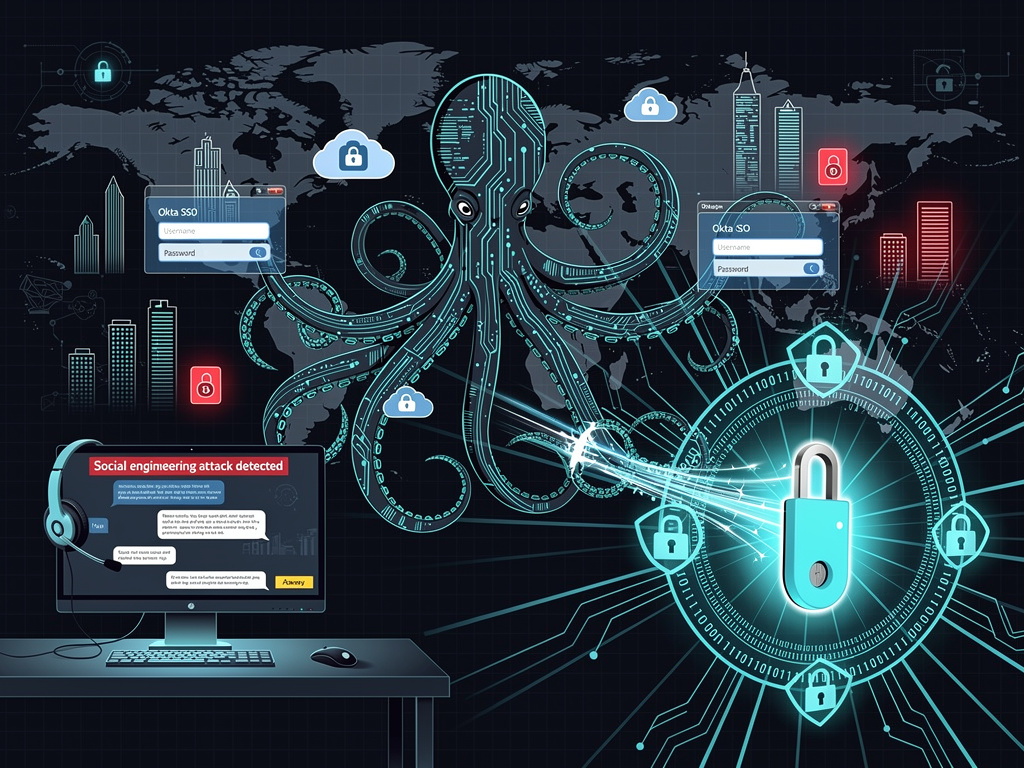
In the quiet corridors of corporate cybersecurity, a disturbing reality has settled in: the fortress of Single Sign-On (SSO), designed to simplify and secure access, has become the primary battering ram for modern threat actors. A sprawling, highly coordinated identity theft campaign, identified by researchers as “0ktapus,” has successfully compromised over 130 organizations, including some of the most technologically fortified companies in the world. This is not merely a series of isolated breaches but a systemic assault on the trust architecture that underpins the modern digital economy. The campaign, which specifically targets users of the Okta identity and access management platform, represents a watershed moment for Chief Information Security Officers (CISOs) who must now reckon with the fact that their identity providers are the new perimeter.
The attackers behind this operation have demonstrated a level of operational security and logistical planning usually reserved for nation-state actors, yet their motives appear strictly financial. According to a report highlighted by TechRadar, the threat actors have managed to harvest nearly 10,000 sets of user credentials. These are not low-level accounts; the targets often include software developers and IT administrators, granting the attackers elevated privileges that allow for lateral movement across cloud environments. The efficiency of the campaign is staggering, relying on a low-tech entry point—SMS phishing—to bypass high-tech defenses.
The sheer scale of the 0ktapus campaign exposes a fundamental fragility in centralized identity management systems used by the Fortune 500.
The methodology employed by the attackers is deceptively simple yet executed with ruthless precision. Known as “smishing,” the attack begins with a text message sent to an employee’s mobile device. These messages often masquerade as urgent notifications from the company’s IT department or the Okta authentication system itself, prompting the user to log in via a provided link. As detailed by Group-IB, the cybersecurity firm that first mapped the extent of this campaign, the link directs the victim to a fraudulent phishing site that is a near-perfect replica of the organization’s legitimate Okta authentication portal. Once the user enters their credentials, the attackers capture the username and password in real-time.
However, the sophistication lies in the second step of the attack. Recognizing that most corporate targets utilize Multi-Factor Authentication (MFA), the phishing sites are engineered to request the MFA code immediately after the password is entered. The attackers script this interaction to relay the code to the legitimate Okta portal instantaneously, effectively hijacking the session before the code expires. This “Man-in-the-Middle” (MitM) approach renders standard SMS-based MFA and Time-based One-Time Password (TOTP) apps obsolete as defensive barriers. The speed at which these kits operate suggests a high degree of automation, allowing the syndicate to scale their operations across multiple verticals simultaneously.
Attackers operate with the efficiency of a software startup, utilizing pre-built phishing kits to streamline the theft of digital identities.
The target selection in this campaign reveals a strategic focus on high-value intellectual property and cryptocurrency assets. While the victims span various sectors, there is a heavy concentration on telecommunications, finance, and technology companies. By compromising a single identity provider, the attackers gain access to any downstream application integrated with that SSO instance—be it Slack, GitHub, AWS, or Salesforce. This supply chain ripple effect was most notably observed in breaches affecting major infrastructure providers, where initial access was gained through the exact methods described in the 0ktapus campaign. The attackers are not just looking for data to sell; they are looking for infrastructure to hijack.
Furthermore, the threat actors have shown an ability to pivot from espionage to extortion. Once inside a network, the modus operandi often shifts toward data exfiltration or the deployment of ransomware. Federal agencies have taken note of this escalation. CISA has issued advisories linking these social engineering tactics to the broader ecosystem of cybercriminal groups like Scattered Spider, who are known to collaborate with the ALPHV/BlackCat ransomware gang. This convergence of identity theft specialists and ransomware operators creates a dangerous hybrid threat that can navigate corporate networks with the stealth of an insider and strike with the destructive force of a criminal cartel.
Social engineering tactics have evolved from generic emails to highly targeted help desk manipulations that exploit human empathy.
A critical, often overlooked aspect of this campaign is the attackers’ willingness to interact directly with human operators. When phishing sites fail or when they encounter hardware-based resistance, the threat actors resort to voice phishing (vishing). They frequently call corporate IT help desks, posing as employees who have lost access to their devices. utilizing data scraped from LinkedIn or stolen in previous breaches to verify their “identity.” By convincing help desk personnel to reset MFA factors or enroll a new device, they bypass technical controls entirely. This highlights a glaring gap in enterprise security: while technology stacks are hardened, the human verification process at the service desk remains vulnerable to manipulation.
The persistence of the attackers is evidenced by their infrastructure. They register look-alike domains that mimic the naming conventions of their targets, often using keywords like “SSO,” “VPN,” or “Okta” combined with the company name. These domains are frequently registered shortly before the attack launches, making them difficult for threat intelligence feeds to blacklist in real-time. The attackers also utilize Telegram channels for command and control (C2), allowing them to exfiltrate data and manage the phishing kits with anonymity and ease. This use of legitimate messaging platforms for criminal logistics complicates the attribution and takedown efforts by law enforcement.
Defensive strategies must now pivot from user education to hardware-enforced cryptographic verification standards like FIDO2.
In response to this wave of attacks, the industry consensus is shifting rapidly away from phishable factors. Security leaders are increasingly advocating for the adoption of FIDO2/WebAuthn standards, which utilize hardware security keys (such as YubiKeys) or platform authenticators (like TouchID or Windows Hello). Unlike passwords or OTPs, FIDO2 credentials are cryptographically bound to the specific domain of the service. If a user is tricked into visiting a fake Okta page, the authentication protocol will fail because the domain does not match the legitimate origin. Okta has released specific guidance urging customers to implement phishing-resistant flows, acknowledging that the human element can no longer be trusted to detect URL spoofing.
However, the transition to hardware-based authentication is a logistical and financial challenge for large enterprises. It requires significant capital investment and a cultural shift in how employees access corporate resources. Until these measures are universally implemented, organizations remain exposed to the 0ktapus tactics. CISOs are advised to implement strict policies regarding help desk verification, potentially requiring video calls or manager approval for MFA resets. Additionally, limiting the geographical scope of access and implementing impossible travel alerts can help detect the anomaly of an attacker logging in from a foreign jurisdiction shortly after an employee accesses the system locally.
The financial and reputational fallout of these breaches forces a reevaluation of the cost of convenience in enterprise access management.
The economic implications of the 0ktapus campaign extend beyond immediate remediation costs. For public companies, the disclosure of such breaches can lead to volatility in stock prices and erosion of shareholder trust. The regulatory environment is also tightening; the SEC’s new rules regarding cybersecurity risk management and incident disclosure mean that companies can no longer hide the magnitude of an identity compromise. A breach of the SSO layer is effectively a breach of the entire organization, necessitating a forensic audit that can take months and cost millions. Insurers are watching closely, and premiums for cyber liability insurance are adjusting to reflect the high success rate of these social engineering attacks.
Ultimately, the 0ktapus campaign serves as a stark reminder that identity is the new control plane. As organizations continue to migrate to the cloud, the reliance on SSO providers creates a single point of failure that acts as a magnet for sophisticated cybercrime syndicates. The era of trusting a password and a six-digit code is definitively over. The industry is now in an arms race, pitting the speed of human deception against the rigidity of cryptographic verification. For the 100+ businesses already victimized, the lesson has been expensive; for the rest of the market, it is a warning that cannot be ignored.


 WebProNews is an iEntry Publication