
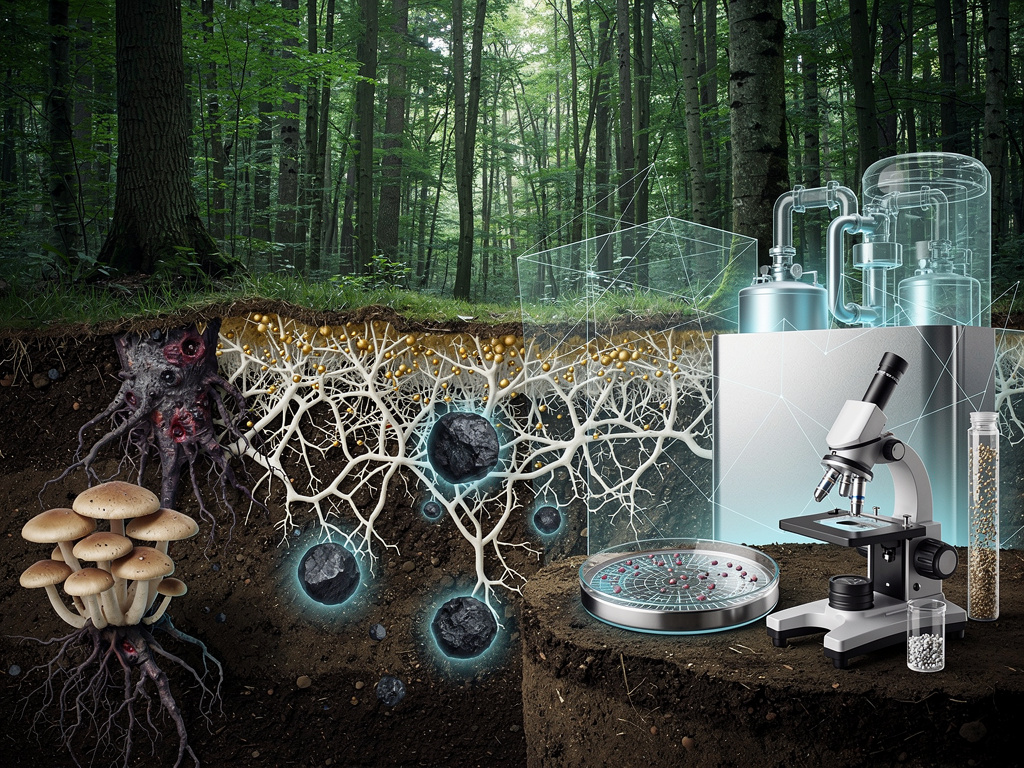
For most of human history, fungi occupied a footnote in biology — lumped with plants, dismissed as decomposers, largely ignored unless they showed up on a pizza or ruined a crop. That era is ending. A surge of scientific discovery over the past decade has revealed fungi to be among the most consequential organisms on the planet, underpinning forest health, shaping atmospheric carbon cycles, producing life-saving medicines, and offering industrial applications that could reshape manufacturing. The kingdom Fungi, it turns out, has been running critical infrastructure all along. We just weren’t paying attention.
As Yale Environment 360 detailed in a sweeping feature on the fungal kingdom, scientists are now racing to catalog the staggering diversity of fungi — an estimated 2 to 6 million species, of which only about 150,000 have been formally described. That gap in knowledge isn’t merely academic. It represents a vast reservoir of biochemical potential, ecological function, and evolutionary insight that researchers are only beginning to tap.
The numbers alone are arresting. Fungi constitute roughly 25% of Earth’s biomass. They predate land plants by hundreds of millions of years. And their networks — threadlike structures called mycelia that can stretch for miles underground — form what scientists have called the “Wood Wide Web,” a biological internet connecting trees and plants in mutual exchange of nutrients, water, and chemical signals.
Underground Architects of the World’s Forests
The mycorrhizal relationship between fungi and plants may be the most important symbiosis on Earth that most people have never heard of. Roughly 90% of all land plants depend on fungal partners. The arrangement is elegant: fungi colonize root systems, extending their hyphal networks far beyond what roots alone can reach, pulling in phosphorus, nitrogen, and micronutrients from the soil. In return, plants feed fungi sugars produced through photosynthesis. Neither thrives without the other.
But the relationship goes deeper than simple nutrient exchange. Research published over the past several years has demonstrated that mycorrhizal networks allow trees to share resources with neighboring trees — including trees of different species. A Douglas fir under stress can receive carbon from a nearby birch through fungal conduits. Mother trees appear to preferentially support their offspring through these networks. The implications for forest management are profound.
Suzanne Simard, the University of British Columbia ecologist whose work on mycorrhizal networks helped popularize the Wood Wide Web concept, has argued for years that industrial forestry’s practice of clear-cutting and replanting monocultures ignores the underground biological architecture that makes forests resilient. Her research, as reported by Yale Environment 360, suggests that preserving hub trees — older trees with extensive fungal connections — is essential for forest regeneration. Remove them, and the network degrades. The young trees that replace them grow slower, resist disease less effectively, and die at higher rates.
This isn’t theoretical anymore. Forest managers in British Columbia have begun incorporating Simard’s findings into harvest planning, retaining hub trees and maintaining forest connectivity. It’s a small shift. But it signals a broader recognition that what happens underground matters as much as what happens above it.
The carbon implications are enormous. Mycorrhizal fungi don’t just move carbon between trees — they store it. A 2023 study published in Current Biology estimated that mycorrhizal fungi receive approximately 13 gigatons of carbon dioxide equivalent from plants annually, representing roughly 36% of global fossil fuel emissions. Much of that carbon gets locked into fungal biomass and soil organic matter, where it can persist for decades or longer. Disrupting these networks through deforestation, intensive agriculture, or soil degradation doesn’t just harm trees. It releases stored carbon back into the atmosphere.
So when climate scientists talk about natural carbon sinks, they’re increasingly talking about fungi — whether they realize it or not.
And yet, fungal conservation barely exists as a policy category. The International Union for Conservation of Nature has assessed fewer than 600 fungal species, compared with tens of thousands of plants and animals. Fungi have no equivalent of the Endangered Species Act protections afforded to charismatic megafauna. They don’t make the poster.
That’s starting to change. In 2023, Chile became one of the first countries to include fungi in its environmental legislation, and advocacy groups like the Fungi Foundation have pushed for what they call “FFF legislation” — Flora, Fauna, and Funga — arguing that fungi deserve the same legal standing as plants and animals in conservation frameworks. The United Kingdom followed with its own recognition of fungi in biodiversity strategies. These are early steps, but they reflect a growing consensus among ecologists that you can’t protect forests without protecting the fungal networks that sustain them.
From Penicillin to Psilocybin: The Medical and Industrial Frontier
If the ecological case for fungi is compelling, the medical case is explosive. Fungi have already given humanity some of its most important drugs. Penicillin, derived from Penicillium mold, transformed medicine in the 20th century. Cyclosporine, an immunosuppressant isolated from a soil fungus, made organ transplantation viable. Statins, the cholesterol-lowering drugs taken by hundreds of millions of people worldwide, were originally derived from fungal metabolites.
The pipeline hasn’t dried up. Researchers are investigating fungal compounds for anti-cancer properties, novel antibiotics to combat drug-resistant bacteria, and treatments for neurodegenerative diseases. The sheer chemical diversity of fungi — evolved over more than a billion years of adaptation — represents a pharmacological library that has barely been opened.
Then there’s psilocybin. The psychoactive compound found in certain mushroom species has moved from counterculture curiosity to serious clinical research with remarkable speed. Studies at Johns Hopkins University, Imperial College London, and NYU have shown psilocybin-assisted therapy to be effective against treatment-resistant depression, end-of-life anxiety, and addiction. The FDA granted psilocybin “breakthrough therapy” designation for depression in 2018 and 2019, fast-tracking its path toward potential approval. Oregon legalized supervised psilocybin use in 2020. Colorado followed in 2022. Australia approved it for clinical use in 2023.
The commercial implications are significant. Compass Pathways, a London-based biotech company focused on psilocybin therapy, went public on the Nasdaq in 2020. Dozens of startups have entered the psychedelic medicine space, collectively raising hundreds of millions in venture capital. Whether psilocybin ultimately achieves broad FDA approval remains uncertain, but the trajectory is clear: a fungal compound is at the center of what may become one of the most significant shifts in psychiatric treatment in decades.
Beyond medicine, fungi are finding industrial applications that would have seemed implausible a generation ago. Mycelium — the vegetative body of a fungus — can be grown into materials that substitute for leather, plastic foam, and building insulation. Companies like Ecovative Design in New York and Bolt Threads in California are producing mycelium-based packaging, textiles, and construction materials. Adidas, Stella McCartney, and Hermès have all experimented with mycelium leather. The appeal is straightforward: these materials are biodegradable, require minimal energy to produce, and can be grown on agricultural waste.
Fungi are also being deployed in bioremediation — the cleanup of contaminated environments. Certain species of white-rot fungi can break down petroleum products, pesticides, and even some radioactive compounds. Paul Stamets, the mycologist and entrepreneur whose TED talks and appearances on Joe Rogan’s podcast brought fungi into mainstream awareness, has advocated for using fungal filtration systems to clean polluted waterways and contaminated soils. Pilot projects have shown promise, though scaling remains a challenge.
The food sector is another active front. Mycoprotein — protein derived from fungal fermentation — has been a commercial product since the 1980s through brands like Quorn. But a new generation of companies is pushing further, using precision fermentation with engineered fungi to produce dairy proteins, fats, and other food ingredients without animals. The overlap with the broader alternative protein movement is significant, and fungi-based approaches may prove more scalable and cost-effective than cell-cultured meat.
None of this is happening in a vacuum. The convergence of genomic sequencing, machine learning, and high-throughput screening has accelerated fungal research dramatically. The cost of sequencing a fungal genome has plummeted, enabling researchers to identify novel species and their biochemical capabilities at a pace that was impossible even a decade ago. Environmental DNA sampling — collecting genetic material from soil and water — is revealing fungal diversity in environments previously thought to be well-characterized.
What We Don’t Know Could Fill a Kingdom
For all the recent progress, the gaps in fungal science remain vast. Most fungal species have never been cultured in a laboratory. Many can’t be — they exist only in symbiotic relationships with other organisms that are difficult or impossible to replicate in vitro. The functional roles of the overwhelming majority of fungal species are unknown. We don’t know what they do, what they produce, or how they interact with the organisms around them.
This ignorance carries real risks. Fungal pathogens are an escalating threat to both agriculture and human health. Candida auris, a multidrug-resistant fungal pathogen first identified in 2009, has spread to hospitals on every inhabited continent and kills roughly 30 to 60 percent of infected patients. Wheat stem rust, caused by the fungus Puccinia graminis, threatens global grain supplies. Chytrid fungus has driven dozens of amphibian species to extinction. Climate change is expected to expand the geographic range and virulence of many fungal pathogens, as warming temperatures allow species adapted to higher heat to infect mammals — including humans — more readily.
A 2022 paper in Nature Reviews Microbiology warned that the world is dramatically underprepared for the growing threat of fungal diseases, citing a lack of surveillance infrastructure, a thin pipeline of antifungal drugs (only four classes exist, compared with dozens of antibiotic classes), and insufficient research funding. Fungi receive a fraction of the attention and resources devoted to bacterial and viral pathogens. The COVID-19 pandemic exposed this gap when secondary fungal infections like mucormycosis — so-called “black fungus” — killed thousands of patients in India.
And then there is the basic taxonomic challenge. With potentially millions of species undescribed, and tropical and soil environments particularly undersampled, the fungal kingdom is one of the largest frontiers in biology. The Global Fungal Red List Initiative and projects like the Earth BioGenome Project are working to close the gap, but progress is slow relative to the scale of the task.
What’s changed is the level of attention. Fungi were once the province of a small community of dedicated mycologists, many of whom spent careers in relative obscurity. Now, fungal biology sits at the intersection of climate science, medicine, materials science, agriculture, and conservation. The funding is growing. The talent pipeline is widening. And the public, primed by popular books like Merlin Sheldrake’s Entangled Life and the 2019 documentary Fantastic Fungi, is more aware of fungal science than at any point in modern history.
But awareness is not the same as action. The policy frameworks for protecting fungal biodiversity remain embryonic. The regulatory pathways for fungal-derived therapies are uncertain. The agricultural practices that degrade mycorrhizal networks continue at industrial scale. And the basic science — cataloging species, understanding interactions, mapping networks — is still in its early chapters.
The fungal kingdom has been operating in the background of life on Earth for over a billion years, quietly building the systems that forests, soils, and countless other organisms depend on. The question now is whether human institutions can move fast enough to understand, protect, and responsibly harness what fungi have to offer — before we lose what we haven’t yet found.


 WebProNews is an iEntry Publication