
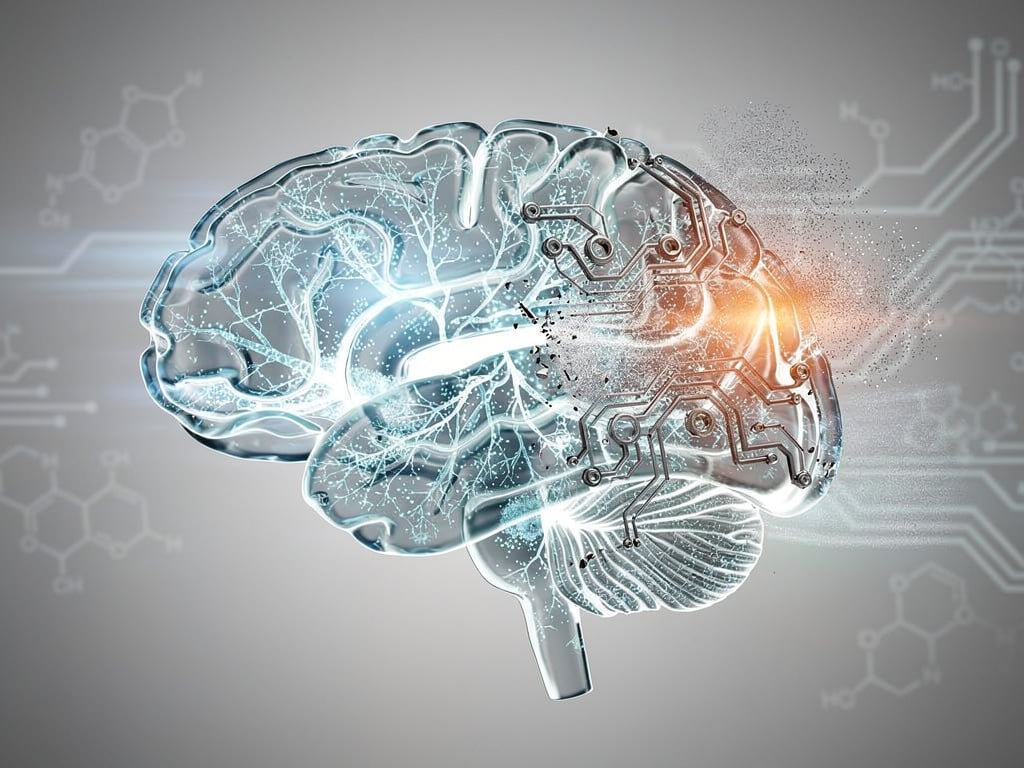
For decades, neuroscientists have operated under a relatively straightforward assumption about human memory: the brain encodes experiences, stores them, and retrieves them when needed. Forgetting, in this framework, was largely seen as a failure of the system — a degradation of neural connections over time, or an inability to access stored information. But a growing body of research is upending that view, suggesting that forgetting is not a bug in the brain’s memory system but a carefully orchestrated feature, one that may be just as important to cognitive function as remembering itself.
A study published in February 2026 and reported by ScienceDaily has added significant new evidence to this emerging understanding. Researchers have identified specific neural mechanisms that actively work to suppress and eliminate certain memories, a process that appears to be essential for maintaining cognitive flexibility, emotional regulation, and the brain’s ability to prioritize information that matters most for survival and daily functioning.
Active Forgetting: A Biological Imperative, Not a Cognitive Flaw
The concept of “active forgetting” has gained considerable traction in neuroscience circles over the past several years, but the latest findings provide some of the most detailed mechanistic evidence to date. According to the research highlighted by ScienceDaily, the brain employs dedicated molecular pathways that tag certain memories for removal or suppression. This is not the passive decay that scientists once assumed was responsible for most forgetting. Instead, it involves targeted biological processes — including specific proteins and neurotransmitter systems — that work to weaken or dismantle the synaptic connections underlying particular memories.
The implications are profound. If forgetting is an active, regulated process, then disorders of memory — from post-traumatic stress disorder to obsessive-compulsive disorder — may in some cases represent not a failure to remember, but a failure to forget. Patients suffering from PTSD, for instance, are plagued by intrusive memories that the brain seems unable to suppress. Understanding the machinery of active forgetting could open entirely new therapeutic avenues for these conditions, offering the possibility of treatments that restore the brain’s natural ability to let go of harmful or irrelevant information.
The Molecular Machinery Behind Memory Erasure
At the cellular level, the research points to the involvement of specific receptor systems and intracellular signaling cascades. Previous work, including landmark studies on the role of the protein Rac1 in memory forgetting in fruit flies, had already suggested that forgetting has a molecular basis. The new findings extend this understanding into mammalian brains, showing that similar mechanisms operate in the hippocampus — the brain region most closely associated with the formation and storage of episodic memories.
The hippocampus has long been understood as a kind of gateway for new memories, temporarily holding information before it is consolidated into longer-term storage in the cortex during sleep. What the latest research underscores is that the hippocampus is also a critical site for memory triage. Not everything that enters the hippocampal system is destined for long-term storage. The brain appears to make continuous, largely unconscious judgments about which experiences warrant preservation and which should be actively cleared away to make room for new, more relevant information.
Why the Brain Needs to Forget: Computational and Evolutionary Perspectives
From a computational standpoint, the case for active forgetting is compelling. A brain that stored every piece of sensory information it encountered would quickly become overwhelmed. The sheer volume of data processed by the human nervous system in a single day — estimated in some studies at the equivalent of several terabytes — would create an impossible retrieval problem if all of it were retained indefinitely. Forgetting, in this view, serves as a form of information management, pruning away low-value data so that high-value memories can be accessed more quickly and reliably.
This perspective aligns with influential theoretical work by researchers such as Blake Richards and Paul Bhatt at the University of Toronto, who argued in a widely cited 2017 paper published in the journal Neuron that the purpose of memory is not to transmit the most accurate information over time but to optimize decision-making. In their framework, forgetting helps the brain generalize from past experiences rather than getting bogged down in the specifics of individual events. A person who remembers every detail of every meal they have ever eaten, for example, would have a harder time making quick dietary decisions than someone who retains only general patterns about what foods are nutritious and enjoyable.
Sleep, Dreams, and the Nightly Purge of Unnecessary Memories
The relationship between sleep and memory has been studied extensively, and the new findings dovetail with a growing understanding that sleep serves as a critical period for memory editing. During certain stages of sleep — particularly slow-wave sleep and REM sleep — the brain replays recent experiences and makes determinations about what to consolidate and what to discard. Research published in recent years has shown that specific neural oscillations during sleep, including sharp-wave ripples in the hippocampus, are associated with the selective strengthening of some memories and the weakening of others.
Some scientists have even speculated that dreaming itself may be a byproduct of the brain’s nightly memory-editing process. The bizarre, fragmented nature of dreams could reflect the activation and deactivation of various memory traces as the brain sorts through the day’s experiences. While this remains speculative, it offers an intriguing framework for understanding why sleep deprivation has such devastating effects on cognitive function: without adequate sleep, the brain may be unable to perform the essential maintenance work of forgetting, leading to a cluttered and inefficient memory system.
Clinical Implications: From PTSD to Alzheimer’s Disease
The therapeutic potential of understanding active forgetting extends across a wide range of neurological and psychiatric conditions. In PTSD, as noted earlier, the inability to suppress traumatic memories is a defining feature of the disorder. Current treatments, including exposure therapy and certain pharmacological interventions, work in part by helping patients recontextualize traumatic memories. But if the underlying problem is a dysfunction in the brain’s active forgetting machinery, more targeted interventions — perhaps drugs that enhance the activity of specific forgetting-related proteins — could prove far more effective.
On the other end of the spectrum, Alzheimer’s disease and other forms of dementia involve the catastrophic loss of memories that the brain should be retaining. Understanding the balance between remembering and forgetting at the molecular level could help researchers identify what goes wrong in these diseases. Is Alzheimer’s, in part, a disorder of overactive forgetting? Or does the disease destroy the neural infrastructure needed for both remembering and forgetting, leaving patients unable to form new memories or properly manage existing ones? These are questions that the latest research brings into sharper focus.
The Philosophical and Ethical Dimensions of Engineered Forgetting
As the science of forgetting advances, it inevitably raises difficult philosophical and ethical questions. If it becomes possible to pharmacologically enhance the brain’s ability to forget specific memories, who should have access to such treatments, and under what circumstances? The idea of a “forgetting pill” has been discussed in bioethics circles for years, often in the context of PTSD treatment. But the potential applications extend far beyond clinical settings. Could such a drug be used by witnesses to crimes, by soldiers returning from combat, or by individuals seeking to erase painful personal experiences?
The 2004 film Eternal Sunshine of the Spotless Mind explored these questions in fictional form, but the science is increasingly catching up with the fiction. The research reported by ScienceDaily brings these discussions closer to practical reality. As scientists map the molecular pathways of forgetting with greater precision, the possibility of targeted memory modification — enhancing forgetting where it is deficient, or inhibiting it where it is excessive — moves from the speculative to the plausible.
What Comes Next: The Frontier of Memory Science
The field of memory research stands at a remarkable inflection point. For most of its history, the discipline was dominated by the study of how memories are formed and stored. Forgetting was an afterthought — literally, the absence of memory rather than a subject of study in its own right. The emerging recognition that forgetting is an active, biologically regulated process has shifted the center of gravity in the field, opening up new lines of inquiry that could transform both basic neuroscience and clinical medicine.
Future research will likely focus on mapping the full complement of molecular players involved in active forgetting, identifying how these systems interact with memory consolidation pathways, and determining how they are disrupted in disease states. The ultimate goal is a comprehensive understanding of the brain’s memory management system — not just how it remembers, but how it decides what is worth remembering in the first place, and what is better left behind. For the millions of people worldwide suffering from disorders of memory — whether they remember too much or too little — the stakes could hardly be higher.


 WebProNews is an iEntry Publication