
For two decades, the bargain was simple. Publishers created content. Google indexed it. Users clicked through. Everyone got something. That arrangement is now unraveling at speed, and the numbers are brutal.
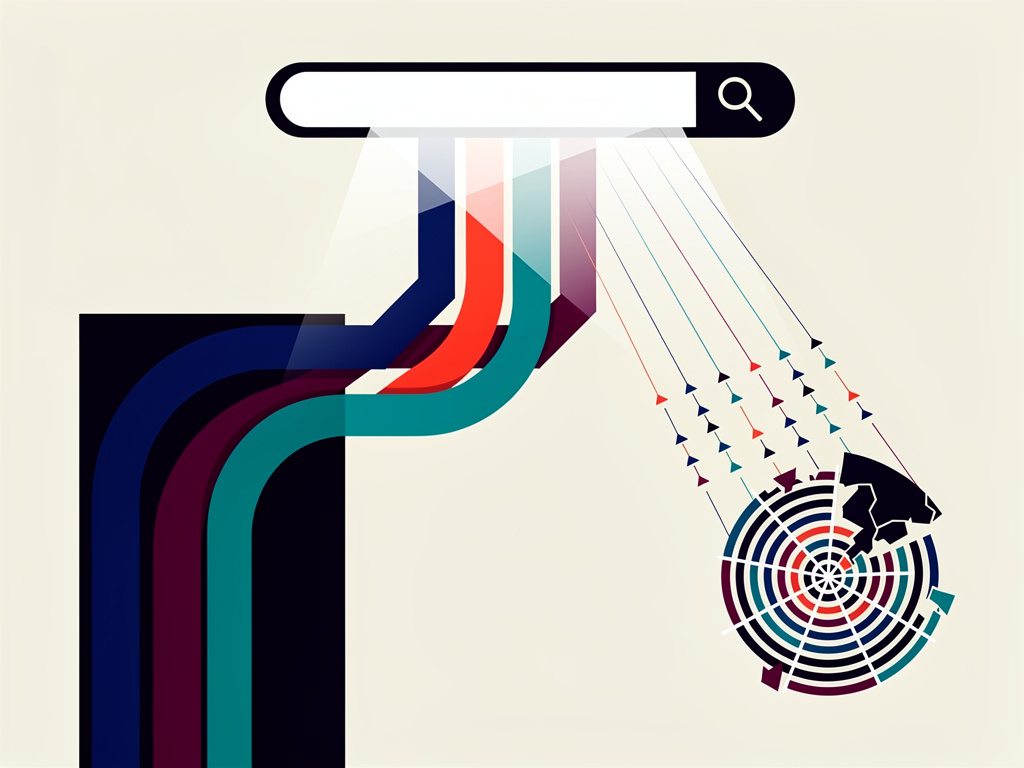
According to HubSpot’s analysis, organic web traffic across major sectors has entered a measurable decline that correlates directly with the rise of AI-generated search answers. The culprit isn’t mysterious. It’s the proliferation of AI Overviews—those synthesized answer boxes that now appear at the top of Google results—along with standalone AI tools like ChatGPT, Perplexity, and Claude that answer questions without ever sending users to a source website. The traffic that once flowed freely from search engines to publishers is being intercepted, summarized, and served up in a neat paragraph. No click required.
The scale of the problem is staggering. HubSpot reports that 58.5% of all Google searches in 2024 ended without a click to any external website, citing data from SparkToro and Similarweb. That’s not a rounding error. That’s the majority of all searches. And the trend is accelerating. For informational queries—the kind that drive blog traffic, how-to articles, and educational content—the zero-click rate is even higher. Google’s AI Overviews now appear on roughly 47% of search queries, according to HubSpot’s data, effectively turning the search engine into a destination rather than a doorway.
This isn’t theoretical damage. It’s showing up in analytics dashboards across the publishing industry right now.
HubSpot’s own data tells a revealing story. The company analyzed traffic patterns across its massive content library and found that pages where AI Overviews appeared experienced measurable declines in click-through rates. Blog posts targeting simple, factual queries—”What is a CRM?” or “How to write a subject line”—were hit hardest. These are exactly the kinds of high-volume, top-of-funnel keywords that content marketers have spent years optimizing for. The entire SEO playbook that powered a generation of inbound marketing is being rewritten by an algorithm that no longer needs to send users anywhere.
And Google isn’t alone in this. Not even close.
ChatGPT now processes hundreds of millions of queries per week, many of which would have previously been typed into a search bar. Perplexity AI, which explicitly positions itself as an “answer engine,” has seen its user base grow rapidly throughout 2024 and into 2025. These tools don’t just reduce clicks—they eliminate them entirely. A user who asks ChatGPT “What’s the best project management software for small teams?” gets a synthesized answer drawn from dozens of sources. They never visit a single one of those sources. The content was consumed. The creator got nothing.
The financial implications are cascading through multiple industries simultaneously. Digital publishers that depend on advertising revenue need pageviews. Fewer clicks mean fewer pageviews. Fewer pageviews mean less ad revenue. The math is unforgiving. For SaaS companies and e-commerce brands that built sophisticated content marketing operations to drive organic acquisition, the calculus is similarly grim. If your funnel starts with a blog post that ranks on Google, and Google now answers the query itself, your funnel has a hole in the top.
Some publishers have started fighting back—literally. The New York Times, Condé Nast, and other major media companies have filed lawsuits or negotiated licensing deals with AI companies over the use of their content in training data. But that addresses a different problem. Training data compensation doesn’t solve the traffic loss from AI-generated answers that synthesize publicly available information in real time. You can get paid for your content being used to train a model. You still lose the visit.
HubSpot’s analysis identifies several strategic responses that companies are already deploying. The first is a shift toward content that AI can’t easily replicate or summarize. Original research, proprietary data, expert interviews, and opinion-driven analysis are harder for an AI Overview to flatten into a three-sentence answer. A blog post explaining what a marketing funnel is can be replaced by a snippet. A blog post presenting original survey data about how 500 CMOs are restructuring their teams in response to AI cannot be so easily distilled.
This tracks with what multiple SEO analysts have been observing. Content that demonstrates firsthand experience—what Google’s own quality guidelines call E-E-A-T (Experience, Expertise, Authoritativeness, Trustworthiness)—tends to retain its traffic better than commodity informational content. The bar for what constitutes valuable content has risen sharply. Generic explainers are now table stakes that the AI itself can produce. The content that still earns clicks is the content that offers something the AI can’t: a human perspective, a unique dataset, a contrarian argument.
The second strategic response is diversification away from Google dependency. HubSpot notes that companies investing in email lists, community platforms, YouTube, podcasts, and social media distribution are better insulated from search traffic volatility. This isn’t new advice, but the urgency behind it has intensified dramatically. When a single channel—organic search—could reliably deliver 50-70% of a website’s traffic, diversification felt optional. Now it feels existential.
Short-form video is a particular bright spot. YouTube, TikTok, and Instagram Reels are generating discovery and brand awareness in ways that are largely untouched by AI search disruption. A well-produced YouTube video answering a complex question still gets watched. It still builds brand affinity. And it’s much harder for an AI to intercept than a text-based blog post. HubSpot’s data suggests that brands investing in video content are seeing more resilient traffic patterns overall.
There’s a third response emerging that’s more uncomfortable to discuss. Some companies are optimizing specifically to appear within AI answers, treating AI Overviews and ChatGPT citations as a new form of visibility even if they don’t generate clicks. The logic: if your brand is consistently cited as a source in AI-generated answers, you build awareness and authority even without the direct visit. It’s brand marketing through algorithmic attribution. Whether that actually translates to revenue is an open and hotly debated question.
Rand Fishkin, co-founder of SparkToro and one of the most vocal critics of Google’s zero-click trend, has been sounding this alarm for years. His data, frequently cited by HubSpot and others, shows that Google has been progressively keeping more traffic for itself long before AI Overviews launched. Featured snippets, knowledge panels, People Also Ask boxes—each iteration extracted a little more value from publishers and kept users on Google’s own properties a little longer. AI Overviews are the logical endpoint of that trajectory. The search engine that once organized the world’s information now increasingly is the information.
So where does this leave the average content team in 2025?
In a difficult but not hopeless position. The era of easy organic traffic—write a keyword-optimized post, watch it rank, collect the clicks—is functionally over for most categories. What remains is harder, more expensive, and more creative. Original reporting. Proprietary data. Strong brand voice. Multi-channel distribution. Community building. Interactive tools and experiences that require a visit to use. These are the moats that AI can’t easily drain.
The companies that will struggle most are those that built their entire growth model on high-volume informational content designed to rank for broad keywords. That model worked spectacularly well for a decade. It is now being systematically dismantled by the very platform it depended on. The irony is sharp: Google encouraged the creation of millions of SEO-optimized pages, then built an AI that makes most of them unnecessary.
For publishers, the strategic imperative is clear. Stop creating content that an AI can answer in a sentence. Start creating content that makes people want to come to you specifically—because of your data, your voice, your tools, your community. The traffic won’t come back. But the audience can still be built. It just requires a fundamentally different approach than the one that worked for the last fifteen years.
The great traffic heist is well underway. The question now isn’t whether it’s happening. It’s whether the companies being robbed can adapt fast enough to build something the algorithms can’t steal.


 WebProNews is an iEntry Publication