
The artificial intelligence debate in the United States has reached an inflection point that few policymakers seem equipped to handle. While Silicon Valley races to deploy increasingly powerful AI systems across every sector of the economy, the regulatory apparatus in Washington remains fractured, underfunded, and ideologically divided. The question is no longer whether AI will reshape society — it already is — but whether democratic institutions can adapt quickly enough to maintain meaningful oversight over systems that are growing more autonomous by the month.
As CNET recently explored in a commentary piece, the tension between AI governance and AI autonomy is becoming one of the defining policy challenges of the decade. The article posed a stark binary: will humans govern AI, or will AI effectively govern humans? That framing, while provocative, captures a genuine anxiety spreading through policy circles, corporate boardrooms, and academic institutions alike. The speed at which generative AI tools have been adopted — from healthcare diagnostics to judicial sentencing recommendations to military targeting systems — has outpaced any serious regulatory framework.
A Regulatory Vacuum That Industry Is Happy to Fill
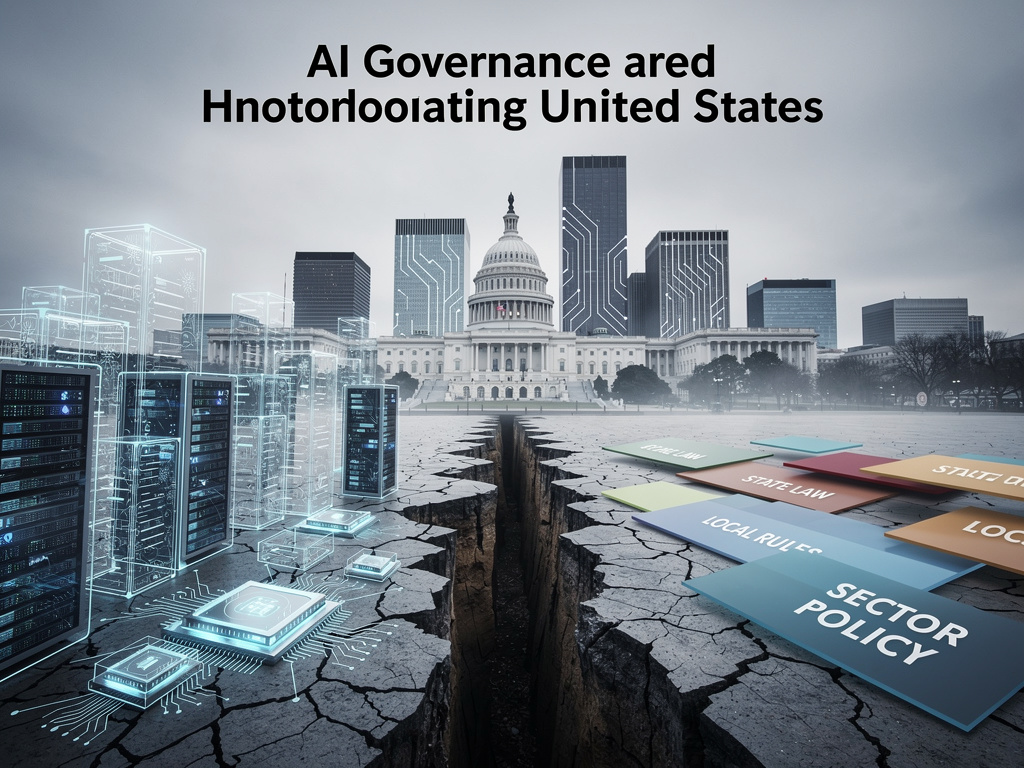
The current state of AI regulation in the United States is best described as patchwork. There is no comprehensive federal AI law. The European Union moved ahead with its AI Act, which categorizes AI systems by risk level and imposes corresponding obligations on developers and deployers. China has implemented its own set of AI regulations focused on algorithmic recommendation systems and generative AI. The United States, by contrast, has largely relied on executive orders, voluntary industry commitments, and existing agency authorities that were never designed for this technology.
President Biden’s October 2023 executive order on AI safety represented the most significant federal action to date, directing agencies to develop standards for AI safety testing, establish guidelines for government use of AI, and address risks to privacy and civil rights. But executive orders are inherently fragile — they can be reversed by a successor, and they lack the permanence and enforcement mechanisms of legislation. The Trump administration has signaled a markedly different approach, emphasizing deregulation and innovation over precautionary governance. This political whiplash creates uncertainty not just for companies trying to comply with rules, but for the public trying to understand what protections exist.
The Corporate Lobbying Machine Moves Faster Than Congress
Major AI companies have invested heavily in shaping the terms of the governance debate. OpenAI, Google, Meta, Microsoft, and Anthropic have all established government affairs operations in Washington and have participated in voluntary safety commitments brokered by the White House. But critics argue that voluntary commitments are fundamentally inadequate. As the CNET commentary noted, relying on companies to self-regulate is akin to asking the fox to design the henhouse security system. The incentive structures are misaligned: companies that slow down to prioritize safety risk losing market share to competitors that don’t.
The lobbying numbers tell their own story. According to disclosures tracked by OpenSecrets, spending on AI-related lobbying has surged in recent years, with technology companies and trade associations deploying hundreds of lobbyists to influence pending legislation. Much of this effort has been directed at watering down proposals that would impose mandatory testing requirements, algorithmic auditing, or liability frameworks for AI-caused harms. The result is a legislative process that moves at a glacial pace while the technology it aims to regulate advances exponentially.
State Legislatures Step In Where Federal Action Stalls
In the absence of federal legislation, state governments have begun filling the void. Colorado passed a law addressing algorithmic discrimination in high-stakes decisions. California has considered multiple AI-related bills, including measures that would require disclosure when AI is used in hiring decisions and mandate safety evaluations for large-scale AI models. Illinois and New York City have enacted rules governing the use of AI in employment screening. This state-level activity mirrors what happened with data privacy regulation, where California’s Consumer Privacy Act became a de facto national standard because companies found it easier to comply uniformly than to maintain different practices for different states.
But state-by-state regulation has significant limitations. AI systems operate across borders — a model trained in one jurisdiction and deployed in another doesn’t respect state lines. A fragmented regulatory environment creates compliance headaches for companies and inconsistent protections for consumers. Industry groups have used this fragmentation as an argument for federal preemption, but the federal legislation they tend to support often sets a lower bar than the most protective state laws, effectively weakening rather than strengthening oversight.
The Technical Challenge of Governing What You Don’t Understand
One of the most persistent obstacles to effective AI governance is the knowledge gap between technologists and regulators. Members of Congress and their staffs often lack the technical expertise to evaluate claims made by AI companies about the capabilities and risks of their systems. Senate hearings on AI have frequently featured lawmakers asking basic questions about how large language models work, revealing a fundamental asymmetry of information between the regulated and the regulators.
This asymmetry is not accidental. The AI industry has cultivated an aura of technical complexity that serves to insulate it from oversight. When companies describe their models as having “emergent capabilities” that even their creators don’t fully understand, they are simultaneously making a factual claim and a political one: that regulation is premature because the technology is too novel and too poorly understood. This argument has been effective in delaying legislative action, but it also raises a troubling question highlighted by the CNET piece — if the people building these systems don’t fully understand them, what does that mean for the rest of us who are subject to their decisions?
AI in Government: The Regulator Becomes the Regulated
Adding another layer of complexity is the fact that government agencies are themselves becoming major consumers of AI technology. The Department of Defense, the Internal Revenue Service, the Social Security Administration, and numerous other federal agencies are deploying or piloting AI systems for tasks ranging from fraud detection to benefits adjudication to intelligence analysis. This creates a conflict of interest: agencies that depend on AI tools for their own operations may be reluctant to impose restrictions that could limit the functionality of those tools.
The use of AI in government decision-making raises acute due process concerns. When an algorithm determines whether someone qualifies for disability benefits, or flags a tax return for audit, or identifies a target for military action, the affected individuals have a right to understand and challenge that decision. But many AI systems operate as black boxes, producing outputs without transparent reasoning. The Government Accountability Office has repeatedly flagged the need for better oversight of federal AI use, but progress has been slow.
International Competition Complicates the Picture
The governance debate cannot be separated from the geopolitical competition over AI supremacy. U.S. policymakers frequently invoke the threat of China as a reason to avoid heavy-handed regulation that might slow American innovation. This framing — that safety and competitiveness are in tension — has become the dominant argument against strong regulatory action. But it rests on a questionable assumption: that unregulated AI development is inherently faster or more effective than regulated development.
The European experience suggests otherwise. Companies operating under the EU’s AI Act have not abandoned the European market; instead, they have adapted their practices to meet the new requirements. Some researchers argue that regulation can actually accelerate responsible innovation by establishing clear rules of the road, reducing uncertainty, and building public trust. Without trust, widespread adoption of AI in sensitive domains like healthcare and finance could face a backlash that proves far more damaging to the industry than any regulatory requirement.
The Stakes Are Higher Than the Debate Suggests
What makes the current moment so consequential is that the decisions being made — or deferred — right now will shape the trajectory of AI governance for decades. The choices embedded in today’s AI systems, from training data selection to optimization objectives to deployment contexts, will become increasingly difficult to reverse as these systems become more deeply integrated into institutional processes. Waiting for perfect information before acting is itself a choice, and it is one that defaults to the interests of those building and profiting from the technology.
The CNET commentary concluded with a warning that resonates beyond the technology sector: the window for establishing meaningful democratic control over AI is narrowing. Every month that passes without clear rules, enforcement mechanisms, and accountability structures is a month in which AI systems become more entrenched, more powerful, and more difficult to govern. The question of whether we will govern AI or AI will govern us is not a philosophical abstraction — it is a policy emergency that demands the kind of urgent, informed action that Washington has so far failed to deliver.
For industry leaders, investors, and policymakers, the message should be clear: the cost of inaction is not zero. It is simply deferred — and compounding.


 WebProNews is an iEntry Publication