
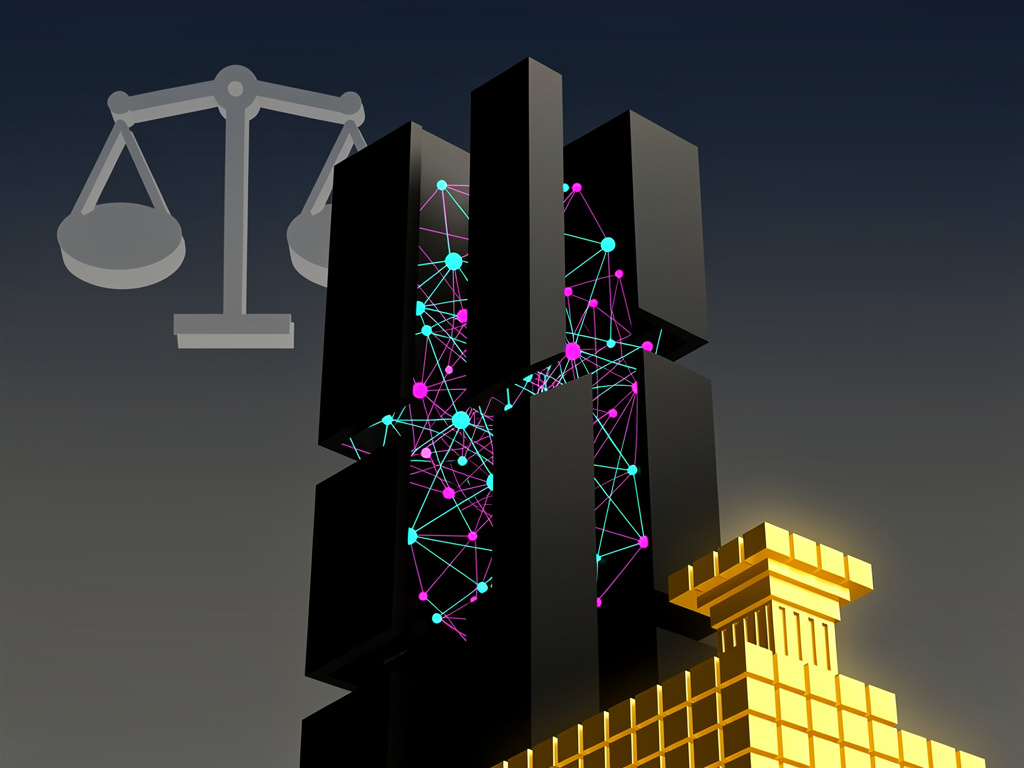
Marc Andreessen doesn’t want you to think too hard about what you’re doing. Not in those words, exactly. But the sentiment runs through his public philosophy like a load-bearing wall — remove it and the whole structure collapses.
The venture capitalist and Netscape co-founder has, over the past several years, constructed an intellectual framework that treats introspection as a kind of disease. Doubt is weakness. Ethical hand-wringing is for people who don’t build things. The correct posture for a technologist, in Andreessen’s telling, is to push forward with maximum velocity and minimum self-examination. His 2023 manifesto, “The Techno-Optimist Manifesto,” made this explicit: technology is the solution, deceleration is the enemy, and those who urge caution are standing in the way of human progress.
Writer Joan Westenberg recently published a pointed critique of this worldview, arguing that Andreessen is fundamentally wrong about introspection — that his dismissal of self-reflection isn’t just philosophically shallow but actively dangerous when wielded by people who control billions of dollars in capital allocation. The argument deserves serious engagement, because it touches something deeper than one man’s opinion. It touches the operating ideology of the most powerful industry on Earth.
Andreessen’s position isn’t new, but it has hardened. In the Techno-Optimist Manifesto, he listed “risk management” and “sustainability” among the enemies of progress, alongside concepts like “trust and safety” and “tech ethics.” He framed the choice as binary: you are either building the future or you are obstructing it. There is no middle ground where a person builds thoughtfully, pauses to consider second-order consequences, and then continues building. That middle ground, in Andreessen’s cosmology, is just cowardice dressed up in academic language.
Westenberg’s rebuttal cuts at the root. Introspection, she argues, isn’t the opposite of action. It’s what makes action meaningful. The capacity to examine one’s own motives, to question whether a product or platform might cause harm, to sit with uncertainty — these aren’t luxuries. They’re responsibilities. And they become more important, not less, as the scale of one’s influence grows.
This matters right now for reasons that extend well beyond philosophical debate.
The Real Cost of Building Without Thinking
Silicon Valley is in the middle of an AI arms race that makes the social media era look quaint. OpenAI, Google DeepMind, Anthropic, Meta, and a growing roster of startups are deploying systems with capabilities that their own creators admit they don’t fully understand. Andreessen Horowitz — the firm Marc Andreessen co-founded with Ben Horowitz — is one of the largest investors in this space. The firm has poured capital into AI companies with the same velocity-first ethos that Andreessen preaches publicly.
And the consequences of that ethos are already visible. Facebook’s algorithmic amplification of divisive content wasn’t a bug that slipped past careful engineers. It was the predictable result of optimizing for engagement without asking what engagement actually meant for democratic societies. The opioid crisis was accelerated by pharmaceutical companies that treated ethical concerns as obstacles to growth. The 2008 financial crisis was engineered by institutions that viewed risk assessment as a drag on returns. In each case, the people in charge weren’t stupid. They were incurious — about themselves, about the systems they were building, about the humans on the receiving end.
Westenberg makes this point sharply: the tech industry’s most catastrophic failures haven’t come from too much thinking. They’ve come from too little.
But Andreessen’s anti-introspection stance has found a receptive audience, and it’s worth understanding why. The tech industry spent roughly 2018 to 2022 in a period of intense public scrutiny. Congressional hearings. Whistleblower testimony. A wave of “tech ethics” initiatives inside major companies, many of which were later gutted or dissolved. For founders and investors who lived through that period, introspection became associated with external criticism — with journalists asking uncomfortable questions, with regulators threatening to slow things down, with employees staging walkouts over military contracts.
So when Andreessen says introspection is the enemy, many in the industry hear something more specific: stop letting other people make you feel bad about what you’re building. That’s a seductive message. It’s also a trap.
The trap works like this. By collapsing all forms of self-examination into a single category — “things that slow us down” — Andreessen eliminates the distinction between genuine regulatory overreach and legitimate moral reasoning. A founder who pauses to consider whether her facial recognition product might be used to surveil minorities isn’t engaging in the same activity as a bureaucrat who buries an innovation in paperwork. But in Andreessen’s framework, both are guilty of the same sin: deceleration.
This is intellectually dishonest. And it’s convenient. If you’re an investor who profits from speed, reframing caution as cowardice is good for business.
The philosophical lineage here is worth tracing. Andreessen’s worldview draws heavily from mid-20th-century techno-utopianism, filtered through Ayn Rand and seasoned with a dash of Nick Land’s accelerationism. The Techno-Optimist Manifesto explicitly cites thinkers who viewed progress as an autonomous force that humans should serve rather than direct. In this tradition, the builder is a kind of priest — channeling something larger than himself, obligated not to question but to execute.
Westenberg identifies the core problem with this framing: it treats human agency as an impediment rather than a feature. If technology is inherently good and progress is inherently directional, then the only role for human judgment is to get out of the way. But technology isn’t inherently anything. It’s a tool shaped by the intentions, blind spots, and incentive structures of the people who create it. A social media algorithm can connect dissidents in authoritarian regimes or it can radicalize teenagers into eating disorders. The difference isn’t in the technology. It’s in the choices made by the people who designed, deployed, and — yes — reflected on it.
There’s a practical dimension to this that the industry ignores at its peril. Companies that don’t build internal cultures of honest self-assessment tend to produce worse products. Not just ethically worse. Functionally worse. Boeing’s 737 MAX disasters were, at their core, failures of institutional introspection — an organization that had stopped asking hard questions about its own engineering culture. Theranos was a company allergic to self-examination, and the result wasn’t just fraud; it was a product that literally didn’t work.
The same pattern is emerging in AI. Models that hallucinate, that reproduce biases from training data, that confidently generate dangerous misinformation — these aren’t problems that get solved by building faster. They get solved by engineers and product managers who are willing to slow down, examine assumptions, and ask whether the thing they’re shipping is actually ready.
Andreessen would likely counter that market forces handle this. Ship it, see what breaks, iterate. The Silicon Valley method. And for consumer apps with low stakes — a photo filter, a productivity tool — that approach has merit. But we’re not talking about photo filters anymore. We’re talking about systems that influence medical diagnoses, legal decisions, financial markets, and military targeting. The “move fast and break things” ethos doesn’t scale to domains where the things you break are people.
There’s also the matter of Andreessen’s own trajectory, which Westenberg alludes to. Here is a man who co-created the first widely used web browser, who saw the internet’s potential before almost anyone, and who has spent the last decade becoming increasingly hostile to the open, democratizing vision that made his early career possible. Andreessen Horowitz has invested heavily in cryptocurrency and Web3 projects that, whatever their technical merits, have also produced spectacular losses for retail investors. The firm has lobbied aggressively against regulatory oversight of these markets. At what point does the refusal to introspect become indistinguishable from the refusal to take responsibility?
Recent developments make this question more urgent. Andreessen has become a prominent political figure, advising the Trump administration on technology policy and AI regulation — or more precisely, on the absence of AI regulation. His influence now extends beyond capital allocation into governance. When a person with that level of power explicitly rejects the value of self-reflection, the implications aren’t abstract. They’re policy.
And the broader tech industry is listening. The pendulum has swung hard away from the “tech ethics” moment of a few years ago. Google dissolved its AI ethics board. Meta has scaled back content moderation. Twitter, under Elon Musk’s ownership, gutted its trust and safety team. The message from the top of the industry is clear: thinking too carefully about consequences is a competitive disadvantage.
Westenberg’s essay is, at its heart, a defense of something unfashionable: the examined life. Socrates argued that the unexamined life wasn’t worth living. Andreessen seems to argue that the examined life isn’t worth funding. Between those two positions lies the question that will define the next decade of technology: who gets to decide what progress means, and are they willing to think honestly about what they’re doing?
The answer, so far, isn’t encouraging. But the question itself is a form of introspection. Which means, by Andreessen’s logic, we probably shouldn’t be asking it.
We should ask it anyway.


 WebProNews is an iEntry Publication