
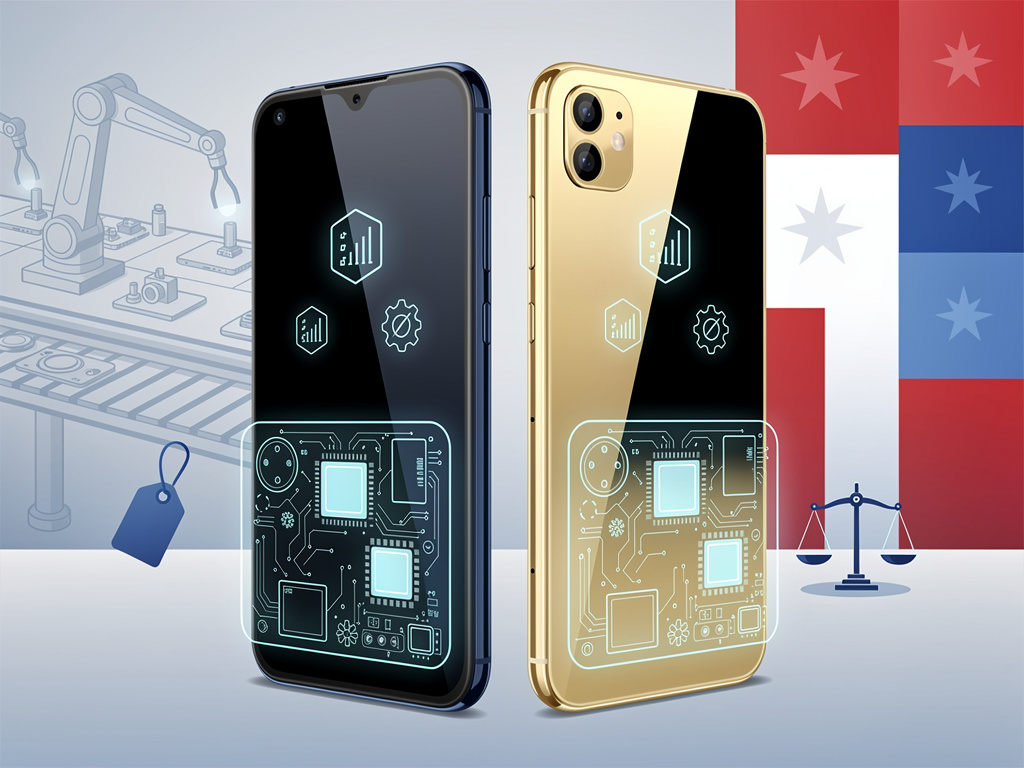
Donald Trump’s name has sold steaks, ties and hotels. Now it sells phones. The T1 from Trump Mobile arrived this spring after months of delays. At $499 it carries a gold finish, an American flag on the back and preloaded Truth Social. Yet technical analysis shows the device shares nearly all its hardware with a two-year-old midrange handset from HTC.
Trump Mobile, an MVNO that licenses the former president’s brand, first teased the phone in 2025. Promotional materials called it “proudly designed and built in the United States.” Early images showed a different camera layout and suggested American manufacturing. By the time units reached reviewers in May 2026 those claims had quietly disappeared.
NBC News obtained one of the first review samples. Reporters sent it to iFixit teardown engineer Shahram Mokhtari in San Luis Obispo, California. What followed was an X-ray scan, microscope work and full disassembly. The verdict came fast. The T1 and HTC’s U24 Pro are almost identical.
The mainboard matches. Sensor placements line up. Even the 3.5-millimeter headphone jack sits in the same spot. Minor differences exist. The Trump version wears a fresh coat of gold paint. Its battery varies slightly. The flag on the rear has 11 stripes instead of 13. Otherwise the phones could swap parts without trouble.
HTC released the U24 Pro in June 2024. The Taiwanese firm built it with a Qualcomm Snapdragon 7 Gen 3 processor, 12 gigabytes of RAM and 512 gigabytes of storage. Those numbers line up exactly with what Trump Mobile lists for the T1. The display measures 6.78 inches with a 120-hertz refresh rate. Cameras include a 50-megapixel main sensor, an 8-megapixel ultrawide and another 50-megapixel telephoto. Front camera also hits 50 megapixels.
Performance reflects that midrange silicon. CNET ran the T1 through daily use over a long weekend. Geekbench scores pointed to the same eight-core chipset found in the HTC model. The phone handled calls, social media and light gaming without drama. It never pretended to rival flagship speed. Reviewers noted the age of the platform. Two years is a long time in smartphones.
Questions about origin surfaced early. Trump Mobile once highlighted “Made in the USA.” The delivered units carry no such marking. FCC filings list an entity called Smart Gadgets Global, overseen by Trump Mobile executive Eric Thomas. Manufacturing traces to Taiwan, where HTC produced the U24 Pro using components from multiple countries including China.
iFixit first flagged the resemblance months before the phone shipped. Writer Shahram Mokhtari compared early photos and FCC documents. He bought an HTC U24 Pro as a reference. When the T1 finally arrived the two devices looked like siblings wearing different clothes. “The hardware inside tells the real story,” Mokhtari observed in his analysis.
The Verge’s Dominic Preston examined a prototype even earlier. His report raised the same possibility. Once the finished product reached journalists the speculation turned into confirmation. Mashable called it a rebranded HTC phone. Newsweek captured customer disappointment. Many had expected something new. They received a familiar Android device with fresh branding.
Trump Mobile sells the T1 alongside renewed Samsung and Apple models. The company operates as a mobile virtual network operator. It does not own its own cellular network. Customers use existing towers. The phone itself functions on major carriers once unlocked. Yet the patriotic marketing created expectations that hardware reality could not meet.
Some buyers shrugged. They liked the gold color. Others felt misled. Social media filled with jokes about the 11-stripe flag and the $499 price tag on what amounts to a repainted 2024 phone. One reviewer compared the finish to something less flattering. The jokes spread quickly.
But the story runs deeper than one product. It reflects persistent challenges in American electronics manufacturing. Building advanced smartphones requires global supply chains. Few companies can produce flagship or even midrange devices entirely within U.S. borders at competitive cost. Trump Mobile never explained how it would overcome those barriers. The final device shows it did not try.
Smart Gadgets Global secured FCC approval in January 2026. The company maintains a low profile. Public records show little activity beyond this single handset. That opacity added to the sense that the T1 was less a bold American venture and more an exercise in licensing and cosmetic change.
HTC’s role adds irony. The once-proud Taiwanese brand has faded from the U.S. market. Its U24 Pro never launched officially here. Now it returns under a political banner. The partnership, if one exists, remains undisclosed. Neither Trump Mobile nor HTC has detailed any formal arrangement.
Reviews focused on practical matters. Battery life proved average. The screen looked bright enough for outdoor use. Cameras produced decent daylight shots but struggled in low light. No one called the T1 a standout. Most described it as functional for the price. The real debate centered on value and honesty.
So the phone exists. It makes calls. It runs apps. It carries the former president’s name in four places out of the box. For supporters that may be enough. For industry observers it stands as another example of marketing that outpaced engineering.
Recent coverage has kept the conversation alive. CNET published a hands-on test on May 27, 2026, confirming the hardware match and questioning the absence of country-of-origin labels. NBC News followed with its own teardown video, showing side-by-side X-rays that left little doubt. The findings have not changed since. The T1 is what it is. A gold-painted handset built on proven but dated foundations.
Whether that satisfies the audience Trump Mobile targeted remains an open question. Sales figures have not surfaced. Early reactions suggest a mix of loyalty and letdown. The larger lesson may be simpler. Branding can open doors. It cannot redesign a supply chain overnight. And in the smartphone business the inside still matters more than the name on the back.


 WebProNews is an iEntry Publication