
The glow of an unfamiliar monitor in a hotel business center or a library cubicle presents a modern dilemma for the mobile professional: a portal to the digital world that is at once essential and untrustworthy. Every keystroke, every login, is a potential liability on a public machine. The dream has long been a single, persistent computing environment, one that is yours alone, accessible from anywhere but controlled by no one else. A new class of software is now turning that dream into a tangible reality, not by reinventing the computer, but by transforming its most ubiquitous tool: the web browser.
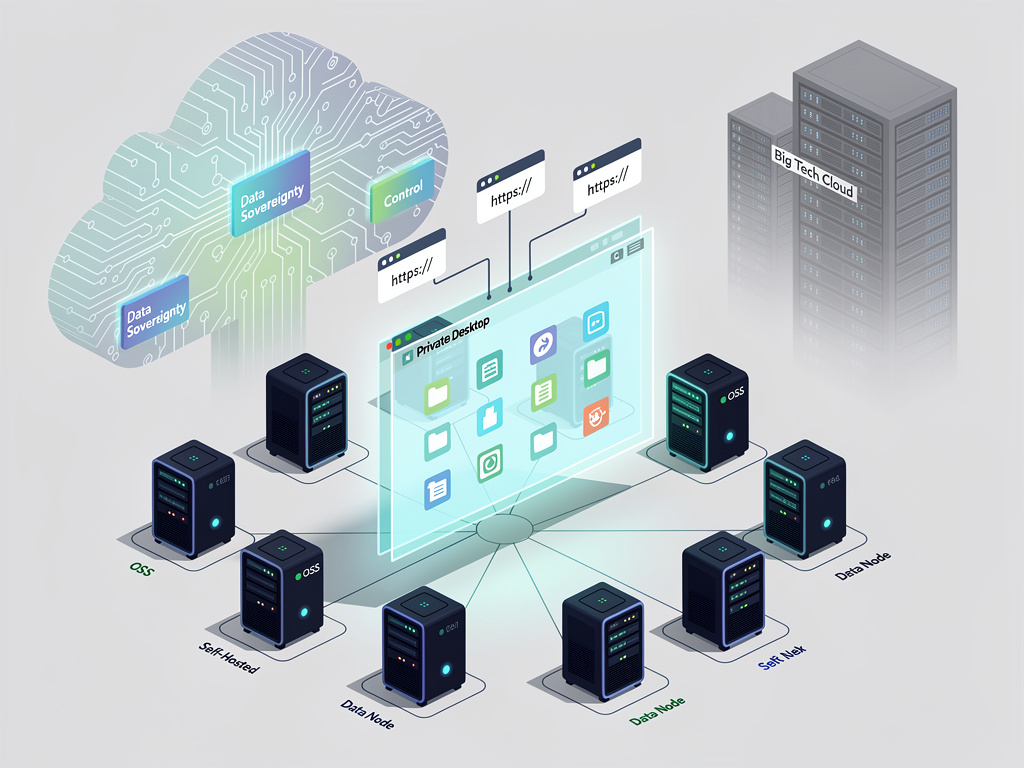
Enter the self-hosted web operating system, a sophisticated web application that runs on a private server but renders a complete desktop environment—replete with files, applications, and settings—inside a standard browser tab. At the forefront of this user-centric movement is Next OS, an open-source project that exemplifies the potential of this approach. It allows a user to host their own personal computer in the cloud, creating a secure and consistent workspace that can be summoned on any device with an internet connection, effectively turning any screen into a secure window to one’s own digital domain.
The Allure of Digital Sovereignty
The primary driver behind the adoption of such technologies is a burgeoning desire for digital sovereignty. In an era where personal data is the currency of the world’s largest corporations, a growing cohort of technically-inclined users is seeking to reclaim control. By self-hosting a personal desktop, individuals can ensure their files, communications, and activity are stored on hardware they own and manage, far from the data-mining operations of Big Tech. This model directly challenges the prevailing ecosystem where user data is continuously harvested to fuel advertising and train AI models.
This movement is not occurring in a vacuum. It is the logical extension of the self-hosting philosophy that has given rise to platforms like Nextcloud, which provides a private alternative to Google Drive and Microsoft 365. As a recent analysis by MakeUseOf points out, the appeal of a browser-based OS lies in its ability to offer a consistent and private computing experience, regardless of the hardware being used. It represents a fundamental shift from renting digital space from corporate landlords to owning a private digital home.
Under the Hood: A Docker-Powered Desktop
For industry insiders, the elegance of Next OS lies in its architecture. It is not a traditional operating system in the vein of Linux or Windows, which manages hardware directly. Instead, it is a client-server application built with modern web technologies, including the Vue.js framework for its interactive front-end and a Node.js-based Express server on the back-end. This entire package is neatly bundled into a Docker container, a standardized unit of software that simplifies deployment across a wide variety of server environments, from a Raspberry Pi in a closet to a virtual private server from a cloud provider.
The user experience is designed to be immediately familiar, mimicking the desktop metaphor that has dominated personal computing for decades. According to the project’s official GitHub repository, Next OS provides a file manager for organizing documents, an integrated app store for adding new functionality, a text editor, an image viewer, and even a terminal for command-line access. All these features operate seamlessly within the confines of the browser, with the heavy lifting performed by the user’s private server, ensuring data remains secure and the local machine is merely a thin client.
A Growing Ecosystem or a Niche Pursuit?
While Next OS offers a compelling vision, it is part of a broader field of remote desktop solutions, each catering to a different segment. On the high end are enterprise-grade platforms like Kasm Workspaces, which provide containerized streaming technology for businesses to deliver secure application and desktop access to their employees. These systems are built for scalability, security auditing, and corporate management, representing a significant investment in infrastructure and licensing.
Closer in spirit to Next OS are other open-source projects popular with home-lab enthusiasts and developers. The Webtop project from LinuxServer.io, for example, focuses on providing a full-featured Linux desktop environment (like XFCE or KDE) accessible via a browser. While immensely powerful, these solutions can be more complex to configure and maintain. Next OS differentiates itself by prioritizing a lightweight, modern, and simplified user experience, aiming for the role of a personal cloud desktop rather than a complete replacement for a Linux workstation.
Practical Applications and Inherent Limitations
The ideal user for a system like Next OS is someone who values privacy and mobility. This includes software developers who need a consistent coding environment accessible from multiple locations, digital nomads who work from a variety of devices, or simply privacy advocates who wish to de-Google their digital lives. The ability to access your personal files and applications from a friend’s laptop or a public kiosk without leaving a trace is a powerful use case, transforming untrusted hardware into a secure personal terminal.
However, it is crucial to understand the inherent limitations. A web OS is not suited for performance-intensive tasks like high-end gaming or 4K video editing, as these are constrained by the server’s processing power and the latency of the network connection. It is a supplementary tool designed for productivity, file management, and light development work. It augments, rather than replaces, the need for a capable local machine for more demanding applications, serving as a persistent, secure hub for one’s digital life.
The Broader Shift Towards Decentralized Computing
The emergence of projects like Next OS is symptomatic of a larger counter-current in the tech industry: a slow but steady push away from centralized, monolithic platforms and towards a more decentralized and user-controlled model. For two decades, the trend has been towards consolidation, with a handful of technology giants controlling the primary platforms for communication, productivity, and data storage. This has led to unprecedented convenience but has come at the cost of user privacy and autonomy.
Self-hosted web operating systems represent a grassroots effort to reverse this trend. They leverage the open standards of the web and the accessibility of open-source software to empower individuals to build their own private corners of the cloud. This philosophy aligns with the core principles that guided the early internet—a network of independent but interconnected nodes, rather than a collection of users tethered to a central hub. It is a technical solution to a philosophical problem: who should ultimately control your digital identity and personal data.
Looking ahead, the trajectory of these platforms will depend on their ability to become more accessible to a less technical audience. As containerization technology becomes more refined and managed hosting solutions for open-source applications become more common, the barrier to entry for self-hosting will continue to lower. While it may not challenge the dominance of Windows or macOS directly, this movement is quietly building a viable alternative for those who believe personal computing should be truly personal.
Ultimately, the innovation here is not merely in recreating a familiar desktop in a new medium. It is a fundamental reimagining of the relationship between the user, their data, and their software. By moving the ‘computer’ from the physical desk to a private server and making it accessible through the universal browser portal, these systems are carving out a new path—one that prioritizes ownership, privacy, and control in an increasingly centralized digital world.


 WebProNews is an iEntry Publication