
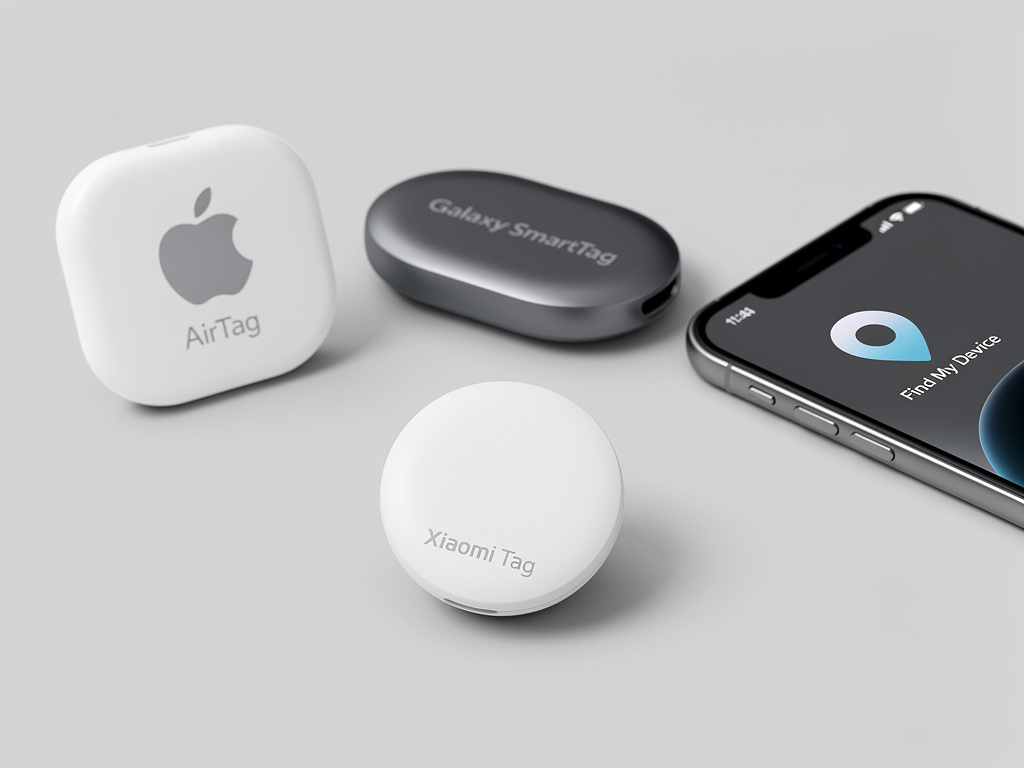
NEW YORK – In a quiet regulatory filing that signals a loud strategic ambition, Chinese electronics giant Xiaomi Corp. appears poised to enter the fiercely competitive market for Bluetooth item trackers. A new device, explicitly named the “Xiaomi Tag,” has surfaced in a certification listing, indicating the company is preparing to challenge the dominance of Apple’s AirTag and Samsung’s Galaxy SmartTag in a move that could reshape the lucrative smart accessories sector.
The certification, filed with Singapore’s Infocomm Media Development Authority (IMDA), details a “Short Range Device” with the model number MZB0G87EU. As first reported by Android Authority, the listing confirms the product’s name and its use of Bluetooth Low Energy (BLE) technology, the foundational standard for modern item finders. While details remain sparse, the filing is the most concrete evidence to date of Xiaomi’s intent to leverage its vast hardware ecosystem and aggressive pricing strategy to capture a piece of a market that consumers have come to heavily rely on.
A New Era Powered by Google’s Network
For years, a significant barrier to entry for any potential AirTag competitor has been the network. An item tracker’s utility is directly proportional to the number of devices that can passively and securely detect its location. Apple’s Find My network, with over a billion active iPhones, iPads, and Macs, created a nearly insurmountable advantage. However, the calculus has fundamentally changed with the long-awaited global rollout of Google’s own crowdsourced Find My Device network.
This upgraded Android-native network, which began activating on devices in April, functions similarly to Apple’s, using the massive, distributed web of Android devices to securely pinpoint the location of lost items, as detailed by The Verge. For third-party manufacturers like Xiaomi, this is a game-changer. It provides a ready-made, global-scale network, instantly leveling the playing field and allowing them to focus on hardware design, feature integration, and, most critically, price.
Entering a Crowded Field of Titans
Xiaomi is not stepping into an empty arena. The market is currently a duopoly controlled by Apple and Samsung, with legacy players like Tile fighting for the remaining share. Apple’s AirTag, launched in 2021, set the modern standard with its seamless iOS integration and, crucially, its use of Ultra-Wideband (UWB) technology for “Precision Finding,” which allows users to get arrow-guided, inch-by-inch directions to their lost item. This feature has become a key differentiator for premium trackers.
Samsung, meanwhile, has refined its offering with the Galaxy SmartTag2, which also incorporates UWB and leverages its own substantial network of Galaxy devices through the SmartThings Find service. These incumbents have established strong brand recognition and deep integration within their respective ecosystems, creating a high bar for any new entrant. Xiaomi’s success will depend not just on building a functional tag, but on convincing consumers it offers a compelling value proposition against these established giants.
The Strategic Advantage of a Massive Ecosystem
While Google’s network provides the foundation, Xiaomi’s own colossal ecosystem represents a powerful strategic asset. The company isn’t merely a smartphone maker; it’s a sprawling consumer IoT powerhouse. According to its 2023 annual results, the global monthly active users of its MIUI (now HyperOS) operating system reached 641.2 million, as reported by PR Newswire. This installed base presents a unique opportunity for deep, native integration.
A Xiaomi Tag could offer a superior user experience for those already embedded in the company’s world. Features could include one-tap setup, seamless management within the Mi Home app, and potential integrations with other Xiaomi products, such as having a smart speaker announce a tag’s last known location. This built-in audience gives Xiaomi a launchpad that smaller competitors like Chipolo or Pebblebee, which also use Google’s network, simply do not have.
The UWB Question and a Disruptive Price Point
A critical question hanging over the Xiaomi Tag is whether it will include UWB technology for precision finding. The initial certification does not specify its inclusion, leaving open the possibility that Xiaomi could launch two versions: a standard, budget-friendly BLE-only model and a premium “Pro” version with UWB. Omitting UWB would allow for a significantly lower price, but would put it at a functional disadvantage against the flagship offerings from Apple and Samsung.
This decision will be central to Xiaomi’s market-entry strategy. The company has a long and successful history of disrupting markets with high-spec, low-cost hardware. It is highly probable that the Xiaomi Tag will be priced aggressively to undercut the competition, potentially targeting a sub-$20 price point for a standard model to drive mass adoption and rapidly build market share. This approach could appeal to budget-conscious consumers and families looking to track multiple items without the premium cost associated with AirTags.
Navigating the Inevitable Privacy Hurdles
The rise of Bluetooth trackers has been shadowed by serious privacy and safety concerns, most notably their use in unwanted tracking and stalking. The industry has been forced to respond, with Apple and Google collaborating on a new industry specification to address the issue. This initiative, named “Detecting Unwanted Location Trackers,” is designed to allow both iOS and Android devices to identify and alert users to unknown trackers moving with them, regardless of the brand.
For Xiaomi, launching a tracker in this environment means that robust anti-stalking features are not optional; they are a prerequisite for market acceptance. As reported by TechCrunch, this standard is being formalized to ensure cross-platform compatibility. The Xiaomi Tag will almost certainly need to be compliant with this specification from day one to avoid the negative press that plagued the early days of the AirTag and to be considered a responsible player in the ecosystem.
Global Ambitions and Perfect Timing
The model number itself—MZB0G87EU—provides a clue to Xiaomi’s geographic ambitions. The “EU” suffix strongly suggests that the product is intended for the European market, and by extension, a global release rather than a China-exclusive launch. This aligns with Xiaomi’s broader strategy of expanding its presence and brand recognition in Western markets, where it has seen significant growth in smartphone sales.
The timing of this move is impeccable. With Google’s Find My Device network now live and expanding, the technological foundation is in place. Consumer awareness of item trackers is at an all-time high, thanks largely to Apple’s marketing muscle. Xiaomi appears to be positioning itself to ride this wave, entering the market at a moment of maximum opportunity with a solution that could democratize the technology for a wider segment of the Android user base, which represents the majority of smartphone users worldwide.


 WebProNews is an iEntry Publication