
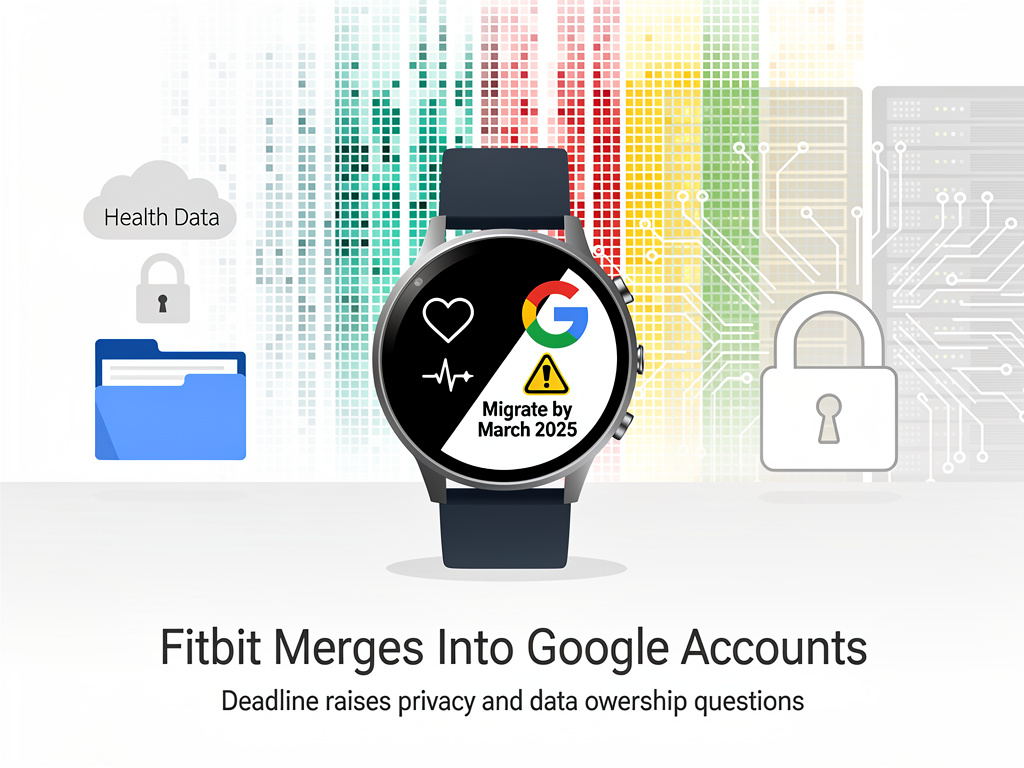
In a move that marks the definitive end of Fitbit’s independent identity, Google has set a hard deadline for millions of users to migrate their accounts or face permanent loss of access to their health data and devices. The March 2025 cutoff represents more than just a technical transition—it’s a watershed moment that crystallizes growing concerns about data consolidation, privacy, and the fate of acquired tech companies in the hands of Silicon Valley giants.
According to Mashable, Fitbit users who refuse to transition to a Google account will lose access to their devices and all associated health data after the deadline. This ultimatum comes nearly four years after Google completed its $2.1 billion acquisition of Fitbit in January 2021, a deal that promised to maintain user choice and data separation. The forced migration effectively nullifies those assurances, leaving users with a stark choice: surrender their data to Google’s ecosystem or abandon years of health tracking history.
The transition has been gradual but inexorable. Google began encouraging voluntary migrations in 2023, offering enhanced features and integration with Google services as incentives. However, the company’s patience has apparently run out. Users who have resisted the change now face a hard stop, with no option to continue using their Fitbit devices with legacy accounts. The company has stated that this consolidation is necessary to provide better features and more seamless integration across Google’s product ecosystem, but critics argue it represents a troubling pattern of tech acquisitions that ultimately erase consumer choice.
Privacy Concerns Mount as Deadline Approaches
The forced migration has reignited debates about health data privacy that first emerged when Google announced its intention to acquire Fitbit. Privacy advocates have long warned that combining Google’s vast advertising apparatus with intimate health data creates unprecedented surveillance capabilities. While Google has pledged not to use Fitbit health data for advertising purposes, the company’s track record on data practices has left many users skeptical. The European Union required specific commitments from Google regarding data separation as a condition of approving the acquisition, but those protections have a 10-year sunset clause.
Health data represents some of the most sensitive personal information individuals generate. Fitbit devices track sleep patterns, heart rates, exercise routines, menstrual cycles, and even stress levels. When combined with Google’s existing knowledge about users’ search histories, locations, emails, and online behavior, this creates an extraordinarily detailed profile of individuals’ lives. While Google maintains that it keeps Fitbit data in a separate silo, the technical architecture of merged accounts makes such separation increasingly theoretical rather than practical.
The Broader Pattern of Tech Consolidation
Fitbit’s absorption into Google follows a familiar pattern in the technology industry. Independent companies with loyal user bases get acquired by larger platforms, initially maintaining separate identities before gradually being dissolved into the parent company’s infrastructure. Instagram and WhatsApp have undergone similar transformations under Facebook’s ownership, despite initial promises of independence. Nest, another Google acquisition, saw its separate account system eliminated in favor of Google accounts in 2019, foreshadowing Fitbit’s current situation.
This consolidation trend has significant implications for competition and innovation in the wearables market. When Google acquired Fitbit, the company was struggling financially but still represented an independent alternative to Apple’s dominant Apple Watch ecosystem. Now, the wearables market has effectively become a duopoly, with Google and Apple controlling the vast majority of the smartwatch and fitness tracker market. Smaller competitors like Garmin and Whoop serve niche markets, but lack the resources and ecosystem integration of the tech giants.
User Backlash and Limited Options
The response from Fitbit’s user community has been swift and largely negative. Online forums and social media platforms have filled with complaints from long-time users who feel betrayed by the forced migration. Many users cite privacy concerns, while others simply prefer to keep their health data separate from their Google accounts. Some users have reported that they purchased Fitbit devices specifically because they weren’t made by Google or Apple, seeking to avoid those companies’ ecosystems.
The practical options for dissenting users are limited and unappealing. Those who refuse to migrate can abandon their Fitbit devices entirely, but this means losing years of health data and the investment in their hardware. Exporting data is possible, but the exported information loses much of its utility outside of Fitbit’s analysis tools. Switching to a competitor means starting over with a new device and new tracking system, with no guarantee that the new company won’t eventually be acquired and face the same fate.
Regulatory Scrutiny and Future Implications
The forced migration comes at a time of increased regulatory scrutiny of big tech companies’ data practices and acquisition strategies. The European Union’s Digital Markets Act and proposed regulations in the United States aim to limit the power of dominant platforms and protect consumer choice. However, these regulatory efforts have largely come too late to affect the Fitbit situation, as the acquisition was approved before most of these frameworks were in place.
The Fitbit case may influence how regulators view future acquisitions in the health technology space. As wearable devices become increasingly sophisticated and capable of monitoring more health metrics, the data they generate becomes more valuable and sensitive. Future acquisition reviews may impose stricter conditions on how acquired health data can be used and whether forced account migrations can be required. Some privacy advocates are calling for retroactive action, though legal mechanisms for such intervention remain unclear.
The Technical Realities of Data Migration
From a technical standpoint, Google argues that maintaining separate account systems creates inefficiencies and limits the features it can offer users. Modern software development increasingly relies on unified authentication systems and shared infrastructure. Supporting legacy Fitbit accounts requires maintaining parallel systems, doubling the engineering effort and creating potential security vulnerabilities. Google contends that the migration enables better integration with Android devices, improved data backup, and access to more advanced health features powered by artificial intelligence.
However, critics note that other companies have successfully maintained separate account systems for acquired properties when they chose to prioritize user choice. The technical challenges, while real, are not insurmountable for a company with Google’s resources. The decision to force migration appears to be more about strategic priorities than technical necessity. By consolidating users into Google accounts, the company strengthens its ecosystem and increases switching costs for users who might otherwise consider leaving Google’s services.
What This Means for the Future of Digital Health
The Fitbit migration represents a critical juncture for digital health and personal data ownership. As health monitoring becomes increasingly digitized and integrated into daily life, questions about who controls health data and how it can be used become more urgent. The current situation demonstrates the vulnerability of users who entrust their health data to commercial platforms that can change terms, get acquired, or simply decide to alter their business models.
The episode also highlights the need for data portability standards and interoperability requirements in the health technology sector. If users could easily move their complete health history between platforms with full functionality, the leverage that platforms hold over users would diminish significantly. Some industry groups have proposed universal health data standards, but adoption remains limited, and major platforms have little incentive to support systems that would reduce user lock-in.
Looking Ahead: Lessons for Consumers and Policymakers
For consumers, the Fitbit situation offers a cautionary tale about the risks of investing in ecosystems controlled by companies that might be acquired or change their policies. Due diligence now requires considering not just a product’s current features and privacy policies, but also the likelihood of acquisition and how a potential acquirer might handle user data. This calculus is particularly important for health-related products where data sensitivity is high and switching costs are substantial.
Policymakers face difficult questions about how to balance innovation and competition with consumer protection and privacy. Outright blocking of acquisitions can stifle investment and prevent struggling companies from finding sustainable business models. However, allowing acquisitions without meaningful conditions on data handling and user choice enables the concentration of power and data that many find troubling. The Fitbit case suggests that acquisition conditions need stronger enforcement mechanisms and longer or permanent restrictions on forced account migrations and data consolidation.
As the March 2025 deadline approaches, millions of Fitbit users must make a choice that many never expected to face. For some, the convenience and features of Google integration will outweigh privacy concerns. Others will reluctantly migrate while resenting the loss of choice. And some will abandon their devices entirely, accepting the loss of their health data as the price of maintaining separation from Google’s ecosystem. Regardless of individual decisions, the forced migration marks the definitive end of Fitbit as an independent entity and serves as a stark reminder of the fragility of digital autonomy in an era of platform consolidation.


 WebProNews is an iEntry Publication