
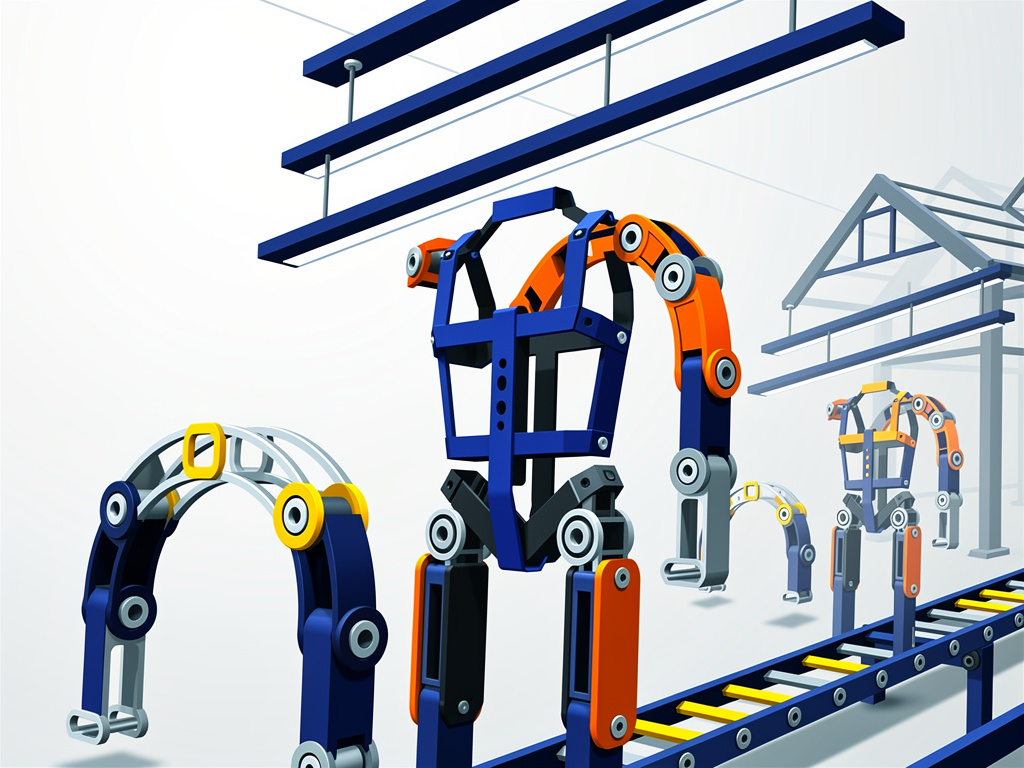
A Dutch startup called Wearable Robotics just closed a €5 million Series A round, and the money tells a story that extends well beyond one company in Delft. The investment, led by FORWARD.one, signals growing institutional confidence that exoskeletons — once confined to science fiction and military prototypes — are ready for the factory floor, the construction site, and eventually the living room.
The company, a spinout from Delft University of Technology, builds powered exoskeletons designed to augment human strength and endurance in physically demanding work. Not replace workers. Augment them. That distinction matters enormously in the current labor climate, where aging workforces and chronic labor shortages in manufacturing and logistics have made the economics of human augmentation far more attractive than they were even five years ago.
According to The Next Web, the Series A funding will be used to scale production and accelerate commercial deployment of the company’s upper-body exoskeleton, which is aimed at reducing strain injuries in industrial settings. The device supports the arms and shoulders during overhead work — the kind of repetitive, physically punishing labor that drives workers out of trades like automotive assembly, shipbuilding, and aircraft maintenance at alarming rates.
Wearable Robotics isn’t operating in a vacuum. The global exoskeleton market, valued at roughly $1.4 billion in 2023 according to various industry estimates, is projected to more than triple by the end of the decade. Companies like Sarcos Robotics, Ekso Bionics, and Germany’s Ottobock have all staked claims in the space, though with varying degrees of commercial success. What makes the Delft startup’s approach notable is its focus on lightweight, practical designs that don’t require hours of training to operate — a persistent barrier to adoption that has tripped up competitors.
The physics of the problem are deceptively simple. A worker performing overhead tasks — bolting panels, welding seams, routing wiring harnesses — is fighting gravity with every repetition. The cumulative toll is staggering. Musculoskeletal disorders account for roughly a third of all workplace injuries requiring time off, according to the U.S. Bureau of Labor Statistics. Shoulder injuries alone cost employers billions annually in workers’ compensation, lost productivity, and retraining. An exoskeleton that offloads even 30 to 40 percent of that gravitational burden can dramatically extend a worker’s productive career.
And the labor math is getting worse, not better.
Europe faces a particularly acute version of this crisis. The European Commission has estimated that by 2030, the EU will have 2 million unfilled manufacturing jobs. Japan, South Korea, and the United States confront similar demographic headwinds. Traditional industrial robots — the kind bolted to factory floors — solve part of the equation, but they can’t follow a human worker into a confined fuselage or up a scaffolding structure. Exoskeletons can.
FORWARD.one, the Amsterdam-based venture firm that led the round, has a portfolio weighted toward deep tech and industrial innovation. The firm’s decision to back Wearable Robotics reflects a broader thesis among European VCs that the continent’s manufacturing base represents an enormous addressable market for human augmentation technology — one that American and Asian competitors have been slower to penetrate at the mid-market level. Other investors in the round were not fully disclosed, though The Next Web noted that existing backers also participated.
The technology itself sits at the intersection of several maturing fields: lightweight actuators, battery energy density, sensor fusion, and machine learning algorithms that adapt to individual users’ movement patterns in real time. Five years ago, a powered upper-body exoskeleton weighed too much, ran out of battery too fast, and felt too rigid to be practical for an eight-hour shift. Those constraints haven’t vanished, but they’ve narrowed considerably. Brushless electric motors have gotten smaller and more efficient. Lithium-ion cells pack more energy per kilogram. And onboard processors can now run adaptive control algorithms without draining the battery in two hours.
Still, skeptics remain. And they have reasonable arguments.
The exoskeleton industry has a history of overpromising. Sarcos Robotics, once a darling of the space, went public via SPAC in 2021 at a valuation north of $1.2 billion. Its stock subsequently cratered, and the company has struggled to translate impressive demo-day footage into sustained commercial revenue. Ekso Bionics, which pivoted from military applications to medical rehabilitation, has found a niche but hasn’t achieved the kind of scale that justifies early valuations. The pattern is familiar in hardware startups: the gap between a working prototype and a commercially viable, mass-manufactured product is wider than it looks from the outside.
Wearable Robotics will have to prove it can cross that gap. €5 million is meaningful seed-to-Series A capital in the European context, but it’s modest by the standards of what’s required to build and certify industrial hardware at scale. Supply chain management, regulatory compliance across multiple jurisdictions, after-sales service infrastructure — these are the unglamorous realities that determine whether a hardware startup survives past its first hundred units.
But there are reasons for cautious optimism specific to this company. Its roots in Delft University of Technology give it access to one of Europe’s strongest engineering talent pipelines. The Netherlands’ proximity to major industrial customers in Germany, France, and Scandinavia shortens the sales cycle. And the company’s focus on a specific, well-defined use case — overhead industrial work — avoids the trap of trying to be everything to everyone, a mistake that has diluted the efforts of more than one exoskeleton maker.
The timing also aligns with shifting regulatory attitudes. The European Union’s updated Machinery Regulation, which takes effect in 2027, includes provisions that more explicitly address wearable robotic devices, potentially streamlining the path to CE marking. In the United States, OSHA has shown increasing interest in exoskeletons as a preventive tool, though formal guidance remains limited. Insurance companies, meanwhile, are beginning to study whether exoskeleton use correlates with lower claims rates — data that, if positive, could create powerful financial incentives for adoption.
There’s a consumer angle too, though it’s further out. An aging global population means that assistive exoskeletons for daily living — helping elderly individuals carry groceries, climb stairs, or simply stand for extended periods — represent a massive potential market. Companies like Japan’s Cyberdyne have pursued this vision for years with their HAL (Hybrid Assistive Limb) system, primarily in rehabilitation contexts. But the cost curves haven’t dropped enough for widespread consumer adoption. Not yet.
So where does this leave Wearable Robotics and its fresh capital? In a race, essentially. A race to prove commercial viability before the next funding round becomes necessary. A race against better-funded competitors in the U.S. and Asia. And a race against the clock of worker demographics that makes the problem they’re solving more urgent with every passing year.
The exoskeleton industry has been five years away from mainstream adoption for roughly fifteen years now. What’s different this time is that the enabling technologies — motors, batteries, sensors, software — have finally converged to a point where the devices are light enough, smart enough, and affordable enough to make economic sense for an industrial buyer. Whether Wearable Robotics specifically will be the company that capitalizes on that convergence is an open question. But the convergence itself is real.
€5 million won’t change the world. It might, however, be enough to prove that strapping a robot to a human being isn’t just a compelling demo — it’s a viable business.


 WebProNews is an iEntry Publication