
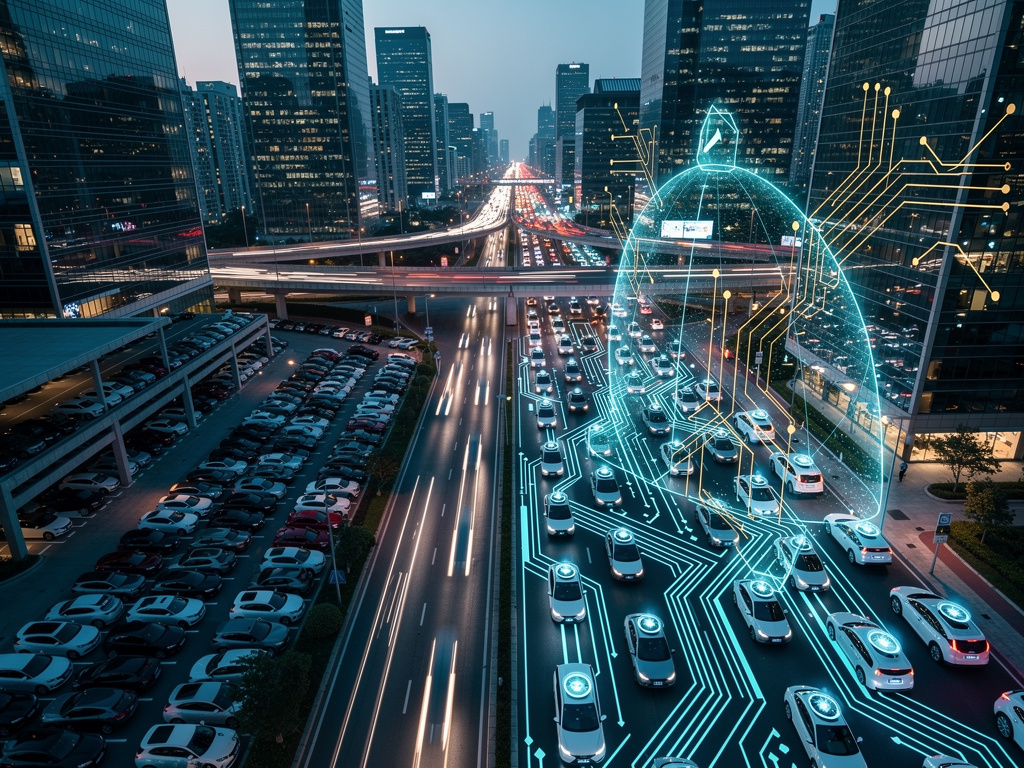
NEW YORK – For more than a century, the personally owned automobile has been the undisputed symbol of American freedom and economic mobility. It sits at the center of the suburban dream, a steel-and-glass avatar of personal choice. Yet, a cohort of technologists and economists argue this icon is on the brink of obsolescence, destined to go the way of the horse and buggy. This isn’t a war declared by regulators or environmentalists, they say, but an undeclared economic conflict waged by lines of code and driven by the cold logic of asset utilization.
The most provocative evangelist for this new era is George Hotz, the famed hacker who founded autonomous driving startup Comma.ai. In a widely circulated manifesto, Mr. Hotz frames the coming shift as a “War on Car Ownership,” an inevitable outcome of technological progress. The enemy, in his view, is not the car itself, but the deeply inefficient model of owning one. “Your car is parked 95% of the time,” he argues, a sentiment echoed across the autonomous vehicle sector. The core of his thesis, as he lays out on his personal blog, is that when self-driving technology makes Transportation-as-a-Service (TaaS) an order of magnitude cheaper than owning a vehicle, the market will ruthlessly abandon the old model.
This is not merely a theoretical exercise. The average annual cost to own and operate a new vehicle surged to $12,182 in 2023, according to a study by the American Automobile Association (Source: AAA). Proponents of TaaS argue that autonomous robotaxis, by eliminating the cost of a human driver and operating near-continuously, can slash that expense for consumers. The think tank RethinkX, in a seminal report on the subject, projected that TaaS could save the average American family over $5,600 per year, calling it the “largest consumer welfare boon in history” (Source: RethinkX).
The Robotaxi Vanguard Deploys
The generals leading this charge, as Mr. Hotz might characterize them, are a mix of established tech giants and ambitious automakers. Alphabet’s Waymo is arguably the furthest ahead, having operated fully driverless commercial services in Phoenix for years. The company is now aggressively expanding its footprint, recently doubling its service area in Phoenix and launching in new, complex urban environments like San Francisco and Los Angeles, signaling a growing confidence in its technology (Source: TechCrunch). Each successful, uneventful ride chips away at the public’s skepticism and builds a case for a driverless future.
The path to deployment, however, is fraught with peril, a lesson learned the hard way by General Motors’ Cruise. The company’s rapid expansion came to a screeching halt in late 2023 after a gruesome incident in San Francisco led to the suspension of its license to operate in California. The fallout served as a stark reminder of the immense technical, ethical, and regulatory hurdles that remain. The incident demonstrated that even for the most well-funded players, the gap between a controlled test environment and the chaotic reality of city streets is vast and unforgiving (Source: Reuters).
Meanwhile, Tesla CEO Elon Musk continues to push his vision of a vast, decentralized robotaxi network powered by the millions of Tesla vehicles already on the road. Mr. Musk has repeatedly promised that a future software update will “unlock” this capability, turning every compatible Tesla into an appreciating, revenue-generating asset for its owner. He has staked the company’s future on a vision-based approach to autonomy and a purpose-built robotaxi, which he claims will make the cost of travel “less than a subsidized bus ticket” (Source: Electrek). While the timeline remains a subject of intense industry debate, the sheer scale of Tesla’s fleet presents a formidable potential force in the TaaS market.
A Cultural and Logistical Reckoning
Beyond the technological race, the transition away from car ownership faces significant cultural headwinds. The automobile is deeply woven into the fabric of modern life, representing not just transportation but privacy, spontaneity, and personal identity. For many, the idea of hailing a sterile, anonymous pod for every trip is a dystopian prospect, a loss of freedom rather than a gain in efficiency. This sentiment is reflected in consumer surveys, which consistently show high levels of distrust in autonomous technology. A recent study found that 66% of drivers are afraid of self-driving vehicles, a figure that has remained stubbornly high despite technological advances (Source: AAA Public Affairs).
Furthermore, the economic and logistical case for TaaS is strongest in dense, urban cores. In suburban and rural areas, where the population is dispersed and trip demand is lower, a robotaxi network may struggle to provide the same level of convenience and cost-effectiveness as a personal vehicle parked in the driveway. This creates a potential mobility divide, where city dwellers enjoy the benefits of cheap, on-demand transport while those outside the urban bubble remain reliant on the traditional ownership model. The future of mobility may not be a single, monolithic solution but a hybrid system for decades to come.
The ripple effects of such a seismic shift would extend far beyond consumers’ wallets. The entire automotive ecosystem—from insurance companies and repair shops to parts suppliers and dealership networks—is predicated on the current model of individual ownership and human error. A world with fewer, but more heavily utilized, autonomous vehicles would require a fundamental rethinking of these multi-trillion-dollar industries. Insurance, for example, would shift from a model of individual driver liability to one of corporate fleet and software liability. The need for vast parking structures in downtown cores could diminish, freeing up valuable real estate for new development.
The Inevitable Trajectory
While the timeline is uncertain and the challenges are immense, the underlying economic forces pushing against the personal car ownership model are powerful. The convergence of electrification, connectivity, and autonomy creates a compelling value proposition that will be difficult for the market to ignore in the long run. The “war” Mr. Hotz describes is not one of bombs and bullets, but of cost-per-mile calculations and algorithmic efficiency.
Legacy automakers are not standing still, with many investing billions into their own autonomous research and mobility service divisions, hedging against the potential disruption of their core business. Yet they face a classic innovator’s dilemma: how to embrace a future that threatens to cannibalize their profitable present. The ultimate victors in this generational transformation will be the companies that can master not only the complex technology of autonomous driving but also the equally complex logistics and user experience of running a massive, reliable, and affordable transportation service.
The question is no longer if this change will happen, but when and how quickly. For now, the car in the driveway remains safe. But on the streets of Phoenix and San Francisco, and in the R&D labs from Silicon Valley to Detroit, the quiet revolution is already underway. The battle for the future of how we move is just beginning, and its outcome will reshape our cities, our economy, and our very conception of personal freedom.


 WebProNews is an iEntry Publication