
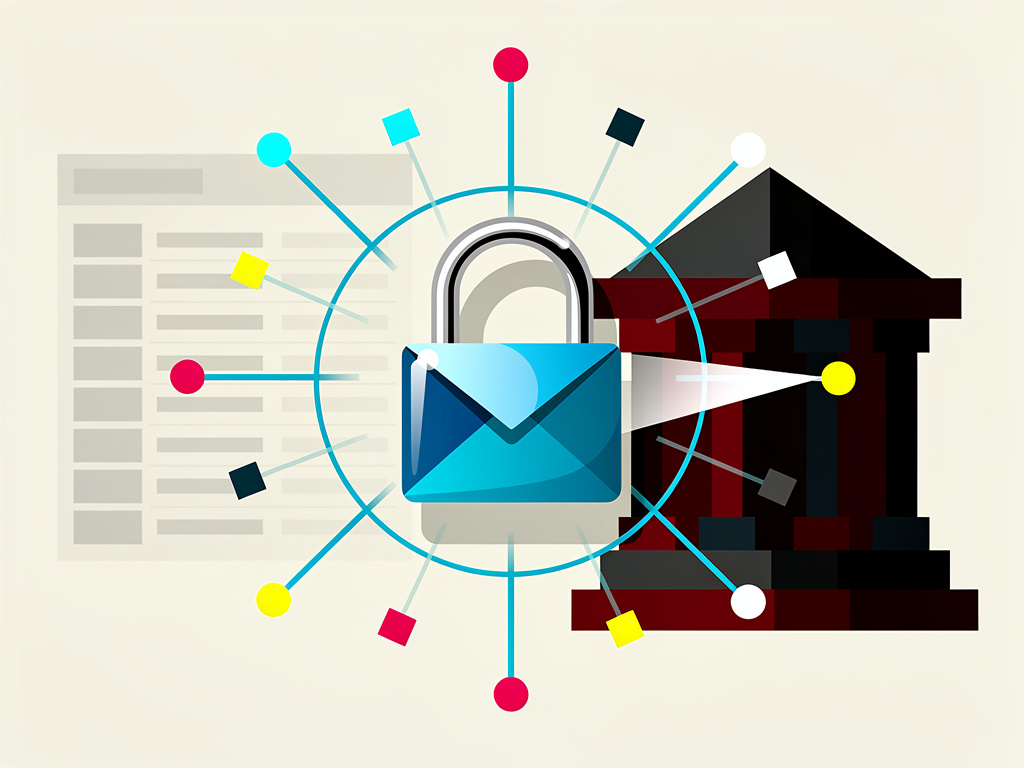
Proton Mail has long marketed itself as the fortress of email privacy — a Swiss-built, end-to-end encrypted service that stands between its users and the prying eyes of governments. That image took another hit recently when it emerged that the company provided user information to law enforcement, again, prompting a familiar but intensifying debate about what encrypted email actually protects and what it doesn’t.
The disclosure, first analyzed by security researcher Bruce Schneier on his widely read blog, reveals that Proton Technologies AG complied with a legal request and handed over data associated with a user’s account. Not the contents of encrypted emails — Proton can’t decrypt those — but metadata: IP addresses, account creation details, and other identifiers that can be just as revealing as the messages themselves.
This isn’t the first time. And that’s precisely the point.
In 2021, Proton Mail complied with a Swiss court order and provided the IP address of a French climate activist to Europol, which then passed it along to French authorities. The backlash was severe. Users felt betrayed. Proton’s response at the time was to update its privacy policy to more clearly state that while message content remains encrypted and inaccessible even to Proton, the company is subject to Swiss law and can be compelled to collect and share certain metadata under valid legal orders. The company also began recommending that users connect via Tor or a VPN to mask their IP addresses.
So when the latest case surfaced, seasoned observers weren’t shocked. But they were frustrated. Because the gap between Proton’s marketing language and operational reality remains wide enough to mislead ordinary users who assume “encrypted” means “invisible.”
Schneier put it bluntly. “Proton Mail can’t turn over the contents of your email,” he wrote. “But it can turn over a lot of other information about you.” That distinction — between content encryption and metadata exposure — is one the privacy industry has struggled to communicate clearly for years. Proton encrypts the body of emails end-to-end when both sender and recipient use Proton. Subject lines are encrypted at rest. But the company’s servers necessarily process information about who is communicating, when, from where, and how often. That transactional data, under Swiss legal compulsion, is fair game.
The architecture of email itself is partly to blame. Unlike Signal or other messaging protocols designed from the ground up to minimize metadata retention, email is a decades-old protocol with metadata baked into its DNA. Headers, routing information, timestamps — these are structural requirements of how email works. Proton can encrypt the payload, but stripping all metadata from an email system while maintaining interoperability with the broader internet would break the protocol entirely.
Andy Yen, Proton’s CEO, has historically been transparent about these constraints, at least when pressed. In previous statements, he’s emphasized that Proton fights legal requests it considers overreaching and publishes a transparency report detailing the number of orders it receives and complies with. According to Proton’s own transparency report, the company received over 6,000 legal orders in 2023 and contested a significant number. But it complied with many as well.
The tension here is structural, not just legal. Proton operates under Swiss jurisdiction, which privacy advocates have traditionally considered favorable. Switzerland isn’t part of the European Union and has strong data protection traditions. But it also has mutual legal assistance treaties with numerous countries, and Swiss courts can and do compel companies to cooperate with foreign investigations routed through proper channels. The activist case in 2021 demonstrated this vividly: French authorities couldn’t directly compel a Swiss company, but they could work through Europol and Swiss legal mechanisms to get what they needed.
For the average user who signed up for Proton Mail expecting a cloak of anonymity, this is a rude awakening. For security professionals, it’s a known tradeoff.
The broader implications extend well beyond one company. Every encrypted service provider faces a version of this dilemma. Apple has battled the FBI over iPhone encryption. Signal has been subpoenaed and produced almost nothing because it retains almost nothing. Tutanota, another encrypted email provider based in Germany, was ordered by a German court in 2020 to implement a monitoring capability for incoming emails on a specific account — a step that went further than anything Proton has disclosed. The common thread is that encryption protects content, but the metadata surrounding that content tells its own story.
Intelligence agencies have known this for decades. Former NSA and CIA director Michael Hayden once said, “We kill people based on metadata.” That quote, jarring as it remains, captures the analytical power of knowing who contacted whom, when, and from where — even without reading a single word of the conversation.
Proton’s situation also raises questions about the effectiveness of transparency reports as accountability tools. The reports show aggregate numbers: how many requests received, how many complied with, how many contested. They don’t reveal the identities of affected users or the specific data handed over. This is standard practice across the industry — Apple, Google, and Microsoft publish similar reports — but it means users are essentially trusting the company’s self-reporting. There’s no independent audit mechanism.
Some privacy advocates argue that Proton deserves credit for operating within a legal framework and being relatively open about its constraints. Others contend that the company’s marketing creates a false sense of security that puts vulnerable users — journalists, activists, dissidents — at risk. Both arguments have merit.
The technical reality is stark. If you use Proton Mail without a VPN or Tor, your IP address is visible to Proton’s servers. If Swiss authorities issue a valid order, Proton will log and provide that IP address. If you created your account with a recovery email or phone number, that information is also potentially available. And if you correspond with someone using Gmail or Outlook, the email travels unencrypted between Proton’s servers and the recipient’s provider, meaning the content itself may be exposed in transit or at the destination.
None of this makes Proton Mail a bad product. It provides meaningfully stronger privacy protections than Gmail or Outlook for most use cases. The encryption of message content at rest and in transit between Proton users is genuine and well-implemented. But it is not, and has never been, a tool for complete anonymity. The distinction matters enormously when the stakes are high.
What would a truly metadata-resistant email system look like? Researchers have explored this question for years. Projects like Mixmaster and its successor Mixminion attempted to build anonymous remailer systems that obscured routing information. More recently, academic proposals for metadata-resistant communication — such as Vuvuzela from MIT and Stadium from Cornell — have shown theoretical promise but haven’t achieved practical deployment at scale. The fundamental challenge is that hiding metadata requires adding noise, delays, and computational overhead that degrade usability. Users want email that works instantly and reliably. Metadata resistance and user convenience are, for now, in direct conflict.
Signal’s approach is instructive by contrast. The messaging app has been designed to retain minimal metadata. When served with a grand jury subpoena in 2021, Signal could produce only two pieces of information: the date an account was created and the date it last connected to Signal’s servers. No message content, no contact lists, no group memberships, no profile information. This is possible because Signal’s architecture was built from scratch with metadata minimization as a core design principle. Email, with its federated architecture and decades of legacy infrastructure, doesn’t afford the same luxury.
Proton has taken steps to mitigate metadata exposure. Its onion site allows Tor users to access the service without revealing their IP address to Proton. Its VPN product, Proton VPN, offers another layer. But these are user-side precautions that require technical sophistication. The default experience — signing up with a browser, logging in from home — leaves metadata exposed by design.
The latest incident is a reminder that privacy is not binary. It exists on a spectrum, and where a particular tool falls on that spectrum depends on threat models, technical architecture, legal jurisdiction, and user behavior. Proton Mail offers strong content encryption. It does not offer metadata anonymity. For someone trying to keep their email from being read by hackers or data-mining advertisers, it’s an excellent choice. For someone trying to hide their identity from a determined law enforcement agency with the ability to obtain Swiss court orders, it’s insufficient on its own.
And that’s the uncomfortable truth the privacy industry keeps bumping up against. Marketing encrypted products is easy. Explaining their limitations honestly is harder. Users don’t read privacy policies. They read taglines. When those taglines promise privacy without caveats, the resulting trust gap can have real consequences for real people.
Proton’s challenge going forward is not primarily technical. It’s communicational. The company needs users to understand that encryption is a tool, not a talisman — that it protects specific things in specific ways under specific conditions. Whether Proton can deliver that nuance while maintaining its brand appeal as the consumer-friendly alternative to Big Tech surveillance will determine whether incidents like this one continue to erode user trust or become accepted as the known boundaries of what email privacy can realistically provide.
The encryption works. The metadata doesn’t lie. And Swiss courts don’t care about your marketing copy.


 WebProNews is an iEntry Publication