
The Encryption Paradox: A Lawsuit Claims Meta’s WhatsApp Has a ‘Backdoor’ to Your Private Messages
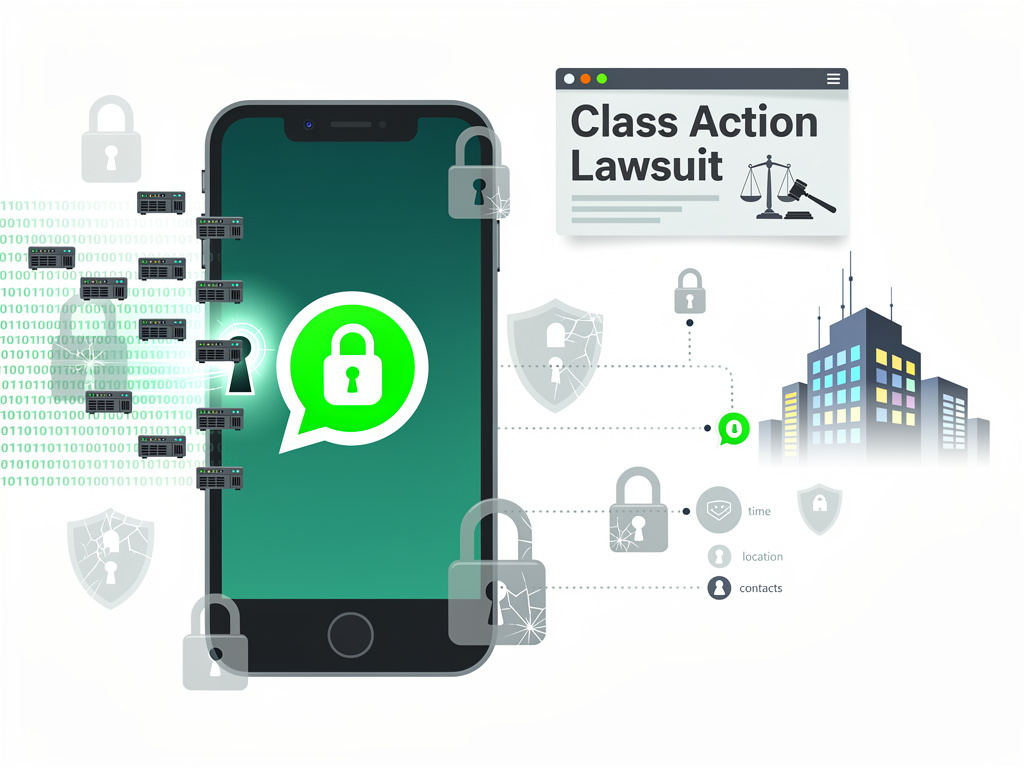
For years, the green shield icon in WhatsApp has served as a digital seal of trust for its more than two billion users, a promise of “end-to-end encryption” (E2EE) ensuring that personal conversations remain just that—personal. It’s the cornerstone of the platform’s brand and a key differentiator in a crowded market. But a class-action lawsuit filed in the Northern District of California is aiming a legal battering ram at that very foundation, alleging that parent company Meta Platforms Inc. has built a business on a deceptive premise. The suit claims that contrary to its public marketing, Meta has the technical means to access, read, and utilize supposedly secure user data, including message content.
The complaint, brought forth by plaintiffs Tracie D. Hines, James Martin, and Nathan Wright, argues that Meta’s representations of impenetrable privacy are “false and misleading.” At the heart of the matter is the assertion that while messages might be encrypted in transit between devices, Meta has allegedly engineered a “backdoor” that grants it access to this information. According to a report on the lawsuit from Lifehacker, the plaintiffs contend that Meta’s implementation of the messaging protocol allows it to access unencrypted messages on user devices, effectively bypassing the very security it touts as absolute. This, the suit claims, allows the tech giant to harvest data for commercial purposes, including targeted advertising and sharing information with third parties and governments.
A Challenge to the Sanctity of the Digital Seal
The lawsuit’s central claim strikes at a critical distinction in the world of digital security: the difference between an encryption protocol’s design and its corporate implementation. WhatsApp famously uses the Signal Protocol, widely considered the gold standard for secure messaging and developed by the non-profit Signal Foundation. In its pure form, E2EE is designed so that not even the company operating the service can decipher the content of communications. However, the lawsuit alleges that Meta’s proprietary code, which wraps around this protocol within the WhatsApp application, is where the vulnerability lies. It suggests the app can access and transmit data before it’s encrypted or after it’s decrypted on a device.
This is more than a simple privacy dispute; it’s a direct challenge to the business model of a platform that has struggled to find a clear path to monetization. For years, industry analysts have watched to see how Meta would generate significant revenue from its 2014, $19 billion acquisition. While WhatsApp remains ad-free for now, its integration with the broader Meta ecosystem is deepening. The company’s own Privacy Policy explicitly states that it receives and shares information with other Meta companies to help “operate, provide, improve, understand, customize, support, and market” their services. The lawsuit leverages this policy, arguing it contradicts the absolute privacy promised to users and serves as evidence of data sharing that shouldn’t be possible if the encryption was as complete as advertised.
The High-Stakes Battle Over Metadata and Trust
Beyond the explosive claim of accessing message content, the lawsuit also focuses on the well-documented collection of metadata—information about who you talk to, when, from where, and for how long. While Meta has been more open about collecting this data, plaintiffs argue that its extensive harvesting and use are at odds with the overall marketing message of a truly private service. Security experts have long warned that metadata alone can paint an incredibly detailed and intimate portrait of a person’s life, relationships, and activities. An analysis by the Electronic Frontier Foundation highlights that this metadata, shared across the Meta family of apps, can be used to build sophisticated user profiles for advertising purposes on platforms like Facebook and Instagram, even if the content of WhatsApp messages remains unseen.
Meta, for its part, has consistently and vigorously defended its privacy posture. In response to past criticisms, Will Cathcart, the head of WhatsApp, has taken to platforms like X to reaffirm the company’s commitment to E2EE, stating that they cannot see personal messages or hear calls. The company’s public position is that its data-sharing practices are for purposes like infrastructure improvement, security, and enabling business-to-consumer interactions, not for ad targeting based on private conversations. Yet, this lawsuit, filed under California’s robust Unfair Competition Law and Consumers Legal Remedies Act, seeks to put that corporate narrative on trial, demanding that Meta’s marketing claims be held to a strict legal standard.
A Reckoning Forged in a History of Privacy Missteps
This legal challenge does not exist in a vacuum. It lands at a time when public and regulatory trust in Meta is near an all-time low, following years of high-profile privacy scandals, most notably the Cambridge Analytica affair, which exposed the data of millions of Facebook users. Each incident has chipped away at the company’s credibility, creating a fertile ground for skepticism. The allegation that Meta is potentially misleading users about its most privacy-focused platform could cause irreparable brand damage, far beyond any financial penalty the court might impose. For a service whose primary value proposition is security, the mere suggestion of a backdoor could trigger a user exodus to competitors like Signal or Telegram, which have built their brands on a more absolutist stance on privacy.
The lawsuit’s success will likely hinge on the plaintiffs’ ability to produce technical evidence of the alleged backdoor—a notoriously difficult task when dealing with a company’s proprietary source code. As legal news outlet Top Class Actions reports, the complaint seeks not only to halt Meta’s alleged practices but also to secure monetary damages for a nationwide class of affected users. The discovery phase of the trial, should it proceed, could force Meta to reveal more about its internal architecture than it ever has before, providing a rare look inside the technical workings of the world’s most popular messaging app.
The Future of Encrypted Communication Hangs in the Balance
Ultimately, the case of *Hines et al v. Meta Platforms Inc.* is about more than just WhatsApp. It represents a critical inflection point in the ongoing global conversation about digital privacy. It poses a fundamental question: Can a company whose business model is predicated on data collection be a trustworthy steward of a truly private communication service? The outcome could set a powerful precedent for how tech companies are allowed to market encryption and what level of transparency they owe their users about how their platforms actually work under the hood.
As regulators in the U.S. and Europe continue to scrutinize Big Tech’s power, this lawsuit adds another front to the battle. It moves the debate from the theoretical realm of policy papers into the tangible reality of the code running on billions of smartphones. For industry insiders, the case is a stark reminder that in the digital age, trust is not just a marketing slogan; it is a technical specification, and its integrity is now set to be adjudicated in a court of law.


 WebProNews is an iEntry Publication