
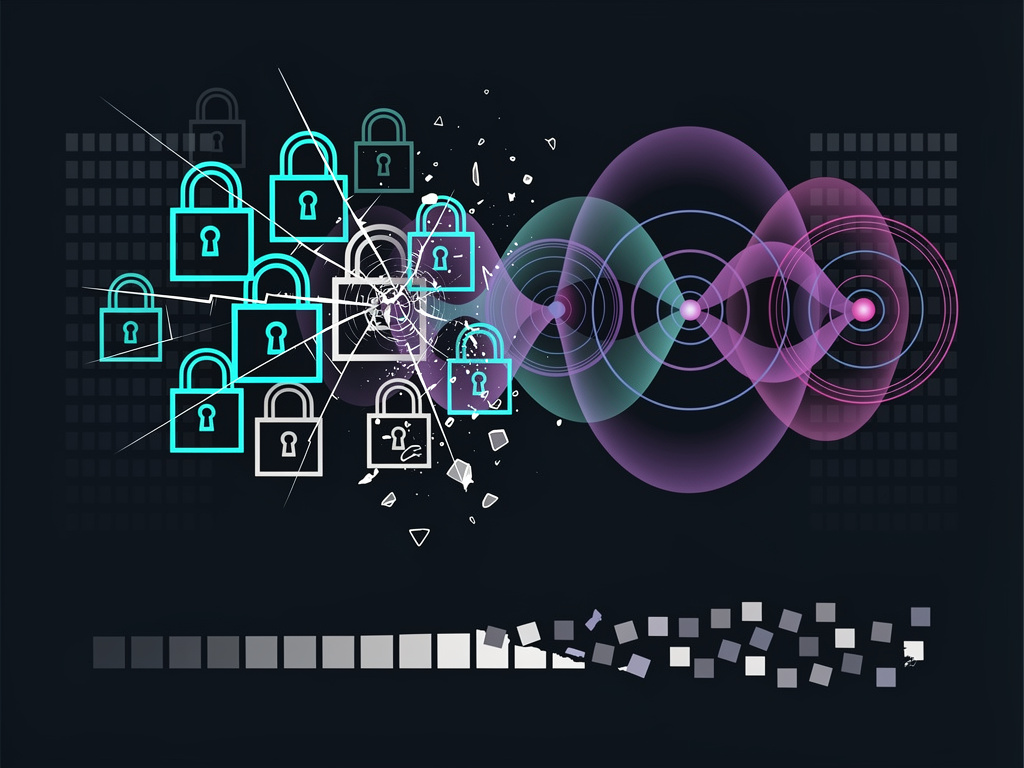
The artificial intelligence panic has consumed boardrooms, congressional hearings, and cable news segments for two years running. Executives worry about deepfakes. Lawmakers fret over autonomous weapons. Pundits debate whether AI will take everyone’s jobs. Meanwhile, a far more concrete and mathematically certain threat is advancing toward the backbone of global digital security — and most organizations aren’t doing nearly enough about it.
Quantum computing, once dismissed as a theoretical curiosity decades away from practical relevance, is approaching a threshold that could render the encryption protecting virtually every digital transaction, communication, and secret on the planet functionally useless. Not might. Not could, in some hypothetical scenario. The math is settled. When a sufficiently powerful quantum computer arrives, the public-key cryptography that underpins modern internet security will break. The only open question is when.
As TechRadar reported, while the world fixates on AI risks, quantum computing represents “the real threat to digital security.” The article makes a sharp point: the cybersecurity industry’s attention and investment dollars have been disproportionately aimed at AI-related threats, leaving quantum preparedness dangerously underfunded and underappreciated. This isn’t a fringe concern raised by academics looking for grant money. It’s a structural vulnerability in the architecture of the internet itself.
Here’s the core problem. Modern encryption — the kind that protects your bank account, your medical records, classified government communications, and the entire global financial system — relies on mathematical problems that are extraordinarily difficult for classical computers to solve. RSA encryption, for instance, depends on the difficulty of factoring very large numbers into their prime components. A classical supercomputer would need millions of years to crack a 2048-bit RSA key. A sufficiently powerful quantum computer, running Shor’s algorithm, could do it in hours.
That’s not speculation. That’s mathematics.
The algorithm was published by Peter Shor at MIT in 1994. For three decades, the only thing standing between Shor’s algorithm and the collapse of public-key cryptography has been the engineering challenge of building a quantum computer with enough stable, error-corrected qubits to run it at scale. And that engineering challenge is being overcome faster than most security professionals expected.
IBM, Google, Microsoft, and a constellation of well-funded startups are racing to build fault-tolerant quantum machines. IBM’s roadmap targets systems with over 100,000 qubits by 2033. Google claimed quantum supremacy in 2019 with its 53-qubit Sycamore processor and has continued advancing. China has invested billions in quantum research, with teams at the University of Science and Technology of China demonstrating quantum computational advantages using both superconducting circuits and photonic systems. The timeline is compressing.
But the threat doesn’t begin when a cryptographically relevant quantum computer is switched on. It’s already here, in a sense, through a strategy intelligence agencies and sophisticated adversaries are almost certainly executing right now: “harvest now, decrypt later.”
The concept is brutally simple. Adversaries intercept and store encrypted communications today — diplomatic cables, corporate trade secrets, military plans, personal data — knowing they can’t read any of it yet. They warehouse it. And they wait. When quantum decryption becomes feasible, they’ll unlock the entire archive at once. Every secret transmitted under classical encryption that was intercepted and stored becomes instantly readable. As TechRadar noted, this means that data with long-term sensitivity — think intelligence assets, infrastructure designs, patient health records, or proprietary pharmaceutical research — is already compromised in a meaningful sense. The decryption event simply hasn’t occurred yet.
This isn’t theoretical hand-wringing. The U.S. National Security Agency has publicly acknowledged the threat. In 2022, the White House issued National Security Memorandum 10, directing federal agencies to begin inventorying their cryptographic systems and preparing migration plans to quantum-resistant algorithms. The urgency was unmistakable.
Then came NIST. The National Institute of Standards and Technology spent eight years evaluating post-quantum cryptographic algorithms through an open, international competition. In August 2024, NIST published its first three finalized post-quantum cryptography standards: ML-KEM (based on the CRYSTALS-Kyber algorithm), ML-DSA (based on CRYSTALS-Dilithium), and SLH-DSA (based on SPHINCS+). A fourth, FN-DSA (based on FALCON), is expected to follow. These algorithms are designed to resist attacks from both classical and quantum computers, relying on mathematical problems — such as structured lattice problems and hash-based signatures — that quantum computers aren’t known to solve efficiently.
The standards exist. The path forward is defined. And yet adoption has been painfully slow.
A survey conducted by the Ponemon Institute and published in early 2025 found that only 23% of organizations had begun any formal assessment of their quantum risk exposure. Fewer than 10% had started actual migration efforts. The reasons are predictable: competing budget priorities, lack of internal expertise, the perceived distance of the threat, and the sheer complexity of cryptographic transitions in large enterprises with decades of legacy systems.
That complexity is real and shouldn’t be minimized. Cryptographic migration isn’t a software patch. It touches everything — TLS certificates, VPN tunnels, code-signing infrastructure, database encryption, hardware security modules, IoT device firmware, email systems, authentication protocols. For a large bank or government agency, a full cryptographic inventory alone can take years. Replacing algorithms across every system, vendor, and protocol without breaking functionality is an engineering project of staggering scope.
But difficulty isn’t an excuse for inaction. It’s a reason to start now.
Some organizations are moving. JPMorgan Chase has been publicly active in quantum-safe research, partnering with Toshiba and Ciena on quantum key distribution trials over metropolitan fiber networks. Apple announced in early 2024 that iMessage would adopt PQ3, a post-quantum cryptographic protocol, making it one of the first major consumer messaging platforms to deploy quantum-resistant encryption. Signal followed with its own post-quantum upgrade to the PQXDH protocol. Google has been experimenting with post-quantum key exchange in Chrome since 2016 and has expanded those efforts significantly.
The financial sector, predictably, is among the most motivated. The Bank for International Settlements and the Monetary Authority of Singapore have both published guidance urging financial institutions to begin quantum readiness assessments. The European Central Bank has flagged quantum risk in its supervisory communications. And the Swift network — which handles messaging for trillions of dollars in daily interbank transfers — has been quietly testing post-quantum security measures.
Government mandates are tightening too. The U.S. Cybersecurity and Infrastructure Security Agency (CISA) has been working with federal agencies on post-quantum migration roadmaps. The European Union’s cybersecurity agency, ENISA, published recommendations in 2024 urging member states to begin transitioning. France’s ANSSI has issued its own technical guidance. The direction is clear across Western governments: migrate or accept escalating risk.
Still, the private sector lags. Badly.
Part of the problem is a communication failure. The quantum threat is abstract to most business leaders. AI, by contrast, is visceral — they can see a deepfake video, interact with ChatGPT, watch a demo of automated code generation. Quantum risk requires understanding number theory, lattice mathematics, and the operational mechanics of key exchange protocols. It doesn’t demo well in a board presentation. So it gets deprioritized.
Another complication: crypto-agility. The concept refers to an organization’s ability to swap out cryptographic algorithms without tearing apart its entire technology stack. Most enterprises have essentially zero crypto-agility. Their encryption is hardcoded into applications, embedded in hardware, and locked into vendor implementations they don’t control. Building crypto-agility — the capacity to transition to new algorithms quickly when needed — is itself a massive undertaking, but it’s arguably more important than any single algorithm choice. Standards will evolve. New attacks will emerge. The ability to adapt is what matters.
There’s also a risk that the new post-quantum standards, while rigorously vetted, could face unexpected cryptanalytic breakthroughs. NIST’s competition was thorough, but lattice-based cryptography is younger than RSA. The mathematical landscape is less explored. In 2022, a promising candidate algorithm called SIKE was broken by a classical computer attack in a single weekend — a humbling reminder that cryptographic confidence takes time to build. NIST has addressed this partly by standardizing hash-based signature schemes alongside lattice-based ones, providing algorithmic diversity as a hedge.
The geopolitical dimension adds further urgency. Quantum computing is a strategic technology, and the race to build operational systems is inextricable from great-power competition. China’s quantum research program is enormous, state-funded, and increasingly opaque. The concern in Western intelligence circles isn’t just that China might build a cryptographically relevant quantum computer — it’s that they might build one and not announce it. The harvest-now-decrypt-later strategy means that any delay in migrating to post-quantum cryptography is a gift to adversaries who are stockpiling encrypted data today.
The private sector needs to understand something fundamental: this is not a future problem. The migration to post-quantum cryptography will take most large organizations five to fifteen years, depending on their complexity and starting position. If a cryptographically relevant quantum computer arrives in the 2030s — a timeline many researchers consider plausible — then organizations that haven’t started migrating are already behind. Some of them critically so.
And the cost of being late is asymmetric. If you migrate early and quantum computers take longer than expected, you’ve spent money on stronger cryptography — hardly a disaster. If you migrate late and quantum arrives on schedule, everything encrypted with classical algorithms is exposed. Every customer record. Every trade secret. Every communication. The downside risk is existential for some organizations.
So what should enterprises actually be doing right now? First, conducting a comprehensive cryptographic inventory. You can’t migrate what you can’t find. This means cataloguing every instance of public-key cryptography across applications, infrastructure, third-party integrations, and embedded systems. Second, assessing data sensitivity timelines — identifying which data must remain confidential for decades versus months, and prioritizing migration accordingly. Third, engaging vendors. If your cloud provider, ERP vendor, or HSM manufacturer doesn’t have a post-quantum roadmap, that’s a red flag. Fourth, building crypto-agility into new systems from day one. Every new application, every new protocol implementation, every new procurement should account for algorithm substitutability. Fifth, testing. The new NIST standards are finalized. Start piloting them in non-production environments. Understand the performance implications — post-quantum algorithms generally have larger key sizes and different computational profiles than their classical predecessors.
None of this is glamorous. It won’t generate headlines or impress at industry conferences the way an AI deployment will. But it is, by any rational risk assessment, among the most important cybersecurity initiatives any organization can undertake in the next decade.
The irony is thick. The technology world has spent two years in a state of high anxiety over artificial intelligence — a technology whose risks, while real, are diffuse, debatable, and in many cases speculative. Meanwhile, quantum computing presents a threat that is mathematically precise, directionally certain, and advancing on a known timeline. The encryption that protects the modern world has an expiration date. We just don’t know exactly when it arrives.
That uncertainty isn’t a reason for complacency. It’s the opposite. Organizations that treat quantum risk as a distant hypothetical are making a bet — that they’ll have time to react when the threat materializes. History suggests otherwise. Cryptographic transitions are among the slowest, most painful technology migrations any enterprise undertakes. The organizations that will be secure in a post-quantum world are the ones that started preparing yesterday.
The alarm has been sounded. Repeatedly. By NIST, by the NSA, by CISA, by central banks, by the world’s leading cryptographers. The standards are published. The tools are emerging. The only missing ingredient is organizational will.
And time. Which is running out faster than most people think.


 WebProNews is an iEntry Publication