
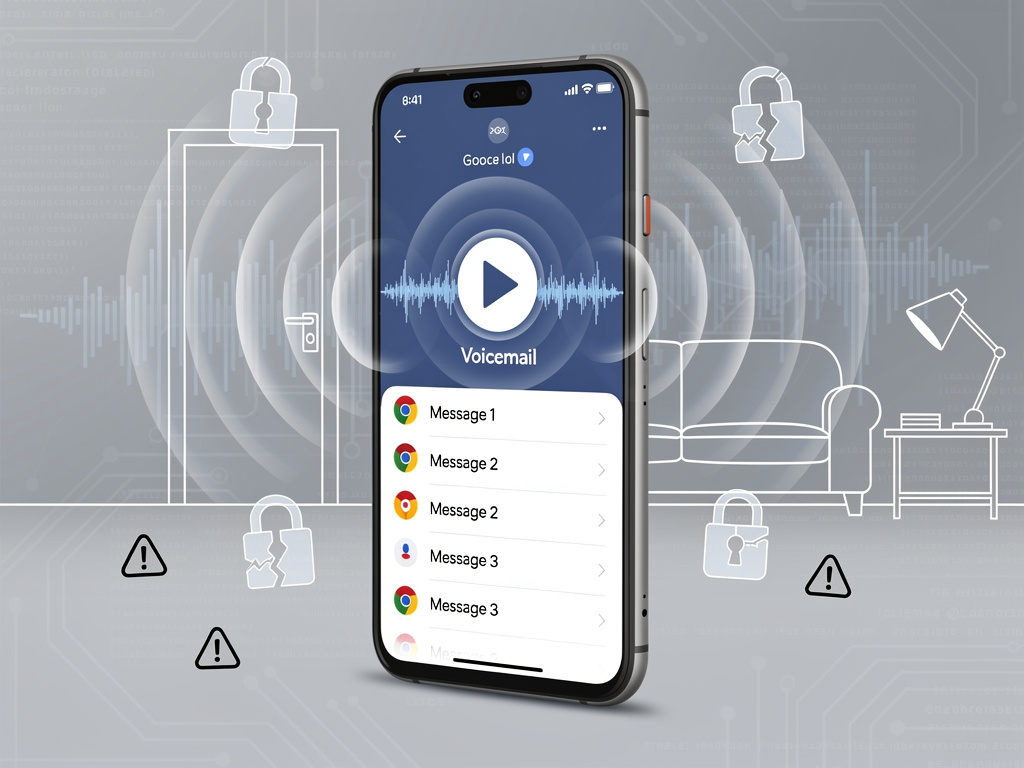
In the quiet of a shared workspace or the middle of a crowded train, a smartphone user taps their screen to discreetly check a voicemail. Instead of the message playing privately through the phone’s earpiece, the audio—be it a sensitive business matter or a personal message from a loved one—suddenly blasts from the main loudspeaker for all to hear. This isn’t a user error; it’s a startling software flaw affecting owners of Google’s flagship Pixel smartphones, turning a private function into an instrument of public embarrassment and raising significant questions about the tech giant’s quality control on its most important hardware.
The bug, which appears to be centered in Google’s own Phone app, bypasses the default audio output for voicemails. When a user navigates to the visual voicemail tab and presses play, the device mistakenly routes the audio through its powerful external speaker. The issue has been widely reported by users of recent models, including the Pixel 8 and Pixel 8 Pro, but complaints suggest it may affect older devices as well. As detailed in a report by Android Central, the glitch effectively breaks a fundamental expectation of privacy inherent in the design of a telephone, creating awkward and potentially compromising situations for unsuspecting users.
A Chorus of User Complaints Echoes Online
The fallout from the bug has been swift and vocal, with frustrated Pixel owners flocking to online forums to share their experiences and seek solutions. On platforms like Reddit, a stream of complaints paints a picture of a widespread problem. One user on the r/GooglePixel subreddit described the phone suddenly playing a voicemail from their doctor in a quiet room, calling the experience “super embarrassing and a huge privacy violation.” Another noted the professional risk, stating, “I can’t check voicemails from my office at my desk anymore.” These firsthand accounts, cataloged in a popular thread on the social media platform, underscore that the bug is more than a minor annoyance; it is a functional failure that actively undermines the device’s utility in professional and personal settings.
At the heart of the user frustration is the breach of a deeply ingrained technological norm. For decades, the default behavior of a phone has been to channel call and voicemail audio to the earpiece for private listening. The loudspeaker has always been an intentional, user-activated choice. By reversing this logic without warning, the bug erodes user trust in their device’s most basic operations. For a company like Google, which positions the Pixel as the pinnacle of the Android experience, such a fundamental failure strikes a serious blow to its reputation for software excellence.
Google Confirms the Glitch, Promises a Fix
In response to the growing outcry, Google has officially acknowledged the existence of the voicemail flaw. The company has confirmed it is aware of the problem and that a fix is currently in development, a confirmation that was reported by tech publication 9to5Google. While a timeline for the patch has not been made public, the acknowledgment provides some relief to users who had been questioning whether the issue was an isolated problem with their specific device. The fix will likely be delivered through an update to the Google Phone application via the Play Store, which could allow for a faster rollout than a full operating system update.
The bug’s path from user complaint to official recognition is visible on Google’s own Issue Tracker, a platform where developers and users can report software problems. The entry for the voicemail bug, designated under issue number 341142514, has been marked as “Assigned” and its status updated to reflect that a fix is in progress. A comment from a Google community manager on the publicly viewable bug report states, “Our team is aware of this issue and is working on a fix.” This formal tracking offers a transparent, if technical, window into the company’s process for addressing a flaw that has clearly struck a nerve with its user base.
A Familiar Refrain in the Pixel’s Software Saga
For longtime observers of Google’s hardware ambitions, this incident, while jarring, may feel disappointingly familiar. The Pixel line has long been praised for its cutting-edge camera technology and clean software interface, yet it has also been persistently dogged by a history of software and hardware integration issues. From the significant connectivity problems and a sluggish fingerprint sensor that plagued the Pixel 6 launch to various smaller glitches that have cropped up with subsequent releases, the brand has struggled to match the reputation for day-one stability enjoyed by its chief rival, Apple’s iPhone.
These recurring problems suggest a deeper, more systemic challenge within Google’s hardware division concerning its quality assurance processes. Each bug, whether it affects cellular reception or voicemail playback, chips away at the central value proposition of the Pixel: that it is the definitive device on which to experience Google’s software. As chronicled by outlets like Android Authority, this pattern of post-launch fixes can deter potential buyers, particularly in the lucrative enterprise market where reliability is not a feature but a prerequisite. This latest privacy-related glitch only adds to that narrative of unpredictability.
The Technical Fault Line in Audio Routing
From a technical perspective, the bug is almost certainly rooted in an error within the Google Phone app’s audio management code. In modern smartphone operating systems, audio is directed to various outputs—the internal earpiece, the main loudspeaker, a Bluetooth headset, or wired headphones—through a system of software flags and priorities. The application is responsible for telling the system where to send the audio stream. The voicemail bug indicates a breakdown in this logic, where the app is incorrectly defaulting to the loudspeaker stream instead of the earpiece stream when a voicemail is played.
While awaiting Google’s official patch, users have crowdsourced a few temporary workarounds. Some have found that tapping the speakerphone icon on during voicemail playback and then immediately tapping it off can sometimes force the audio to reroute correctly to the earpiece. A more reliable, though less convenient, solution is to connect Bluetooth or wired headphones before playing a message, which ensures the audio is directed there instead. However, these are stopgap measures for a function that should work seamlessly out of the box.
Navigating the Fallout and the Path Forward
While the voicemail bug does not represent a data breach in the traditional sense, its impact on user trust is arguably just as corrosive. A smartphone is a profoundly personal object, a repository for private communications and sensitive information. When it behaves in a way that publicly exposes that information without consent, it violates a core tenet of the user-device relationship. The trust that a private message will remain private is fundamental, and its breach, even if unintentional, can damage a brand’s credibility.
The speed and thoroughness of Google’s response will be critical in mitigating this damage. A prompt and effective software update is the necessary first step. However, the larger challenge for the company will be to address the underlying issues in its development and testing pipeline that allow such a basic, yet critical, flaw to reach millions of users. For the Pixel to truly compete at the highest level, it must be more than just a vehicle for innovative features; it must be a bastion of reliability that users can trust with the private moments of their lives.


 WebProNews is an iEntry Publication