
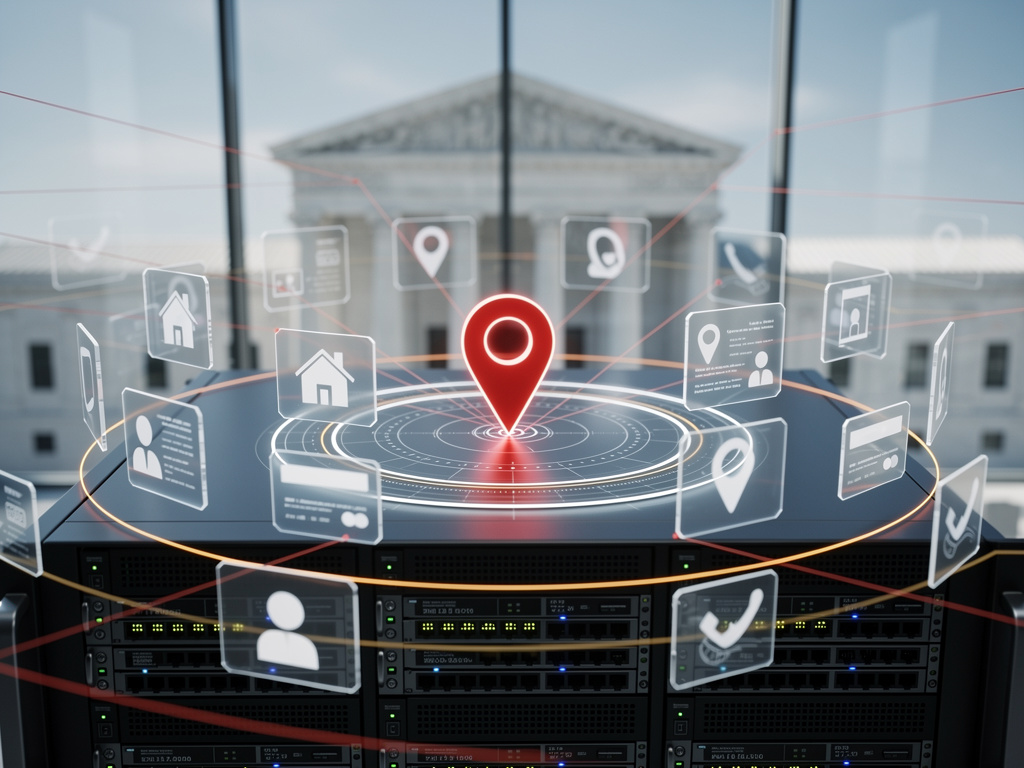
In an era where personal information flows freely through digital channels, a growing threat has emerged that targets those who serve in public office. Data brokers—companies that collect, aggregate, and sell personal information—have created a dangerous vulnerability that enables stalkers, harassers, and violent actors to locate and target government officials, election workers, and public servants with alarming precision.
The intersection of commercial data trading and political violence represents one of the most underexamined threats to democratic institutions. According to Wired, the proliferation of easily accessible personal data has transformed how extremists identify and pursue their targets, creating what security experts describe as a “hunter’s paradise” for those seeking to intimidate or harm public officials.
The mechanics of this threat are disturbingly simple. Data brokers compile information from public records, social media profiles, commercial transactions, and countless other sources to create detailed dossiers on virtually every American. These profiles often include home addresses, phone numbers, family member information, daily routines, and even financial details. While marketed for legitimate purposes like background checks or marketing campaigns, this information becomes weaponized when it falls into the hands of those with malicious intent.
The Anatomy of a Data Broker Industry
The data broker industry operates largely in the shadows, with most Americans unaware of how extensively their information is collected and sold. These companies gather data from diverse sources: courthouse records, motor vehicle departments, social media platforms, shopping habits, and mobile phone location tracking. They then package this information into searchable databases that anyone can access for a fee—sometimes as little as a few dollars.
What makes this particularly dangerous for public servants is the asymmetry it creates. While officials’ names and roles are matters of public record, the addition of granular personal details—where their children attend school, what time they leave for work, which routes they drive—transforms public information into operational intelligence for potential attackers. The data broker industry has effectively eliminated the protective buffer that once existed between public service and personal privacy.
Recent years have witnessed a disturbing escalation in threats against government officials at all levels. Election workers, school board members, public health officials, and judges have all reported unprecedented levels of harassment and intimidation. In many documented cases, perpetrators have explicitly referenced personal information obtained through online searches, demonstrating how data brokers facilitate the transition from online rage to real-world threat.
From Digital Dossiers to Doorstep Confrontations
The pathway from data access to physical confrontation has become distressingly short. When an individual decides to target a public official, data broker services provide a one-stop shop for reconnaissance. Within minutes, a motivated actor can obtain a target’s home address, phone numbers, vehicle registration information, and family member details. This information enables stalking, swatting incidents, and direct confrontations at officials’ homes.
The threat extends beyond individual violence to encompass broader campaigns of intimidation. Organized groups have used data broker information to coordinate harassment campaigns against election officials, public health directors, and other government employees whose decisions they oppose. These campaigns often begin with doxxing—publicly releasing personal information—and escalate to physical surveillance, threatening communications, and in some cases, actual violence.
Law enforcement agencies have struggled to address this threat effectively. The legal framework governing data brokers remains fragmented and inadequate. While some states have enacted privacy laws that restrict certain data collection practices, these regulations often contain exemptions for information derived from public records or fail to address the resale of data across state lines. Federal legislation has been proposed but not enacted, leaving a regulatory vacuum that data brokers continue to exploit.
The Economic Incentives Behind Privacy Erosion
The data broker industry generates billions of dollars annually, creating powerful economic incentives to maintain the status quo. Companies in this sector argue that they provide valuable services for legitimate purposes: employers conducting background checks, journalists investigating public figures, and individuals researching potential business partners. They contend that restricting access to information would impede these legitimate uses and conflict with principles of government transparency.
However, critics argue that the industry has prioritized profit over safety, implementing minimal safeguards to prevent misuse of the information they sell. Unlike regulated industries such as consumer credit reporting, data brokers face few requirements to verify the identity or intentions of their customers. This lack of oversight creates an environment where anyone with a credit card can access detailed personal information about public servants, regardless of their motives.
The business model of data brokers depends on volume and accessibility. The easier they make it to obtain information, the more customers they attract. This dynamic has led to increasingly sophisticated search tools that allow users to find individuals based on minimal starting information. Some services even offer monitoring features that alert subscribers when new information about a target becomes available, essentially enabling continuous surveillance.
Technical Vulnerabilities and System Exploitation
The technological infrastructure supporting data broker operations presents additional security concerns. Many of these companies maintain vast databases with inadequate security measures, making them attractive targets for hackers. When breached, these databases can expose sensitive information about thousands or millions of individuals, including government officials. The concentration of so much personal data in the hands of companies with varying security standards creates systemic vulnerability.
Moreover, the automated nature of data aggregation means that errors and outdated information frequently appear in broker databases. Public officials have reported instances where data broker profiles contained incorrect addresses, leading to harassment of innocent individuals at wrong locations. The difficulty of correcting these errors—many data brokers lack accessible processes for disputing information—compounds the problem and extends the threat to unintended victims.
The integration of location tracking data into broker offerings has opened new avenues for surveillance. Mobile advertising networks and apps routinely collect precise location information, which data brokers then package and sell. For public officials, this means that their movements can be tracked in near real-time, information that could enable ambush attacks or reveal patterns that make them vulnerable to targeting.
Protective Measures and Their Limitations
Recognizing these threats, some government agencies and advocacy organizations have developed programs to help public officials remove their information from data broker databases. These services, often called “opt-out” or “privacy protection” programs, involve systematically requesting removal from dozens or hundreds of data broker sites. However, these efforts face significant challenges. New data brokers constantly emerge, information reappears after removal, and the manual process of requesting deletion proves time-consuming and often ineffective.
Some officials have turned to commercial privacy services that continuously monitor and request removal of their information from data broker sites. While more effective than individual efforts, these services typically cost hundreds or thousands of dollars annually—an expense that many public servants, particularly those in local government positions, cannot afford. This creates a troubling dynamic where protection from data-broker-enabled threats becomes a luxury available only to those with sufficient resources.
Legislative efforts to address the problem have gained momentum but face significant obstacles. Privacy advocates have called for comprehensive federal legislation that would restrict data broker operations, require transparency about data sources and uses, and establish meaningful penalties for companies that facilitate harassment or violence. The data broker industry has mounted vigorous lobbying campaigns against such measures, arguing that they would stifle innovation and impede legitimate business activities.
International Comparisons and Alternative Approaches
Other democratic nations have implemented more robust protections against data broker abuses. The European Union’s General Data Protection Regulation (GDPR) imposes strict requirements on data collection and processing, including provisions that limit the compilation and sale of personal information without explicit consent. While not specifically designed to protect public officials, these regulations have substantially curtailed data broker operations in European markets.
Canada has similarly enacted privacy legislation that restricts commercial data trading, though enforcement has been inconsistent. Australia has established frameworks requiring data brokers to register with government authorities and disclose their data sources and business practices. These international examples demonstrate that democratic societies can implement meaningful data privacy protections without abandoning government transparency or legitimate business needs.
The contrast between American and international approaches reflects different balancing of competing values. U.S. policy has traditionally prioritized information access and commercial freedom, while other democracies have placed greater emphasis on individual privacy rights. The question facing American policymakers is whether the current balance adequately protects public servants from data-broker-enabled threats or whether recalibration is necessary.
The Human Cost of Information Asymmetry
Beyond policy debates and industry economics, the data broker threat has imposed real human costs on public servants and their families. Election workers have left their positions after receiving threatening communications that referenced their children’s names and schools. Public health officials have relocated after protesters appeared at their homes armed with personal information obtained online. School board members have installed security systems and altered their daily routines to avoid potential confrontations.
These impacts extend beyond individual officials to affect democratic governance itself. When public service becomes synonymous with personal vulnerability, fewer qualified individuals are willing to serve. The chilling effect on civic participation represents perhaps the most insidious consequence of data broker operations. Democratic institutions depend on citizens willing to serve in government roles; when that service exposes them and their families to targeted harassment enabled by commercial data trading, the foundations of self-governance are undermined.
The psychological toll on officials living under the constant possibility of being located and confronted cannot be overstated. Many report heightened anxiety, disrupted sleep, and strained family relationships. Some have sought mental health treatment for stress-related conditions directly attributable to harassment campaigns that leveraged data broker information. These personal costs rarely appear in discussions of data privacy policy but represent very real consequences of the current regulatory framework.
Paths Forward and Systemic Reform
Addressing the threat posed by data brokers requires multifaceted approaches spanning legislation, technology, and institutional reform. At the federal level, comprehensive privacy legislation could establish baseline protections for all Americans while including enhanced safeguards for public officials and election workers. Such legislation might restrict the types of information data brokers can collect and sell, require verification of customer identity and purpose, and establish penalties for companies whose services facilitate harassment or violence.
State and local governments can implement their own protective measures without waiting for federal action. Some jurisdictions have already enacted laws allowing public officials to shield their personal information from public records, though these protections often contain gaps that data brokers exploit. Expanding and strengthening these state-level protections while ensuring they don’t undermine legitimate government transparency represents a delicate but necessary balance.
Technology companies and platforms also bear responsibility for addressing this threat. Social media networks, search engines, and app developers collect much of the data that ultimately flows to brokers. These companies could implement stronger privacy protections, limit data sharing with third parties, and develop tools that help users understand and control how their information is used. Some platforms have begun taking steps in this direction, but progress remains slow and inconsistent.
The challenge of protecting public servants from data-broker-enabled threats ultimately reflects broader questions about privacy, transparency, and security in the digital age. As information technology continues to evolve, the tension between accessibility and protection will only intensify. Finding solutions that preserve the benefits of information access while preventing its weaponization against those who serve the public represents one of the defining challenges for democratic governance in the twenty-first century. The stakes—measured in lives disrupted, public servants driven from office, and democratic participation chilled—could not be higher.


 WebProNews is an iEntry Publication