
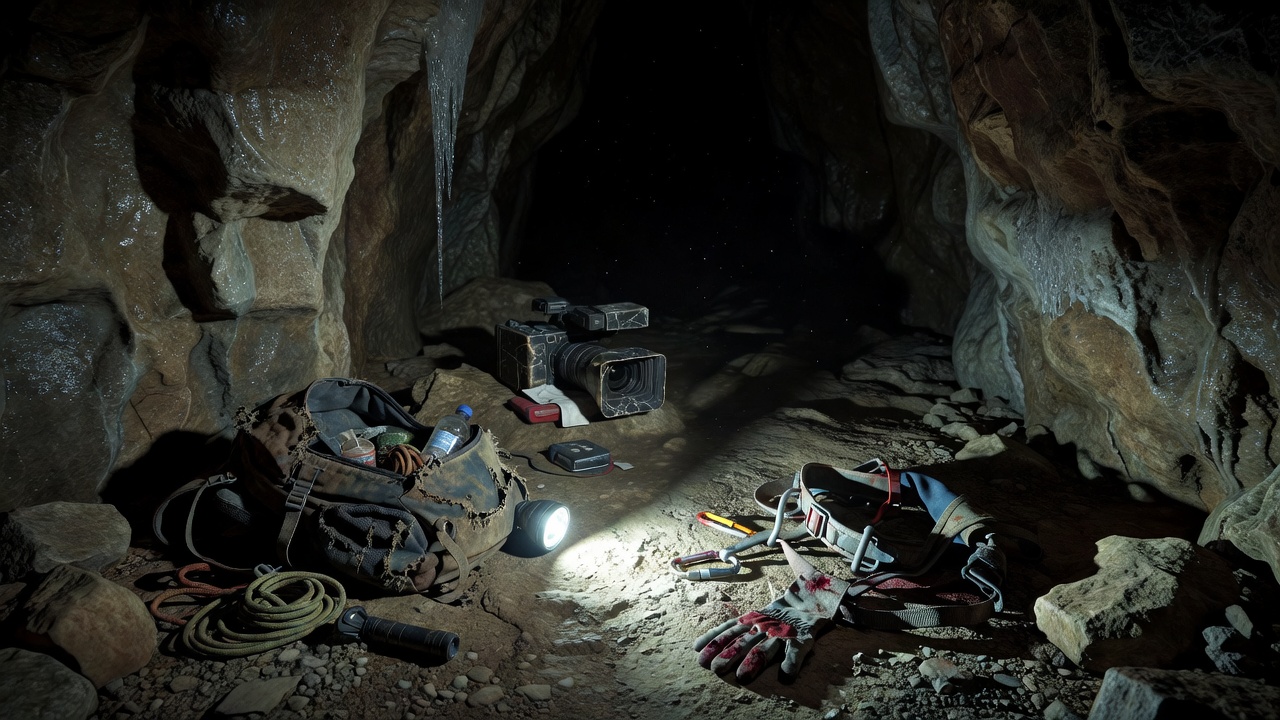
The Descent stands as one of the most effective horror films of the 2000s, a movie that combines visceral terror with psychological depth while operating within tight constraints of setting and budget. Directed by Neil Marshall and released in 2005, the picture follows six women who enter an unmapped cave system in the Appalachian Mountains for what begins as an adventurous weekend trip. Their expedition turns nightmarish when a rockfall seals their only known exit, forcing them to search for another way out through increasingly narrow and hostile passages. As oxygen runs low and panic rises, they discover they are not alone in the darkness.
The story centers on Sarah, played with raw intensity by Shauna Macdonald. Still grieving the death of her husband and daughter in a car accident a year earlier, Sarah joins her friends despite lingering emotional wounds. Her companions include Juno, the group’s driven and sometimes reckless leader portrayed by Natalie Mendoza, along with Beth, Sam, Rebecca, and Holly. Each woman brings distinct personality traits that become magnified under extreme stress. The early scenes establish their relationships through sharp dialogue and subtle tensions, particularly between Juno and Sarah, whose friendship carries layers of unresolved guilt. This character groundwork pays dividends later when trust begins to fracture.
Marshall, who previously directed the werewolf siege film Dog Soldiers, approaches The Descent with the confidence of a filmmaker who understands both genre conventions and how to subvert them. He confines nearly the entire second and third acts to the cave environment, using the physical limitations of the location to heighten tension. The caves themselves were constructed on soundstages, yet they feel convincingly real thanks to careful art direction and lighting design. Cinematographer Sam McCurdy employs head-mounted cameras and tight framing to create a claustrophobic atmosphere that makes viewers feel the weight of stone pressing in from all sides.
One of the film’s greatest strengths lies in its commitment to practical effects and believable creature design. The crawlers, as the underground creatures are known, represent a masterful blend of human and bat-like features. Pale, blind, and equipped with heightened senses of hearing and smell, they move with disturbing agility across walls and ceilings. Their design draws clear inspiration from H.P. Lovecraft’s subterranean horrors and the Morlocks from H.G. Wells’ The Time Machine, yet they possess a grotesque originality that makes them genuinely unsettling. The sound design amplifies their presence, with clicking echolocation and wet, guttural breathing that often precedes their appearance on screen.
The movie’s first half builds dread through mounting environmental hazards. Narrow squeezes, unstable rock formations, and the constant threat of flooding create a baseline of anxiety before the crawlers even appear. This measured pacing allows the audience to absorb the oppressive setting and bond with the characters. When the creatures finally reveal themselves, the horror feels earned rather than abrupt. Marshall stages the initial encounter with masterful restraint, using darkness and suggestion to maximize impact. A single flashlight beam sweeping across a cavern wall reveals just enough to trigger primal fears without immediately showing the full threat.
As the situation deteriorates, the film transforms from a survival thriller into a study of human behavior under extreme pressure. The women turn on one another as leadership failures and past betrayals surface. Juno’s decision to take the group into an unexplored cave system without proper documentation becomes a central point of conflict. Her ambition, once a source of admiration, now appears as dangerous recklessness. Meanwhile, Sarah’s grief manifests in ways that blur the line between psychological breakdown and hyper-vigilance. The script by Marshall refuses to offer easy heroes or villains, instead presenting flawed people reacting to impossible circumstances.
The film’s British origins allowed it to avoid some of the tonal softening that often affected American horror productions of the era. The original theatrical cut maintains a bleak outlook that culminates in one of the most discussed endings in modern horror. Without revealing specifics, the conclusion refuses traditional catharsis, choosing instead to emphasize the psychological toll of trauma. This uncompromising approach contributed to the movie’s polarizing reception upon initial release, though time has been kind to its reputation. Many now consider it a benchmark for intelligent genre filmmaking that respects its audience’s intelligence.
The American version released by Lionsgate included a modified ending that some viewers found more satisfying while others argued it undermined the film’s thematic consistency. The difference between these cuts provides an interesting case study in how distribution decisions can alter a movie’s final statement. Both versions maintain the core strengths of Marshall’s direction, particularly his ability to orchestrate chaos within confined spaces. The action sequences demonstrate remarkable spatial awareness, with each swing of a pickaxe or desperate scramble feeling grounded in the physical reality of the cave.
Beyond its technical achievements, The Descent offers commentary on the nature of fear itself. The title refers not only to the literal descent into the earth but also to the psychological unraveling that occurs when civilized behavior strips away. The women enter the cave as competent outdoorswomen with modern equipment and strong bonds of friendship. By the final act, they have been reduced to primal states driven by terror and self-preservation. This transformation feels earned rather than exploitative because the script has taken time to establish who these characters were before the horrors began.
The movie also functions as an effective metaphor for grief and depression. Sarah’s journey through the caves mirrors her internal struggle with loss. The darkness that surrounds her represents the emotional void she has carried since the accident. Moments when she hallucinates her daughter or confronts visions of her past trauma blend seamlessly with the physical threats, creating a dual-layered horror experience. This psychological dimension elevates the film above mere monster movies, though it never sacrifices the visceral thrills that genre fans expect.
Marshall’s direction shows particular skill in handling the ensemble cast. Each actress delivers committed performances that sell both the physical demands of the role and the emotional breakdowns. The physicality required cannot be overstated. The women spend much of the film crawling through mud, blood, and bat guano while maintaining character consistency. Their gradual transformation from clean and organized to filthy and desperate mirrors their mental deterioration. Small details like changing accents under stress or the way their voices become hoarse from shouting add layers of authenticity.
The sound mix deserves special recognition for its contribution to the overall effect. The caves produce a natural reverb that makes every sound feel both intimate and vast simultaneously. Distant drips of water, the scrape of equipment against rock, and the women’s increasingly labored breathing create an auditory landscape that keeps viewers on edge even during quieter moments. When the crawlers appear, their sounds integrate with the existing soundscape in ways that make it difficult to distinguish natural cave noises from approaching threats until it is too late.
Visual effects work remains impressive nearly two decades later because it prioritizes practical solutions whenever possible. The few digital enhancements that were used blend convincingly with the physical sets. The decision to keep the crawlers mostly in shadow and quick cuts demonstrates confidence in the audience’s imagination. What viewers think they see often proves more terrifying than what is explicitly shown. This restraint stands in contrast to many contemporary horror films that rely heavily on computer-generated imagery and bright lighting.
The film’s influence extends beyond its immediate success. It helped establish a wave of female-led horror that gained momentum in subsequent years. While not the first movie to center women in survival horror, its commitment to complex characterization and refusal to sexualize its protagonists set a standard for future productions. The crawlers themselves inspired numerous imitations in both film and video games, though few managed to capture the same balance of menace and ecological plausibility.
Marshall followed The Descent with Doomsday and then Centurion, continuing his interest in confined spaces and human conflict. However, the 2005 film remains his most accomplished work, one that perfectly matches concept with execution. Its reputation has grown steadily since release, with many critics and fans now placing it among the finest horror movies of the 21st century. The combination of claustrophobic setting, committed performances, intelligent scripting, and unrelenting tension creates an experience that lingers long after the credits roll.
The movie rewards multiple viewings by revealing new details about character motivations and environmental storytelling. Background elements that seem incidental on first watch gain significance once the full story unfolds. The way certain props and locations connect thematically to the characters’ emotional states demonstrates careful planning from pre-production through post. This attention to detail separates The Descent from lesser genre entries that rely primarily on jump scares or gore.
Its legacy continues through fan discussions, academic analysis, and occasional rumors of sequels or remakes. A 2009 follow-up titled The Descent: Part 2 attempted to expand the universe but struggled to recapture the original’s raw power and thematic coherence. The first film works so effectively because it maintains tight focus on a specific group of characters facing specific problems within a contained environment. Adding more characters, locations, and plot threads in the sequel diluted some of what made the original special.
The Descent proves that horror achieves its greatest impact when it taps into universal fears while telling a specific human story. The fear of being trapped, the fear of the unknown, and the fear of losing control all find expression through the cave setting and the characters’ deteriorating relationships. By grounding these abstract terrors in concrete physical danger and believable emotional conflict, the film creates an experience that feels both viscerally immediate and psychologically resonant. Its influence on subsequent horror cinema remains evident, and its status as a modern classic seems secure as new generations discover its terrors. The movie demonstrates how limitations of budget and location can become creative strengths when approached by talented filmmakers who understand that the most effective scares often come from what remains unseen and what cannot be escaped.


 WebProNews is an iEntry Publication