
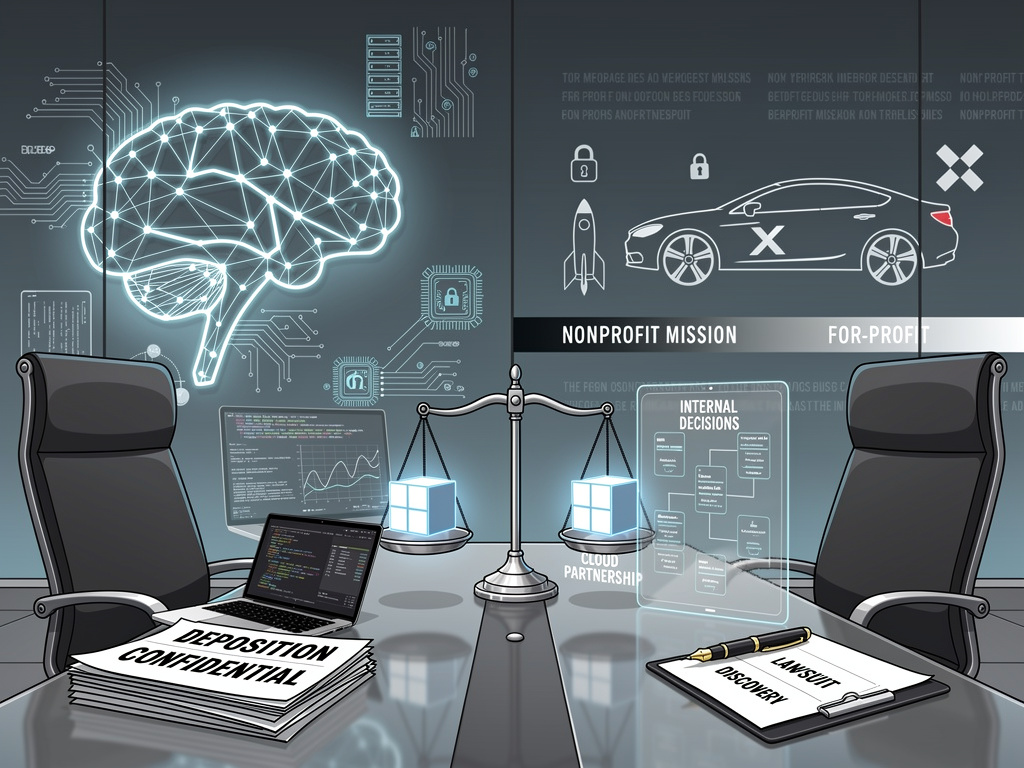
The simmering feud between two of Silicon Valley’s most prominent figures is about to enter its most dramatic phase yet. Sam Altman, CEO of OpenAI, and Elon Musk, the world’s richest person and OpenAI co-founder, will be required to sit for depositions under oath as part of Musk’s ongoing lawsuit against the artificial intelligence company. The legal confrontation, which has escalated from boardroom disagreements to courtroom battles, represents one of the most significant rifts in the tech industry’s recent history and could reshape the future of AI development and governance.
According to Business Insider, the depositions mark a critical juncture in Musk’s lawsuit alleging that OpenAI has strayed from its original nonprofit mission and become a de facto subsidiary of Microsoft. The case, filed in federal court, contends that OpenAI’s transformation into a for-profit entity betrays the founding principles that Musk himself helped establish when he co-founded the organization in 2015. Legal experts suggest that the sworn testimony from both executives could reveal previously undisclosed details about OpenAI’s strategic decisions, its relationship with Microsoft, and the internal conflicts that led to Musk’s departure from the company’s board in 2018.
The lawsuit’s origins trace back to OpenAI’s founding mission: to develop artificial general intelligence that benefits all of humanity rather than concentrating power in the hands of a few corporations. Musk has publicly argued that OpenAI’s pivot toward a capped-profit structure and its deepening partnership with Microsoft—which has invested over $13 billion in the company—fundamentally contradicts this mission. His legal team is expected to press Altman on key decisions made during OpenAI’s transition, including the rationale behind accepting Microsoft’s substantial investment and the mechanisms designed to ensure the technology remains accessible to the broader public.
The Microsoft Connection and Questions of Independence
Central to Musk’s allegations is OpenAI’s relationship with Microsoft, which has evolved from a simple partnership into what critics describe as a symbiotic dependency. Microsoft’s Azure cloud infrastructure powers OpenAI’s computationally intensive models, while the tech giant has integrated OpenAI’s technology across its product suite, from Bing search to Office applications. The financial arrangement gives Microsoft a significant stake in OpenAI’s profits until the company reaches a predetermined return threshold, after which the structure theoretically reverts to nonprofit control. However, Musk’s lawsuit questions whether this arrangement truly preserves OpenAI’s independence or effectively makes it beholden to Microsoft’s commercial interests.
The depositions will likely explore internal communications and decision-making processes that led to this partnership’s current form. Legal documents suggest that Musk’s attorneys plan to scrutinize whether OpenAI’s leadership adequately considered alternatives to Microsoft’s investment and whether the board exercised proper oversight in evaluating potential conflicts between the company’s stated mission and its financial arrangements. These questions touch on broader concerns within the AI community about corporate capture of transformative technologies and whether profit motives can coexist with commitments to develop AI safely and equitably.
The Personal Dimension of a Professional Dispute
Beyond the legal and philosophical questions, the lawsuit has exposed deep personal tensions between Musk and Altman, two individuals who once collaborated on OpenAI’s vision but now find themselves on opposite sides of a contentious legal battle. Musk has used his social media platform X, formerly Twitter, to criticize OpenAI’s direction and question Altman’s leadership, while Altman has largely maintained a more measured public stance, occasionally defending OpenAI’s decisions without directly engaging in personal attacks. The depositions will force both men to address these tensions directly, under oath and on the record.
The personal nature of the dispute adds complexity to what might otherwise be a straightforward corporate governance case. Musk’s involvement with OpenAI was significant in its early years—he contributed substantial funding and helped recruit top AI researchers to the organization. His departure from the board came amid disagreements over OpenAI’s direction, with some reports suggesting he proposed taking direct control of the organization or merging it with Tesla, proposals that other board members rejected. These historical tensions will likely surface during the depositions, providing insight into the interpersonal dynamics that shaped one of the world’s most influential AI organizations.
Implications for AI Governance and Industry Standards
The legal battle extends beyond the individuals involved, raising fundamental questions about how transformative AI technologies should be developed and governed. Musk’s lawsuit argues that OpenAI’s structure and practices set problematic precedents for the AI industry, potentially encouraging other organizations to adopt similar approaches that prioritize commercial success over broader societal considerations. The case has attracted attention from policymakers, ethicists, and other AI researchers who see it as a test case for whether voluntary commitments to responsible AI development can withstand commercial pressures.
The depositions could reveal internal debates within OpenAI about balancing safety considerations with competitive pressures to release new capabilities. Since the launch of ChatGPT in late 2022, OpenAI has faced criticism for moving too quickly to commercialize its technology without adequate safety testing, while simultaneously defending itself against accusations of moving too slowly and allowing competitors to gain ground. Altman’s testimony may address how OpenAI’s leadership weighs these competing demands and whether the company’s governance structure provides adequate safeguards against rushing potentially dangerous capabilities to market.
The Competitive Context and Timing
The lawsuit unfolds against a backdrop of intense competition in artificial intelligence, with major technology companies racing to develop and deploy increasingly sophisticated AI systems. Musk himself has entered this competition through his company xAI, which has raised billions of dollars to develop what he describes as a “maximum truth-seeking AI” that will compete directly with OpenAI’s offerings. This competitive dynamic adds another layer to the legal dispute, raising questions about whether Musk’s motivations are purely principled or also reflect commercial interests in undermining a competitor.
OpenAI’s attorneys are expected to raise these questions during Musk’s deposition, potentially arguing that his lawsuit represents an attempt to hamstring a competitor while advancing his own AI ambitions. They may point to xAI’s rapid development and substantial fundraising as evidence that Musk’s concerns about OpenAI’s commercial focus ring hollow given his own for-profit AI venture. The testimony could expose the complex interplay between principle and self-interest that often characterizes disputes in the technology sector, where ideological disagreements frequently align with competitive advantages.
Legal Precedents and Potential Outcomes
From a legal perspective, the case presents novel questions about the enforceability of mission-driven commitments when organizations undergo structural transformations. OpenAI’s transition from a pure nonprofit to a capped-profit subsidiary of a nonprofit parent organization was designed to attract the capital necessary for AI development while theoretically preserving its original mission. Musk’s lawsuit challenges whether this structure adequately protects that mission or whether it represents an impermissible deviation from the organization’s founding principles.
Legal experts note that the case could establish important precedents for how courts evaluate mission drift in organizations that begin as nonprofits but later adopt hybrid structures. The depositions will likely explore whether OpenAI’s board fulfilled its fiduciary duties in approving the structural changes and whether adequate safeguards exist to ensure the organization remains true to its stated purpose. The outcome could influence how other organizations approach similar transitions and what legal obligations they bear to original stakeholders and the public when making such changes.
The Broader Stakes for Artificial Intelligence Development
As the depositions approach, the tech industry is watching closely to see what revelations emerge about OpenAI’s internal operations and decision-making processes. The testimony could provide unprecedented insight into how one of the world’s leading AI organizations balances competing pressures from investors, partners, employees, and the broader public. These insights may inform ongoing debates about AI regulation, corporate governance in the tech sector, and the appropriate role of for-profit entities in developing technologies with potentially transformative societal impacts.
The case also highlights tensions within the effective altruism movement, which influenced OpenAI’s founding philosophy and continues to shape debates about AI safety and development. Some effective altruists argue that rapid AI development by responsible actors like OpenAI represents the best path to ensuring beneficial outcomes, while others contend that commercial pressures inevitably compromise safety considerations. The depositions may reveal how these philosophical debates played out within OpenAI’s leadership and whether the organization’s structure adequately addresses these concerns.
Whatever the legal outcome, the deposition testimony from Altman and Musk will likely become required reading for anyone seeking to understand the forces shaping AI development. The sworn statements will provide a rare window into the thinking of two influential figures whose decisions will help determine how artificial intelligence evolves and impacts society. As the technology continues to advance at a rapid pace, the questions raised by this lawsuit about governance, accountability, and the balance between innovation and safety will only become more pressing, making the upcoming depositions a pivotal moment not just for the parties involved but for the entire AI industry.


 WebProNews is an iEntry Publication