
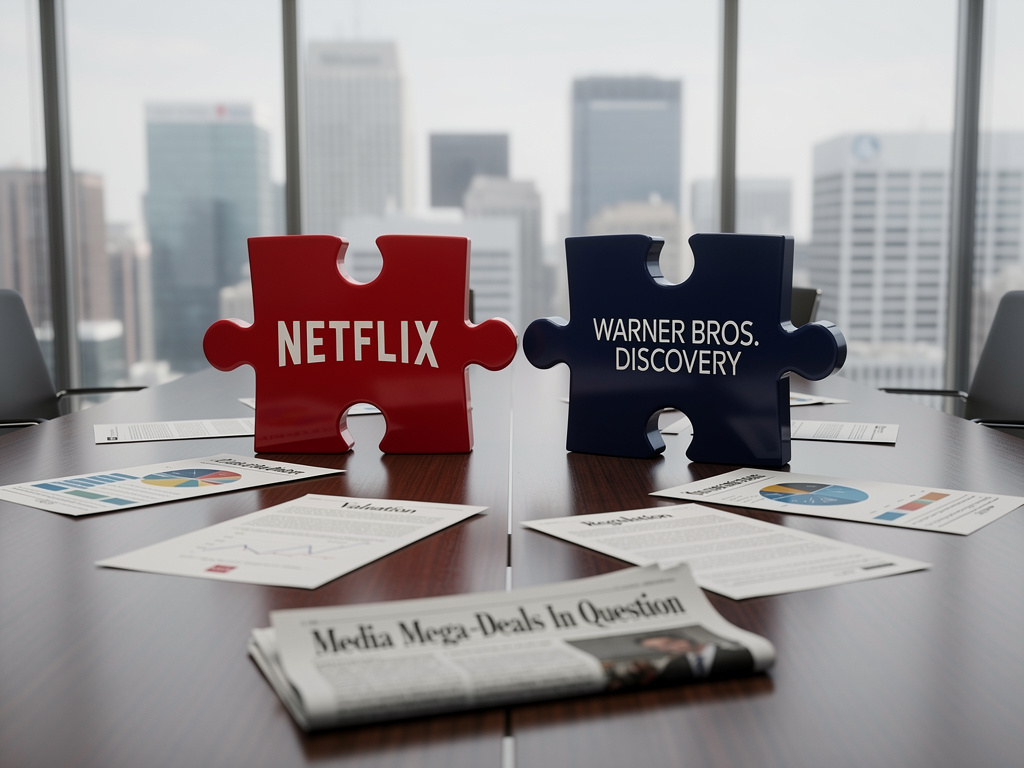
For a brief, dizzying moment earlier this year, the entertainment industry was gripped by the prospect of a transaction that would have reshaped the entire media business: Netflix, the world’s dominant streaming platform, appeared poised to acquire Warner Bros., the storied studio behind franchises from Harry Potter to DC Comics. Then, just as suddenly as the talks surfaced, Netflix backed away. The collapse of this potential mega-deal raises profound questions about the limits of consolidation, the regulatory environment facing Big Tech, and the strategic calculus that now governs Hollywood’s most powerful players.
According to reporting by TechCrunch, Netflix had engaged in serious preliminary discussions with Warner Bros. Discovery about a potential acquisition of the Warner Bros. studio division. The talks, which reportedly began in late 2025, involved senior executives on both sides and reached a stage where financial advisors had been retained. But by late February 2026, Netflix had pulled back, citing a combination of regulatory risk, valuation disagreements, and strategic concerns about integrating a legacy studio operation into its technology-driven business model.
A Marriage of Convenience That Never Made It to the Altar
The logic behind a Netflix-Warner Bros. combination was, on its surface, compelling. Warner Bros. controls one of the deepest content libraries in entertainment history, including the DC Universe, the Harry Potter franchise, HBO’s legacy programming catalog, and decades of theatrical films. Netflix, despite spending more than $17 billion annually on content, has long faced criticism for its relative lack of enduring intellectual property compared to Disney, Universal, or Warner Bros. Acquiring Warner Bros. would have given Netflix instant ownership of franchises with multi-generational appeal and global recognition.
Warner Bros. Discovery, for its part, has been under intense financial pressure since the 2022 merger of WarnerMedia and Discovery under CEO David Zaslav. The combined company has struggled with a heavy debt load—north of $40 billion at the time of the merger—and has seen its stock price languish as investors questioned whether the company could compete effectively against Netflix, Disney+, and Amazon Prime Video in the streaming wars. A sale of the Warner Bros. studio, or even the entire company, had been the subject of Wall Street speculation for months.
The Price Tag Problem: Valuation Gaps That Couldn’t Be Bridged
One of the primary reasons the deal fell apart, according to TechCrunch, was a fundamental disagreement over price. Warner Bros. Discovery’s leadership reportedly sought a valuation for the studio division that reflected the full worth of its IP portfolio—a figure that sources familiar with the discussions pegged at north of $50 billion. Netflix, however, was unwilling to pay what it considered a premium for assets that, while prestigious, came with significant overhead, legacy distribution agreements, and union labor obligations that would be difficult to integrate into Netflix’s leaner operational structure.
Netflix co-CEO Ted Sarandos has long emphasized the company’s preference for building rather than buying when it comes to content. While Netflix has made targeted acquisitions—such as its purchase of the Roald Dahl Story Company and game studio Spry Fox—it has historically avoided the kind of transformational M&A that has defined the strategies of competitors like Amazon, which acquired MGM for $8.5 billion in 2022, and Disney, which purchased 21st Century Fox assets for $71.3 billion in 2019. The Warner Bros. deal would have represented a radical departure from this philosophy, and ultimately, Netflix’s leadership decided the risk-reward calculus did not justify the price.
Regulatory Storm Clouds Over Big Tech Acquisitions
Beyond the financial considerations, regulatory risk played a significant role in Netflix’s decision to walk away. The current antitrust environment in the United States and Europe has grown increasingly hostile toward large-scale acquisitions by technology companies. The Federal Trade Commission under Chair Lina Khan’s successor has maintained an aggressive posture toward consolidation in media and technology, and the Department of Justice has shown a willingness to challenge deals that would concentrate too much content ownership in the hands of a single distributor.
Netflix, with more than 300 million global subscribers, would have faced intense scrutiny from regulators concerned about vertical integration—the combination of content production and distribution under one roof at an unprecedented scale. European regulators, who have already imposed strict content quotas and data regulations on streaming platforms, would likely have imposed conditions that could have undermined the strategic rationale for the deal. As one media analyst told TechCrunch, “Netflix looked at the regulatory timeline and realized they could be tied up in approval processes for two years or more, during which time the assets would deteriorate and competitors would exploit the uncertainty.”
The Cultural Divide Between Silicon Valley and Old Hollywood
Industry observers have also pointed to a deeper, more structural tension that made the deal problematic: the cultural gap between Netflix’s data-driven, algorithm-first approach to content and Warner Bros.’ tradition-bound, talent-relationship-driven model. Warner Bros. maintains long-standing relationships with A-list directors, producers, and actors who have historically valued the studio’s commitment to theatrical releases, awards campaigns, and creative autonomy—values that have sometimes clashed with Netflix’s emphasis on subscriber acquisition metrics and content volume.
The integration challenges would have been enormous. Warner Bros. employs thousands of workers across physical studio lots in Burbank, California, and maintains complex distribution agreements with theatrical exhibitors, international broadcasters, and cable networks. Absorbing these operations into Netflix’s relatively flat, technology-company organizational structure would have required years of restructuring and likely resulted in significant layoffs—a prospect that would have generated political backlash and labor union resistance at a time when Hollywood’s workforce is still recovering from the 2023 writers’ and actors’ strikes.
What Happens to Warner Bros. Discovery Now?
The collapse of the Netflix talks leaves Warner Bros. Discovery in a precarious position. The company’s debt remains a persistent overhang, and its streaming service, Max, while growing, has not yet achieved the scale needed to compete head-to-head with Netflix or Disney+. David Zaslav has repeatedly insisted that the company is not for sale, but the market has been skeptical. Warner Bros. Discovery’s stock has underperformed the broader media sector, and activist investors have begun circling.
Other potential suitors remain in the picture. Apple, which has invested heavily in Apple TV+ but lacks a deep content library, has been mentioned as a possible acquirer. Comcast, the parent company of NBCUniversal, could see strategic value in combining Warner Bros.’ assets with its own studio and Peacock streaming service. And private equity firms, flush with capital and increasingly interested in media assets, have reportedly explored the possibility of taking Warner Bros. Discovery private, stripping costs, and selling off divisions piecemeal.
Netflix’s Path Forward: Building, Not Buying
For Netflix, the decision to walk away from Warner Bros. represents a reaffirmation of its core strategy. The company has signaled that it intends to continue investing heavily in original content, expanding its advertising tier, and growing its nascent gaming division rather than pursuing large-scale acquisitions. In its most recent earnings call, Netflix reported strong subscriber growth and improving margins, suggesting that its organic approach to content development is delivering results.
Still, the fact that Netflix engaged in serious talks at all is revealing. It suggests that even the most dominant player in streaming recognizes the long-term value of owning iconic intellectual property, and that the company’s leadership is at least open to acquisitive growth under the right circumstances. The question is whether those circumstances will ever materialize, or whether the regulatory and cultural barriers to Big Tech-Hollywood consolidation have become effectively insurmountable.
The Broader Implications for Media Consolidation
The failed Netflix-Warner Bros. deal is likely to have a chilling effect on large-scale media M&A for the foreseeable future. If the world’s most valuable streaming company—with a market capitalization exceeding $400 billion—cannot find a path to acquiring one of Hollywood’s most storied studios, it raises questions about whether any transformational deal in the entertainment industry is feasible in the current environment. The combination of regulatory hostility, high valuations, cultural friction, and integration complexity creates a formidable set of obstacles.
Yet the pressures driving consolidation have not disappeared. The streaming wars continue to intensify, content costs remain elevated, and smaller players are struggling to achieve profitability. The industry may be headed toward a period of smaller, more targeted transactions—licensing deals, IP partnerships, and minority investments—rather than the blockbuster mergers that defined the previous decade. For now, Warner Bros. and Netflix will go their separate ways, each facing its own set of challenges in an industry that continues to be reshaped by technology, consumer behavior, and the relentless economics of scale.


 WebProNews is an iEntry Publication