
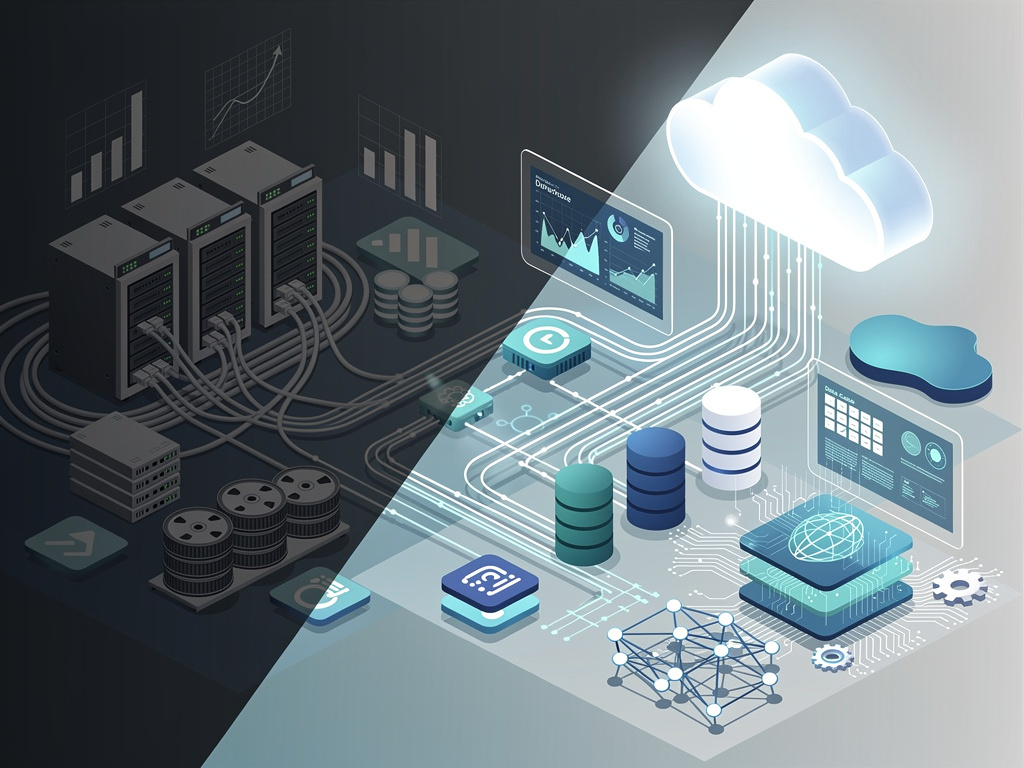
The enterprise data management sector is experiencing its most significant transformation in decades, driven by artificial intelligence adoption, cloud-native architectures, and an urgent need for real-time analytics. As organizations grapple with exponential data growth—projected to reach 175 zettabytes globally by 2025—IT leaders are fundamentally rethinking their data strategies, abandoning outdated approaches in favor of agile, AI-optimized frameworks that promise to unlock competitive advantages in an increasingly data-driven economy.
According to CIO.com, the shift represents more than incremental improvement; it signals a wholesale reimagining of how enterprises collect, store, process, and derive value from information assets. Organizations that once relied on centralized data warehouses and batch processing are now embracing distributed architectures, real-time streaming, and self-service analytics platforms that democratize data access across business units.
The stakes have never been higher. Companies that successfully modernize their data operations gain the ability to make faster decisions, personalize customer experiences, and deploy AI models that drive revenue growth. Those that cling to legacy systems risk falling behind competitors who can leverage data as a strategic weapon. This divergence is creating a new class of data-mature organizations that are pulling away from the pack, with research indicating that data-driven companies are 23 times more likely to acquire customers and six times more likely to retain them.
The Death of the Traditional Data Warehouse
The traditional data warehouse, once the cornerstone of enterprise analytics, is rapidly losing ground to more flexible alternatives. For decades, organizations invested heavily in monolithic warehouse systems that required extensive upfront planning, rigid schemas, and costly ETL processes. These systems served their purpose in an era of structured data and predictable query patterns, but they buckle under the weight of modern requirements: unstructured data, real-time processing, and the need to support machine learning workloads.
Data lakehouses have emerged as the architecture of choice for forward-thinking enterprises, combining the flexibility of data lakes with the performance and reliability of warehouses. As CIO.com reports, this hybrid approach allows organizations to store raw data in open formats while maintaining ACID transaction support and schema enforcement where needed. The result is a more cost-effective, scalable solution that can accommodate diverse workloads without forcing data teams to choose between flexibility and governance.
Real-Time Data Streaming Takes Center Stage
Batch processing, the dominant paradigm for decades, is giving way to real-time data streaming as organizations demand instant insights. The shift reflects changing business requirements: e-commerce platforms need to detect fraud in milliseconds, logistics companies must optimize routes based on current traffic conditions, and financial institutions require up-to-the-second risk assessments. Legacy batch systems that process data on hourly or daily schedules simply cannot meet these demands.
Event-driven architectures powered by platforms like Apache Kafka and cloud-native streaming services are becoming standard components of modern data stacks. These systems enable organizations to capture, process, and act on data as it’s generated, eliminating the latency that once separated business events from analytical insights. The impact extends beyond speed; real-time architectures fundamentally change how organizations think about data, shifting from historical analysis to predictive and prescriptive analytics that can influence outcomes while they’re still in motion.
Data Governance Gets a Modern Makeover
The explosion of data privacy regulations—from GDPR to CCPA to emerging frameworks in dozens of countries—has elevated data governance from a back-office function to a strategic imperative. Organizations face mounting pressure to demonstrate compliance, protect customer privacy, and maintain data quality across increasingly complex environments. Traditional governance approaches, which relied on manual processes and centralized control, cannot scale to meet these challenges.
Modern data governance leverages automation, metadata management, and policy-driven controls that embed compliance into data workflows rather than treating it as an afterthought. Data catalogs with AI-powered discovery capabilities help organizations understand what data they have, where it resides, and who has access. Automated lineage tracking ensures transparency about how data flows through systems and transforms along the way. These capabilities are essential for organizations navigating regulatory requirements while maintaining the agility needed to compete in fast-moving markets.
The Rise of Data Mesh and Decentralized Architectures
The data mesh concept, which treats data as a product owned by domain-specific teams rather than a centralized IT function, is gaining traction among large enterprises struggling with data silos and bottlenecks. This architectural paradigm represents a fundamental shift in organizational thinking, distributing data ownership and accountability across business units while maintaining interoperability through standardized interfaces and federated governance.
Early adopters report significant benefits: faster time-to-insight, reduced dependency on centralized data teams, and better alignment between data products and business needs. However, implementing data mesh requires more than technology changes; it demands cultural transformation, clear accountability structures, and investment in data literacy across the organization. Companies that successfully navigate this transition gain the ability to scale their data operations in ways that centralized models cannot match, enabling parallel development of data products that serve specific business domains while contributing to enterprise-wide analytics.
Cloud-Native Data Platforms Dominate New Investments
The migration from on-premises infrastructure to cloud-native data platforms has accelerated dramatically, driven by the operational flexibility, scalability, and cost advantages that cloud providers offer. Organizations are moving beyond simple lift-and-shift migrations to embrace cloud-native services designed specifically for modern data workloads: serverless data warehouses, managed streaming platforms, and integrated machine learning services that eliminate infrastructure management overhead.
Multi-cloud and hybrid cloud strategies are becoming the norm as organizations seek to avoid vendor lock-in while leveraging best-of-breed services from different providers. This approach introduces complexity—data teams must manage integration across platforms, ensure consistent governance, and optimize costs across multiple billing models—but it also provides strategic flexibility. Organizations can match workloads to the most appropriate platform, negotiate better terms with vendors, and maintain optionality as the technology ecosystem evolves.
Self-Service Analytics Empowers Business Users
The democratization of data access through self-service analytics tools is transforming how organizations extract value from information assets. Rather than relying on centralized data teams to field every analytical request, business users can now directly access data, build visualizations, and generate insights using intuitive interfaces that abstract away technical complexity. This shift accelerates decision-making and frees data professionals to focus on higher-value activities like advanced analytics and machine learning.
However, self-service comes with risks. Without proper guardrails, organizations face challenges around data quality, inconsistent metrics, and ungoverned data sprawl. Leading companies are addressing these concerns through careful implementation strategies that balance accessibility with control: certified data sets that business users can trust, semantic layers that enforce consistent business logic, and embedded governance that prevents unauthorized access to sensitive information. The goal is enabling self-service without sacrificing the data integrity and security that enterprises require.
AI and Machine Learning Drive Infrastructure Requirements
Artificial intelligence and machine learning workloads are reshaping data infrastructure requirements in profound ways. Training large language models and deep learning systems demands computational resources and data throughput that dwarf traditional analytics workloads. Organizations are investing in specialized infrastructure—GPU clusters, high-performance storage systems, and data pipelines optimized for ML workflows—to support these demanding applications.
The integration of AI into data management itself is creating a virtuous cycle of improvement. Machine learning algorithms can automate data quality checks, predict storage requirements, optimize query performance, and even generate metadata automatically. These AI-powered capabilities reduce the manual effort required to maintain data systems while improving reliability and performance. As AI becomes more deeply embedded in data operations, the distinction between data management and machine learning infrastructure continues to blur, creating unified platforms that serve both traditional analytics and advanced AI use cases.
Data Quality and Observability Become Non-Negotiable
As organizations become more dependent on data for critical decisions, the cost of poor data quality has become impossible to ignore. Estimates suggest that bad data costs organizations an average of $12.9 million annually, with impacts ranging from flawed business decisions to regulatory penalties. This reality has elevated data quality and observability from nice-to-have capabilities to essential components of modern data stacks.
Data observability platforms that continuously monitor data pipelines, detect anomalies, and alert teams to quality issues are seeing rapid adoption. These systems apply concepts from software engineering—monitoring, logging, and alerting—to data workflows, enabling teams to identify and resolve problems before they impact downstream consumers. The shift represents a maturation of data operations, moving from reactive troubleshooting to proactive monitoring that maintains system reliability and data trustworthiness. Organizations that invest in observability capabilities report fewer data incidents, faster resolution times, and greater confidence in the insights derived from their data systems.
The transformation of enterprise data management reflects broader shifts in how organizations compete and create value in the digital economy. Success requires more than adopting new technologies; it demands rethinking organizational structures, building new skills, and fostering a culture that treats data as a strategic asset rather than a technical concern. The organizations that navigate this transition successfully will be positioned to leverage data and AI as competitive advantages, while those that cling to outdated approaches risk irrelevance in an increasingly data-driven world.


 WebProNews is an iEntry Publication