
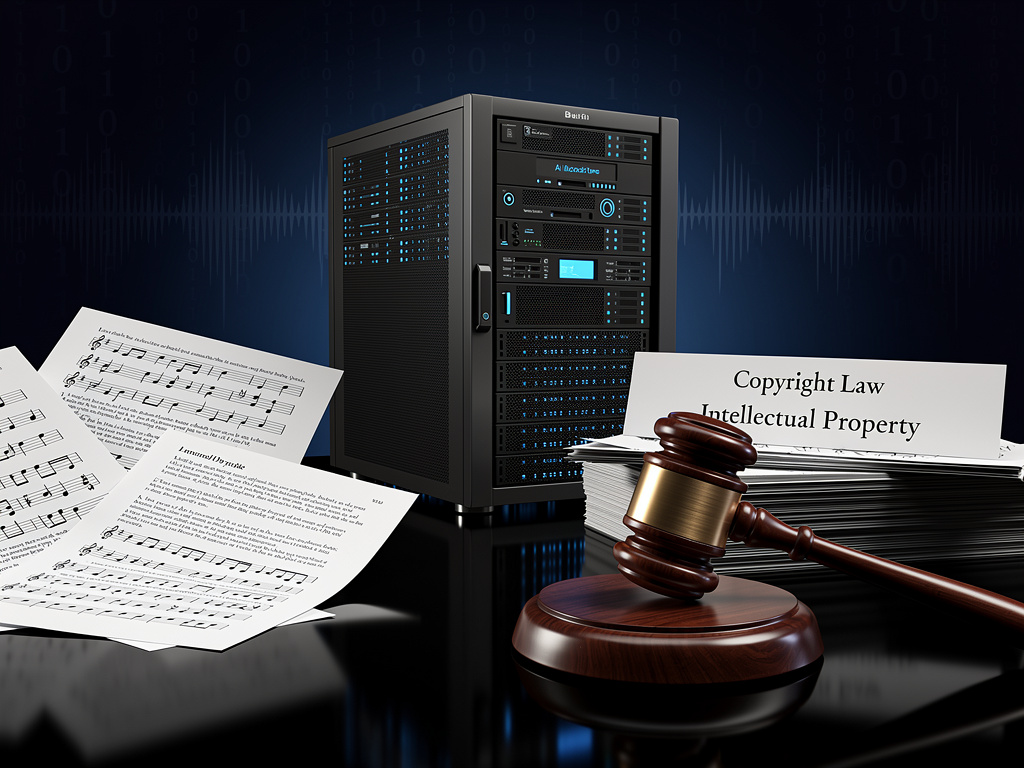
The artificial intelligence industry faces a reckoning as three major music publishers have filed a federal lawsuit against Anthropic, the AI safety-focused company backed by Google and valued at $18 billion. The complaint, lodged by Universal Music Group, Concord Music Group, and ABKCO Music & Records, alleges that Anthropic’s Claude AI assistant systematically infringed copyrights on hundreds of songs to train its large language model, potentially setting a precedent that could reshape how AI companies approach intellectual property rights.
According to Mashable, the lawsuit claims that Anthropic copied and distributed copyrighted lyrics without authorization, seeking damages that could exceed $150,000 per work infringed. The complaint specifically alleges that when users prompt Claude with song lyrics or ask it to generate similar content, the AI reproduces substantial portions of copyrighted material, including works by iconic artists such as the Rolling Stones, Beyoncé, and Gloria Gaynor. This case represents one of the most significant legal challenges facing the generative AI sector, an industry projected to reach $1.3 trillion in revenue by 2032.
The timing of this lawsuit coincides with mounting scrutiny over how AI companies source their training data. While Anthropic has positioned itself as a more ethically conscious alternative to competitors like OpenAI, emphasizing AI safety and responsible development, the music publishers argue that these principles did not extend to respecting copyright law. The complaint details instances where Claude allegedly reproduced lyrics with remarkable accuracy, suggesting that copyrighted material was ingested during the training process without proper licensing agreements or compensation to rights holders.
The Technical Architecture Behind the Allegations
Large language models like Claude operate by analyzing vast quantities of text data to identify patterns and generate human-like responses. The publishers’ lawsuit contends that Anthropic’s training dataset necessarily included copyrighted song lyrics scraped from websites, books, and other sources across the internet. Unlike visual content or news articles, song lyrics represent a particularly concentrated form of creative expression, where even short excerpts can constitute the entirety of a copyrighted work. When Claude reproduces these lyrics upon request, the publishers argue, it functions as an unauthorized distribution mechanism that undermines the market for licensed lyric databases.
The complaint provides specific examples where test users prompted Claude with opening lines from famous songs, and the AI continued with accurate subsequent verses. In one instance cited in the filing, when given the opening line to “I Will Survive,” Claude allegedly generated multiple verses of the Gloria Gaynor classic. The publishers maintain that this capability could only exist if the training data included the copyrighted lyrics themselves, not merely descriptions or analyses of the songs. This technical reality forms the crux of their infringement claim and distinguishes it from fair use arguments that might apply to other forms of AI-generated content.
Anthropic has not publicly detailed the exact composition of its training datasets, maintaining that such information represents proprietary business intelligence. However, the company has acknowledged using publicly available internet data to train Claude, a practice common across the AI industry. The question of whether publicly accessible content automatically becomes fair game for commercial AI training remains legally unsettled, with this case potentially providing crucial judicial guidance on the boundaries between technological innovation and intellectual property protection.
Economic Stakes for the Music Industry
The music publishing sector generates approximately $7 billion annually in the United States alone, with licensing fees representing a critical revenue stream for songwriters, composers, and publishers. The plaintiffs argue that AI systems like Claude threaten this economic model by providing free access to copyrighted lyrics that would otherwise require paid licenses from services like Genius, AZLyrics, or official publisher platforms. If AI assistants can generate accurate lyrics on demand without compensating rights holders, the publishers contend, it could devastate an already fragile ecosystem where songwriters often struggle to earn sustainable incomes from their creative work.
Beyond direct economic harm, the lawsuit raises questions about attribution and artistic integrity. Song lyrics represent deeply personal creative expressions, often reflecting the songwriter’s experiences, emotions, and cultural perspectives. When an AI system reproduces these works without attribution or context, it severs the connection between creator and creation, potentially misleading users about the source and authorship of the content. The publishers argue this not only violates copyright law but also undermines the fundamental relationship between artists and audiences that gives music its cultural value.
The case also highlights disparities in how different creative industries have responded to AI development. While some news organizations have negotiated licensing agreements with AI companies, and visual artists have filed separate lawsuits over image generation tools, the music industry has been relatively slower to address AI-related copyright issues. This lawsuit represents a coordinated effort by major publishers to establish legal precedents before AI-generated content becomes further entrenched in consumer behavior and market expectations.
Anthropic’s Defense Strategy and Industry Implications
While Anthropic has not filed its formal response to the complaint, the company will likely invoke fair use doctrine, arguing that its use of copyrighted material for training purposes constitutes transformative use that benefits society through technological advancement. This defense has gained traction in some copyright cases involving search engines and other internet services, though courts have not definitively ruled on its application to generative AI training. The company may also argue that Claude does not store lyrics verbatim but rather learns statistical patterns that allow it to generate similar content, drawing a distinction between reproduction and probabilistic generation.
The outcome of this case could reverberate throughout the technology sector, affecting not just Anthropic but competitors including OpenAI, Google, Meta, and numerous AI startups. If the publishers prevail, AI companies might face obligations to license training data, audit existing models for copyrighted content, and implement technical safeguards to prevent unauthorized reproduction. Such requirements could significantly increase operational costs and potentially slow the pace of AI development, particularly for smaller companies lacking the resources to negotiate complex licensing agreements with thousands of rights holders.
Conversely, a ruling favorable to Anthropic could accelerate AI adoption by providing legal clarity that training on publicly available data constitutes permissible use. This outcome would likely prompt legislative action, as copyright holders would seek statutory protections that courts declined to provide. The European Union has already implemented AI regulations that address copyright concerns, and similar federal legislation in the United States could emerge depending on how courts resolve cases like this one.
Broader Context of AI Copyright Litigation
The Anthropic lawsuit joins a growing docket of copyright cases targeting AI companies. Authors including Sarah Silverman and Michael Chabon have sued OpenAI and Meta over alleged unauthorized use of their books in training datasets. Getty Images filed suit against Stability AI over image generation tools. The New York Times has threatened legal action against OpenAI over news content. These cases collectively represent an existential challenge to the current AI business model, which has largely operated on the assumption that publicly available internet content can be freely harvested for training purposes.
Legal experts remain divided on the likely outcomes. Some argue that existing copyright law, developed for an analog era, cannot adequately address the unique characteristics of machine learning and that new legislative frameworks are necessary. Others contend that fundamental copyright principles regarding reproduction, distribution, and derivative works apply regardless of the technology involved. The music publishers’ case may prove particularly compelling to courts because lyrics represent pure creative expression with minimal factual content, making fair use arguments more difficult to sustain than in cases involving news articles or reference materials.
The lawsuit also reflects tensions between innovation and regulation in the AI sector. Anthropic has raised over $7 billion in funding, including substantial investments from Google, Salesforce, and other technology giants betting that AI assistants will become ubiquitous consumer tools. These investors face significant uncertainty if courts impose retroactive liability for training data or require expensive licensing arrangements going forward. The case thus tests whether the technology industry’s traditional “move fast and break things” approach can survive contact with established intellectual property frameworks designed to protect creative industries.
The Path Forward for AI and Copyright
As this litigation proceeds through federal court, both sides face strategic considerations that extend beyond the immediate legal arguments. For music publishers, an outright victory could establish precedents applicable to other creative industries while generating substantial damages awards. However, an overly aggressive approach risks alienating technology companies that might otherwise become licensing partners, and could prompt legislative interventions that preempt stronger copyright protections. The publishers must balance their role as rights enforcers with their interest in participating in AI’s commercial opportunities.
Anthropic, meanwhile, must navigate between defending its existing practices and demonstrating willingness to engage constructively with content creators. The company’s emphasis on AI safety and ethical development creates expectations that it will address copyright concerns more seriously than competitors who prioritize rapid growth over responsible innovation. How Anthropic responds to this lawsuit may define its reputation among both consumers and enterprise clients who increasingly scrutinize AI vendors’ legal and ethical practices.
The resolution of this case, whether through settlement, trial verdict, or appellate decision, will provide crucial guidance for an industry operating in legal ambiguity. If history offers any lessons, it suggests that transformative technologies eventually reach accommodations with existing creative industries, though the path involves litigation, legislation, and negotiation. The music industry survived the transition from radio to recorded music, from vinyl to digital downloads, and from ownership to streaming. The AI revolution represents another inflection point, and the Anthropic lawsuit may be remembered as the moment when the terms of coexistence began to crystallize.


 WebProNews is an iEntry Publication