
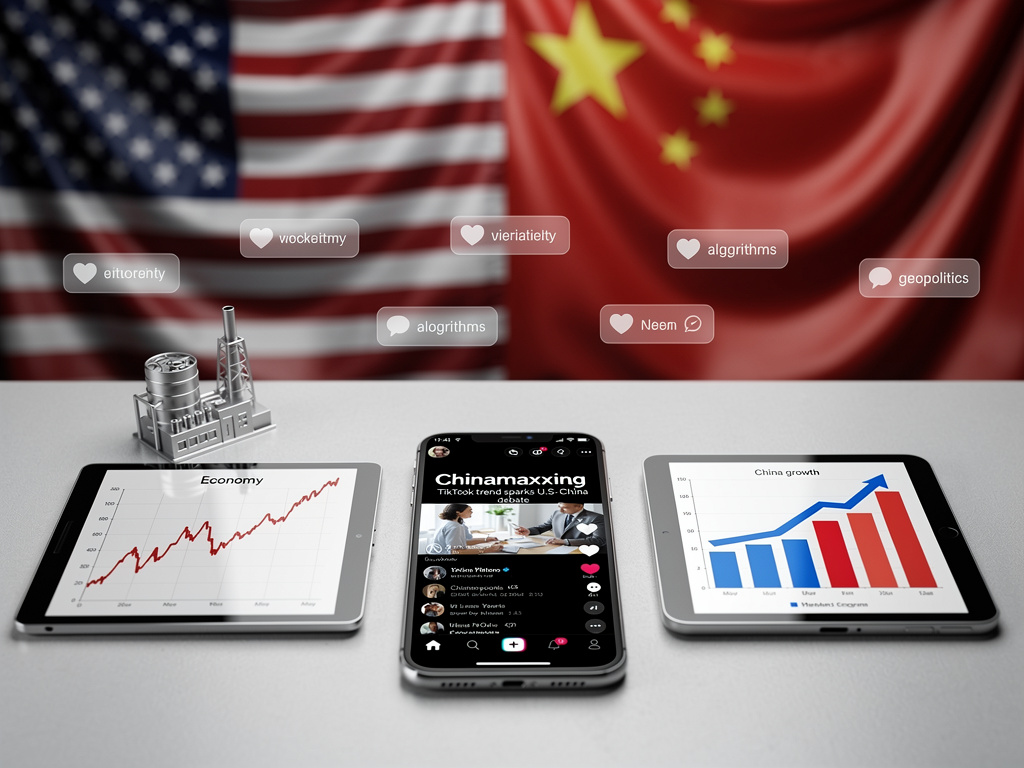
A peculiar trend has emerged on TikTok that has left cultural observers, political analysts, and everyday Americans scratching their heads. “Chinamaxxing,” as it’s been dubbed, involves Western social media users—predominantly young Americans—posting content that glorifies life in China while denigrating their own countries. The phenomenon has sparked intense debate about social media influence, generational disillusionment, and the complex relationship between the United States and China in the digital age.
According to The New York Post, the trend features creators showcasing idealized versions of Chinese urban life, praising everything from infrastructure and public transportation to perceived safety and economic opportunity. These videos often contrast sharply with complaints about Western societies, touching on issues like housing affordability, healthcare costs, and political dysfunction. What makes this trend particularly noteworthy is not merely its existence, but the enthusiasm with which young people are embracing a narrative that runs counter to decades of Western democratic values and free-market ideology.
The trend has grown exponentially in recent weeks, with hashtags related to Chinamaxxing accumulating hundreds of millions of views across TikTok and other platforms. Creators film themselves in Chinese cities, marveling at high-speed rail networks, cashless payment systems, and gleaming skyscrapers. Some have gone further, relocating to China temporarily or permanently, documenting their experiences for Western audiences hungry for content that challenges their preconceptions. The production quality varies widely, from slick, professionally edited videos to raw smartphone footage, but the underlying message remains consistent: China offers opportunities and quality of life that the West increasingly cannot.
Economic Anxiety Fuels Digital Escapism
The roots of Chinamaxxing extend deeper than simple social media trend-chasing. Economic data paints a sobering picture of the challenges facing young Americans and Europeans. Housing affordability has reached crisis levels in major Western cities, with homeownership increasingly out of reach for millennials and Generation Z. Student debt burdens have created a generation of young professionals whose economic mobility is severely constrained. Healthcare costs continue to rise, and the gig economy has replaced stable employment for millions.
Against this backdrop, China’s rapid development presents a compelling alternative narrative. The country has lifted hundreds of millions out of poverty in recent decades, built world-class infrastructure, and created thriving tech ecosystems in cities like Shenzhen and Hangzhou. For young Westerners facing economic precarity, these achievements appear enviable, even if the full context—including political restrictions, surveillance systems, and social credit scores—receives less attention in Chinamaxxing content.
The Algorithm’s Role in Shaping Perception
TikTok’s algorithm plays a crucial role in amplifying Chinamaxxing content. The platform’s recommendation system is designed to maximize engagement by showing users content aligned with their interests and viewing patterns. Once a user engages with Chinamaxxing videos—whether through likes, comments, or extended viewing time—the algorithm serves up more similar content, creating echo chambers that reinforce particular worldviews.
Critics argue that TikTok, owned by Chinese company ByteDance, has an inherent interest in promoting content favorable to China. While ByteDance maintains that its content moderation policies are politically neutral, concerns persist about potential influence operations and subtle manipulation of Western public opinion. The company has repeatedly stated that TikTok operates independently from its Chinese parent company and that U.S. user data is stored on American servers, but skepticism remains high among policymakers and security experts.
Geopolitical Implications and National Security Concerns
The Chinamaxxing trend arrives at a particularly sensitive moment in U.S.-China relations. Trade tensions, technology competition, and disputes over Taiwan have created an atmosphere of strategic rivalry between the world’s two largest economies. Against this backdrop, a social media trend that portrays China favorably while criticizing American society raises red flags among national security officials.
Some analysts view Chinamaxxing as evidence of successful Chinese soft power projection. By allowing Western creators to experience and document China’s modernization firsthand, the Chinese government gains authentic-seeming testimonials that carry more weight than official propaganda. These creators become unwitting participants in a broader information campaign, their genuine enthusiasm lending credibility to narratives that serve Chinese strategic interests.
The Reality Behind the Filtered Content
Lost in much of the Chinamaxxing content is the fuller picture of life in China. While the country has indeed made remarkable economic progress, it remains an authoritarian state with significant restrictions on personal freedom. Internet censorship is pervasive, with the “Great Firewall” blocking access to many Western websites and social media platforms. Political dissent is not tolerated, and surveillance technology monitors citizens’ activities both online and offline.
Human rights concerns persist, including the treatment of Uyghur Muslims in Xinjiang, restrictions on religious freedom, and the crackdown on democracy advocates in Hong Kong. Labor rights remain limited, environmental challenges are significant, and wealth inequality has grown alongside economic development. These realities rarely feature in Chinamaxxing videos, which tend to focus on surface-level observations about urban amenities and technological convenience.
Cultural Criticism and the Search for Meaning
Beyond economics and geopolitics, Chinamaxxing reflects deeper currents of cultural discontent in Western societies. Young people are increasingly questioning the values and systems they inherited, seeking alternatives to what they perceive as broken or failing institutions. This search for meaning and purpose makes them receptive to narratives that promise different ways of organizing society.
The trend also highlights generational differences in how Americans view China. Older generations, shaped by Cold War thinking and memories of Tiananmen Square, tend to view China with suspicion. Younger Americans, who came of age during China’s economic rise and have less personal connection to 20th-century ideological conflicts, approach the country with fewer preconceptions and more curiosity. This generational divide has implications for future U.S. foreign policy and public support for confrontational approaches toward China.
The Influencer Economy and Authenticity Questions
The Chinamaxxing trend cannot be separated from the broader influencer economy that dominates social media. Content creators are incentivized to produce material that generates views, likes, and engagement, which translate into advertising revenue and sponsorship opportunities. China-focused content has proven particularly effective at driving engagement, as it combines exotic appeal with political controversy—a potent combination for algorithmic amplification.
Questions about authenticity inevitably arise. Some creators may genuinely believe in the message they’re promoting, while others may be exploiting a trending topic for commercial gain. Still others may receive direct or indirect support from Chinese entities eager to shape Western perceptions. Distinguishing between these categories is difficult, and the lines between authentic expression, commercial opportunism, and influence operations are often blurred.
Educational Gaps and Media Literacy Challenges
The Chinamaxxing phenomenon exposes significant gaps in media literacy and critical thinking skills among social media users. Many young people lack the historical context and analytical tools needed to evaluate the content they consume. They may not understand the differences between authoritarian and democratic systems, or the tradeoffs involved in different governance models.
Educational institutions and media organizations face challenges in addressing these gaps. Traditional approaches to media literacy were developed for an era of newspapers and television, not for the algorithmically-driven, user-generated content ecosystem of social media. Teaching young people to critically evaluate Chinamaxxing videos requires not just fact-checking skills but also understanding of geopolitics, economics, and the business models underlying social media platforms.
Looking Forward: Implications for Society and Policy
The Chinamaxxing trend, while potentially fleeting like many social media phenomena, raises enduring questions about information warfare, youth disillusionment, and the future of U.S.-China relations. Policymakers must grapple with how to respond to content that, while potentially misleading or one-sided, is created and shared by American citizens exercising their free speech rights.
Heavy-handed attempts at censorship or content removal would likely backfire, reinforcing narratives about Western decline and authoritarian tendencies. Instead, responses might focus on improving media literacy education, supporting quality journalism that provides nuanced coverage of China, and addressing the underlying economic anxieties that make alternative systems appear attractive. The challenge is substantial: competing with the emotional appeal and algorithmic amplification of Chinamaxxing content requires understanding both the technological systems that spread it and the social conditions that make it resonate.
As the trend continues to evolve, it serves as a reminder that soft power competition in the 21st century plays out not on traditional media but on social platforms where young people spend hours each day. The outcome of this competition will shape not just individual perceptions but potentially the trajectory of great power relations for decades to come. Whether Chinamaxxing represents a genuine shift in how young Westerners view China or merely a passing social media fad remains to be seen, but its emergence signals deeper currents that demand serious attention from leaders, educators, and citizens alike.


 WebProNews is an iEntry Publication