
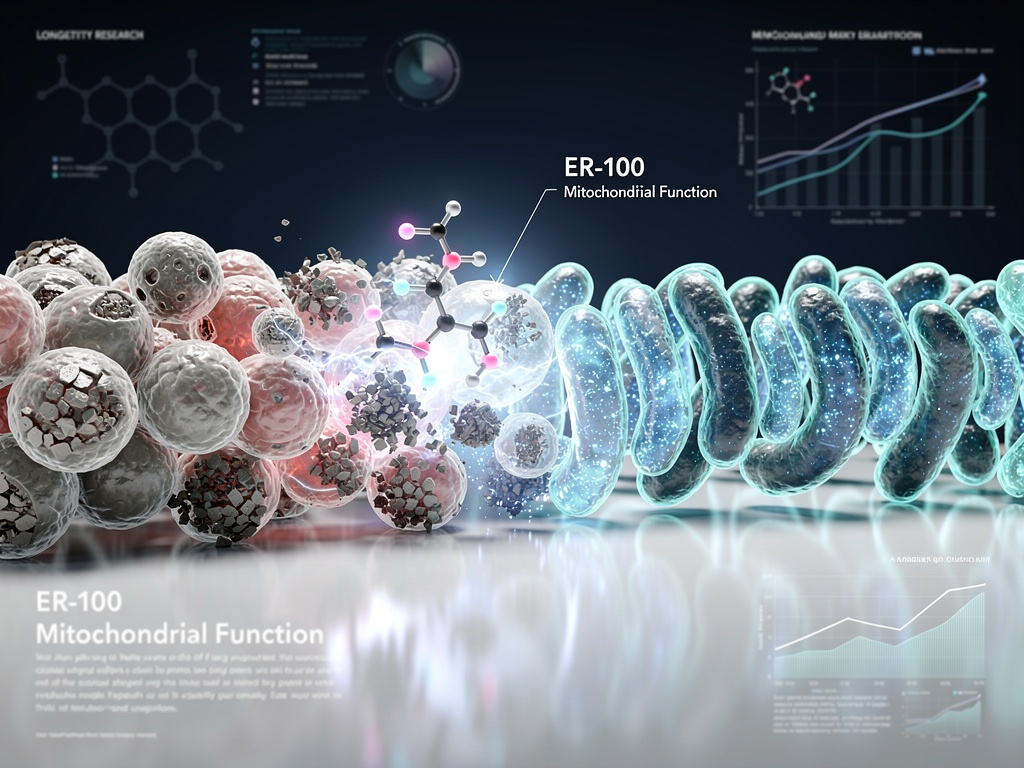
In a development that could fundamentally alter humanity’s relationship with aging, scientists have identified a compound that appears to reverse cellular deterioration at its source—the mitochondria, often called the powerhouses of our cells. The molecule, designated ER-100, has demonstrated remarkable potential in early research to restore youthful function to aging cells, opening a new frontier in longevity science that goes far beyond conventional anti-aging treatments.
According to Futurism, ER-100 works by targeting mitochondrial dysfunction, a fundamental driver of aging that affects every organ system in the human body. Unlike previous approaches that merely address symptoms of aging, this compound appears to tackle one of the root causes: the gradual decline in cellular energy production that occurs as mitochondria deteriorate over time. The implications extend from cosmetic improvements to potentially life-extending interventions for age-related diseases including cardiovascular conditions, neurodegeneration, and metabolic disorders.
The research represents a convergence of decades of work in cellular biology, biochemistry, and gerontology. Scientists have long understood that mitochondria play a critical role in aging, but developing compounds that could safely and effectively restore mitochondrial function in humans has remained elusive. ER-100 appears to overcome many of the obstacles that have stymied previous attempts, though researchers caution that extensive clinical trials will be necessary before the compound could become available as a therapeutic intervention.
The Mitochondrial Theory of Aging Takes Center Stage
Mitochondria generate adenosine triphosphate (ATP), the molecular currency of energy in cells, through a complex process involving electron transport chains and oxidative phosphorylation. As organisms age, mitochondrial efficiency declines due to accumulated damage from reactive oxygen species, mutations in mitochondrial DNA, and deterioration of the organelles’ internal structures. This decline manifests as reduced energy availability for cellular processes, leading to the familiar symptoms of aging: decreased physical capacity, cognitive decline, weakened immune function, and increased susceptibility to disease.
The mitochondrial theory of aging has gained substantial support from research showing that mitochondrial dysfunction precedes and potentially causes many age-related pathologies. Studies have documented that improving mitochondrial function can extend lifespan in model organisms ranging from yeast to mice. However, translating these findings into safe, effective human therapies has proven challenging, as mitochondria are delicate structures easily disrupted by interventions, and their function must be carefully balanced to avoid creating new problems while solving old ones.
How ER-100 Restores Cellular Youth
ER-100 operates through a mechanism that enhances mitochondrial biogenesis—the process by which cells create new mitochondria—while simultaneously improving the quality control systems that remove damaged mitochondria through a process called mitophagy. This dual action addresses both the quantity and quality of mitochondria within cells, potentially reversing the age-related decline in cellular energy production. The compound appears to activate specific cellular pathways that become less responsive with age, essentially reminding cells how to maintain their powerhouses properly.
Early experimental results have shown that cells treated with ER-100 exhibit markers of youthful function, including increased ATP production, reduced oxidative stress, and improved cellular respiration. Perhaps most remarkably, aged cells treated with the compound begin to resemble younger cells in their gene expression patterns and metabolic profiles. These changes occur relatively rapidly, suggesting that cellular aging may be more reversible than previously believed, at least at the mitochondrial level.
From Laboratory Discovery to Clinical Potential
The path from promising laboratory compound to approved medical therapy is long and uncertain, requiring extensive safety testing and efficacy trials in human subjects. ER-100 must demonstrate not only that it can improve cellular function in controlled settings but also that it produces meaningful health benefits in living humans without unacceptable side effects. The compound must be evaluated for its effects on different tissues and organ systems, its interactions with other medications, and its long-term safety profile when taken over months or years.
Researchers involved in developing ER-100 are proceeding cautiously, aware that the history of anti-aging research is littered with compounds that showed promise in early studies but failed in human trials. The complexity of human aging, which involves multiple interconnected biological processes, means that targeting a single mechanism may not produce the dramatic results seen in simpler model organisms. Nevertheless, the mitochondrial approach has strong theoretical justification and substantial experimental support, making ER-100 one of the most scientifically credible anti-aging interventions currently under investigation.
The Broader Context of Longevity Science
ER-100 emerges at a time of unprecedented investment and interest in longevity research. Biotechnology companies, academic institutions, and well-funded startups are pursuing multiple strategies to extend human healthspan—the period of life spent in good health—and potentially lifespan itself. These approaches include senolytics that clear senescent cells, NAD+ boosters that support cellular metabolism, rapamycin analogs that modulate nutrient sensing pathways, and gene therapies targeting fundamental aging processes.
The field has matured considerably from its early days, when anti-aging research was often dismissed as pseudoscience or wishful thinking. Today, respected institutions including the National Institutes of Health recognize aging as a legitimate target for medical intervention, and the FDA has signaled openness to approving drugs that target aging processes rather than specific diseases. This regulatory shift reflects growing scientific consensus that aging itself is the primary risk factor for most chronic diseases, and that interventions targeting aging mechanisms could prevent or delay multiple conditions simultaneously.
Economic and Ethical Implications of Rejuvenation Technology
If ER-100 or similar compounds prove effective in humans, the societal implications would be profound. Extended healthspan could reduce healthcare costs by delaying or preventing expensive age-related diseases, while allowing people to remain productive members of society for longer. However, access and equity questions immediately arise: would such therapies be available only to the wealthy, creating a longevity divide between economic classes? How would extended working lives affect employment opportunities for younger generations?
Healthcare systems would face challenges adapting to populations that age more slowly, potentially requiring new models for insurance, retirement, and long-term care. Social security and pension systems designed around traditional lifespan expectations might need fundamental restructuring. These practical concerns exist alongside deeper philosophical questions about the desirability of radically extended lifespans and whether human societies are prepared for the changes that would accompany them.
The Science of Measuring Rejuvenation
One significant challenge facing ER-100 and similar interventions is determining how to measure their effectiveness. Traditional clinical trials evaluate whether treatments prevent or cure specific diseases, but rejuvenation compounds aim to affect the aging process itself, which unfolds over decades. Researchers are developing biological age clocks based on epigenetic markers, blood biomarkers, and other measurable indicators that change predictably with age, but these tools are still being validated and refined.
The ideal study would follow participants for years or decades to determine whether ER-100 extends lifespan or healthspan, but such trials are impractical for both scientific and commercial reasons. Instead, researchers will likely rely on surrogate endpoints—measurable changes that correlate with improved health outcomes—to evaluate the compound’s effects. These might include improvements in physical performance, cognitive function, cardiovascular health markers, and the biological age clocks mentioned above. The challenge is ensuring these surrogate measures truly predict meaningful health benefits.
Looking Forward: The Future of Human Longevity
ER-100 represents just one approach among many being pursued in the quest to extend human healthspan and lifespan. The coming decade will likely see multiple longevity interventions entering clinical trials, with some potentially reaching the market if they demonstrate safety and efficacy. The most effective strategy may ultimately involve combinations of therapies targeting different aspects of aging, much as cancer treatment now often involves multiple drugs attacking tumors through different mechanisms.
The development of ER-100 and similar compounds reflects a fundamental shift in how medicine approaches aging—not as an inevitable decline to be managed symptom by symptom, but as a biological process that can be understood, measured, and potentially modified. Whether this particular compound succeeds or not, it represents an important step toward a future where aging remains a fact of life but perhaps not an immutable one. The scientific foundation has been laid; now comes the difficult work of translating laboratory discoveries into safe, effective therapies that could give millions of people more years of healthy, productive life.
As research continues and clinical trials progress, the world watches with cautious optimism. The promise of cellular rejuvenation through compounds like ER-100 offers hope not just for extended lifespans, but for compressed morbidity—the idea that we might live longer lives while spending less time suffering from age-related diseases. That goal, once the province of science fiction, now appears within the realm of scientific possibility, though significant hurdles remain before it becomes medical reality.


 WebProNews is an iEntry Publication