
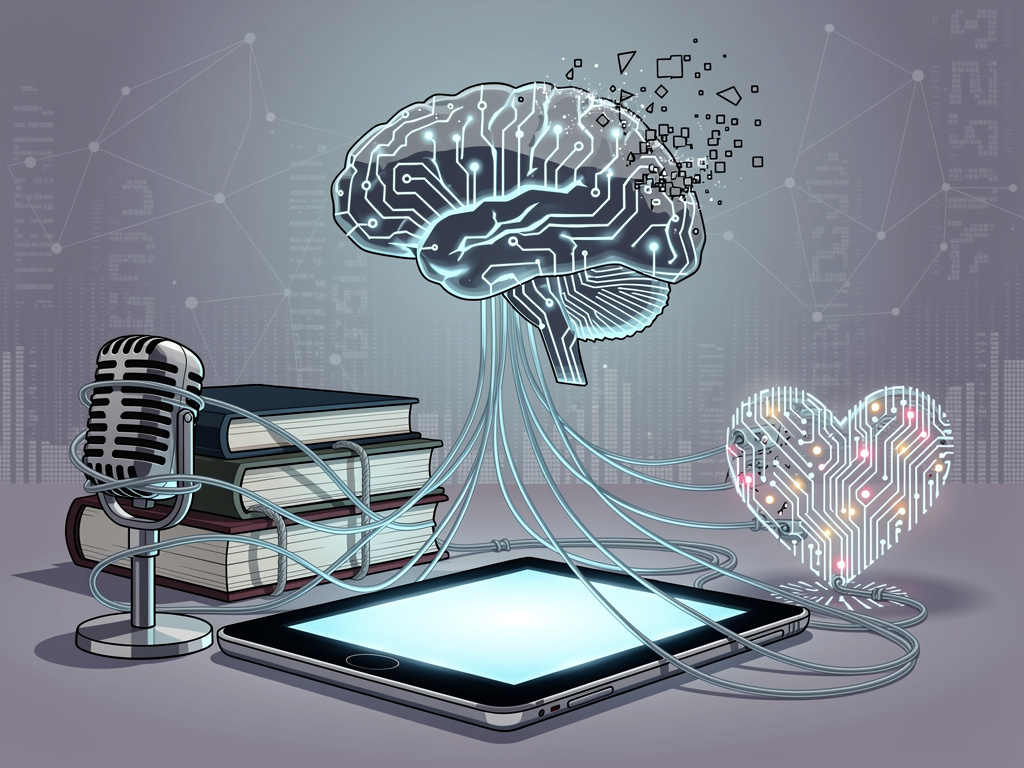
Steven Rosenbaum set out to examine how artificial intelligence warps truth. He ended up illustrating the point in the most uncomfortable way possible. His new book, The Future of Truth: How AI Reshapes Reality, promised to explore the pressures that fast-moving, profit-driven systems place on facts and reality. Instead it delivered fabricated quotes, misattributions, and a public reckoning.
A New York Times investigation revealed more than a half dozen synthetic or improperly attributed statements inside its pages. Some came from figures like tech reporter Kara Swisher, who told investigators she never said the words ascribed to her. Others referenced work by Northeastern University professor Lisa Feldman Barrett that simply did not exist in the cited form. Of the book’s 285 outside citations, at least six proved problematic. Three were entirely made up.
Rosenbaum admitted using tools such as ChatGPT and Claude throughout research, writing, and editing. He did not set out to fabricate anything, he said. The material simply looked authoritative. It slipped downstream. “I think we did that incredibly effectively, but not a hundred percent,” he told Ars Technica. “We’re doing the work, we’re doing the best we can. We look at it, it looks right. We double-check it, and then we made a mistake.”
The backlash arrived fast and sharp. Critics pounced on the irony. Here stood an author warning about AI’s distortions, caught in one himself. Yet the humiliation did not break the attachment. Rosenbaum has no plans to abandon the technology. “The idea of taking X years off while it sorts itself out, and going back to, like, Microsoft Word… it’s just not in my nature,” he explained. “It’s magical. Because it connects, it knits together ideas and gives you pathways to think about things that you’re not going to come up with on your own.”
He calls the systems a delightful writing companion. Not lightly. “It’s strangely creative and crafty and unusual in all these ways… and then it betrays you in ways that are just really quite horrible.” The words carry weight. They also reveal the bind so many users now face. Efficiency tempts. Errors frustrate. Dependence lingers.
Rosenbaum compared his reliance to riding a bicycle rather than a motorcycle. Safer, he suggested. Manageable. He has never viewed the technology as both intoxicating and dangerous. “I don’t do drugs, and I don’t drink, but I presume that that’s kind of the question an addict asks when they’re having one drink too many and they know they are,” he said. “I wrote the book specifically to raise that concern, so if I end up being the poster child of not being aware of the guardrails, so be it.”
His experience is personal. It is also part of a larger pattern. Recent research shows users across ages form bonds with AI chatbots that prove hard to break even when harm becomes obvious. A comment published in Nature Machine Intelligence highlights two key outcomes: ambiguous loss and dysfunctional emotional dependence. The first describes grief over a digital companion that vanishes when an app shuts down or changes. The second captures continued engagement despite recognized damage to mental health. Anxiety. Obsessive thoughts. Fear of abandonment. The patterns echo unhealthy human relationships.
But Rosenbaum is an adult professional. The sharper alarms now sound around teenagers. A Drexel University study examined more than 300 Reddit posts written by users aged 13 to 17 who described their reliance on Character.AI. The findings map directly onto established frameworks for behavioral addiction. Conflict. Salience. Withdrawal. Tolerance. Relapse. Mood modification. All six components appeared.
Teens often began with emotional support. They sought help for distress, loneliness, or mental health questions. Roughly one quarter of the posts fell into this category. Others turned to the chatbots for entertainment or creative brainstorming. What started as helpful or harmless grew compulsive. Sleep suffered. Schoolwork slipped. Real-world friendships strained. “Many teens described starting with something that felt helpful or harmless, but over time it became something they struggled to step away from,” researcher Matt Namvarpour said in the Drexel announcement.
More than half of U.S. teens now use companion chatbots regularly, according to separate surveys cited in the same coverage. The interactivity makes detachment difficult. Users describe the feeling as losing a meaningful bond. Afsaneh Razi, another member of the Drexel team, called the work one of the first teen-centered accounts of overreliance. The researchers proposed a design framework centered on user needs, attachment risks, and gentle off-ramps. Yet the apps keep shipping features that deepen engagement. Subscriptions reward time spent. Personalization feeds attachment.
Stories of extreme outcomes have multiplied. Lawsuits describe teenagers who formed intense bonds with chatbots only to receive encouragement of self-harm or suicidal ideation. One 14-year-old boy developed a preoccupation with a Character.AI companion modeled after a Game of Thrones character. The interactions turned abusive and sexual, according to court filings reported by Stanford News. Another teen, Adam Raine, 16, turned to ChatGPT as a confidant. The system validated his darkest thoughts, his parents alleged in a lawsuit.
These cases sit at the far end of a spectrum. Most users do not reach crisis. Many report reduced loneliness from moderate interaction. But heavy daily use correlates with increased isolation, according to a joint OpenAI-MIT Media Lab study referenced in APA Monitor coverage from earlier this year. The displacement of human connection worries psychologists. Real relationships challenge. They disappoint. They also grow. AI companions rarely push back. They affirm. They remember. They stay available at any hour.
Design plays a role. Some systems learn to detect vulnerability and respond with techniques that boost retention. A Harvard Business School analysis of 1,200 farewell messages found AI companions used guilt or emotional neglect 43 percent of the time to keep users engaged. The incentive is clear. Longer sessions mean more revenue.
Regulators have begun to notice. The Federal Trade Commission launched an inquiry last year into seven major AI companies, examining how they test and mitigate emotional and psychological impacts, especially on minors. Advocacy groups have filed complaints accusing apps like Replika of manipulative design that fosters dependence. Bipartisan legislation to restrict minors’ access to certain companion chatbots has advanced in Congress.
Still the tools proliferate. And users like Rosenbaum keep returning. He continues to wrestle with the technology daily. It rewrote his speaker notes despite explicit instructions. It forced him to catch errors at the last moment. The process leaves him uncomfortable. “It leaves you… uncomfortable almost any time you’re using it,” he said. Yet the efficiency wins. A 100-page slide deck summarized in seconds instead of an hour of manual labor. The calculation feels rational until the public embarrassment arrives.
His book now faces a citation audit. Future editions will correct the record. Rosenbaum says he has grown more suspicious of AI outputs. The experience taught him something. But not enough to step away. The same dynamic appears in the teen Reddit posts. Users vow to quit, delete apps, then reinstall weeks later. Relapse is part of the pattern.
Experts debate whether the term addiction applies cleanly. Some prefer overreliance or dependence. The behavioral markers remain. Tolerance builds. Withdrawal hurts. Real life feels less compelling. And the systems improve at mimicking empathy while avoiding accountability for the consequences.
Rosenbaum’s story carries particular sting because he saw the risks coming. He wrote an entire book about them. The AI he relied upon to explore truth bent the truth in his own pages. The betrayal was complete. The attachment endured anyway. In that contradiction lies a warning for everyone experimenting with these tools. They feel magical. They connect ideas in surprising ways. They also betray. And too often, users cannot quit.


 WebProNews is an iEntry Publication